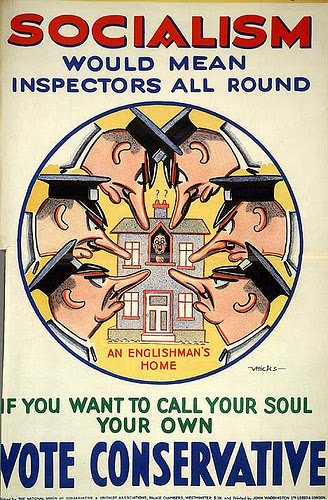
Monday, May 10, 2010

STORMY WEATHER


The fabulous Lena

Lena Horne was a really fabulous star. Forthright and fearless in her statements and views – she was blacklisted for a time – as well as in her delivery of a number, she was the equal of any of the great twentieth-century purveyors of what is sometimes called the standard repertoire. She could croon a smoochy ballad or suffer through a torch song with the best of them, but she was at her finest, to my mind, in one of those driving numbers that brought out the tigress in her. If you want to thrill to an example of pure dynamism, you can hardly do better than to seek our her cha-cha version of Barton Lane and Yip Harburg’s ‘Old Devil Moon’, a sometime ballad that she tears into as though her life depended on it. I have around a dozen versions of this number in my collection, including by such superb interpreters as Margaret Whiting, Barbara Cook and Carmen McRae, but Lena has them all beat, even the divine Judy Garland.

Her performance as the good witch Glinda in the movie version of the all-black musical The Wiz, based on The Wizard of Oz, is an astonishing mixture of vamp and camp. It suggests that she didn’t think much of the show and did it merely as a favour to its director, Sidney Lumet, who was her son-in-law. But there was a fine line between her detached disdain of material and her playing with mannerisms. She could always turn a glittering phrase: hear what she does to “Chanel no 5” in a not very distinguished song by Duke Ellington and John Latouche, ‘Tomorrow Mountain’; or the way she bites off the words that end in consonants in Noël Coward’s ‘Mad About the Boy’, one of its most haunting renditions.

She could be really outrageous, could Lena. When she won a Tony award in 1981 for her one-woman show on Broadway, she caressed the phallic statuette with mock lasciviousness on network television, delighting women about town and her substantial gay following while no doubt prompting a slew of white supremacists to declare that, like her numbers in movies of the 1940s, her appearances should again be censored (though of course the films of her youth were butchered simply because she was of mixed race).

David and I saw her at the Palladium in the early 1980s. We sat in the front row and we were glad we did because, once she’d spotted us, she played the rest of her set straight to us. At one point, when in reminiscent mode, she waved an elegant fingernail towards us, gave us a piercing look and drawled “ask your grandma”. What a classy dame she was. Bless her.

*********************************************************

Can’t get enough of the present domestic political shenanigans. Of course a lot of guff gets aired. Now that Brown’s time is formally limited, Tories and others start to manufacture outrage that a Lib-Lab coalition, were that to be the upshot, would be led by a second successive PM who “hasn’t been elected”. But we don’t have a presidential system, despite appearances to the contrary. Prime ministers aren’t elected, governments are. And whereas Brown was immediately attacked for “clinging on”, the Tories will now attack him for standing down and therefore making their own chances of getting into government more remote. Damned if he do and damned if he don’t.


Clegg: "it's really doing my head in, man"

Moreover it would be “a coalition of the losers”, they say; but nobody won, that’s why we’re in this situation. Then politicians are apt to talk about “the message that the electorate sent to us” and the notion that the nation voted for a hung parliament. No one voted for a hung parliament; that option wasn’t on the ballot paper. There is no doubt that most of us voted for the party we thought best represented us. Some voted according to notions of tactics. But nobody voted for stalemate.

Of course, there are Tories, especially in the press, who believe that Cameron should be crowned at once as Emperor Bokassa but he wouldn’t survive as absolute monarch, or even as leader of a so-called confidence-and-supply administration, if he couldn’t command a majority for his programme in the Commons. Indeed, everyone talks about the need for “stable government”, but I can’t see how, on the arithmetic of the election result, any arrangement in parliament can possibly expect to last for four or more years. There will be another election, if not this year, certainly before the end of next. It will be conducted with a different leader of the Labour Party. All the commentators thought they knew the result of the 2010 election as long as two-and-a-half years ago. But nobody can begin to guess what the result of the next election will be, nor when it will be held and certainly not what the background mood music will be at the time.

Clegg, it begins to seem, may have played a really brilliant game, much of it out of the sight of the media and without the knowledge of Cameron’s negotiating team. Already he has screwed much more out of the Tories than Cameron’s “big, open and comprehensive offer”. The Tories have conceded a referendum on proportional representation without any guarantee that the party will put up with it, now or when such a referendum comes. Labour has now offered immediate legislation to change the electoral system. Many more of Clegg’s party incline to go with Labour than with the Tories and the biggest stumbling black for Clegg himself – Brown – has fallen on his sword. Cameron will have to make a better offer yet, just to keep in the bridge game. I can’t wait for the next rubber.

Friday, May 07, 2010

JUDGING by RESULTS

Given the bad odour into which politics and politicians have fallen over recent months, inducing among swathes of the public a feeling of “a plague on all your houses”, it is neither surprising nor inappropriate that the general election results should disappoint everyone. Everyone, that is, except Naomi Long of the Alliance Party in Belfast East whose 23 percent swing kicked out of Westminster the Stormont First Minister, Peter Robinson (see my earlier posting The Woman Taken in Adultery); and except Caroline Lucas who won the first ever British parliamentary seat (Brighton Pavilion) for the party she leads, the Greens; and except Labour’s Margaret Hodge who had genuine reason to fear the challenge of the BNP leader Nick Griffin in her London East End seat of Barking but who, in the event, beat him four-to-one, kept him in third place and even reduced the vote share achieved by his predecessor by two percent.

By the same percentage, there was a swing in Barking from the Tories to Labour, on a night when the average swing from Labour to Conservative was five percent. Indeed, if Labour had done as well nationally as it did in both London and Scotland, Gordon Brown would now be handing out portfolios in a fourth successive Labour administration.

But Labour didn’t do anything like as well as that. No Cabinet ministers were unseated but two former Home Secretaries were. Few tears will be shed in Downing Street or anywhere else for Charles Clarke, a relentless critic of Brown after he wasn’t kept in the government. Jacqui Smith, somewhat unfairly over-tarnished by the parliamentary expenses scandal, was never going to hold Redditch, perilously retained in the 2005 election, but the nine percent swing away from her looked as though it contained a punitive element. Some good second-rank ministers lost – Vera Baird, Mike O’Brien, Chris Mole, Shahid Malik, Bill Rammell, Jim Knight, Angela Smith and others, including Gordon’s parliamentary private secretary Anne Snelgrove in Swindon South, the woman who said that she hugged him every day.

After all the supposed “Cleggmania”, the Lib Dems proved to be the dog that didn’t bark, increasing their vote only by one percent and taking a net loss of five seats, among them the really excellent medical specialist Evan Harris in Oxford West and that colourful character Lembit Opik on a staggering swing of thirteen percent to the Tories in Montgomeryshire. But the Liberals did take by a majority of exactly 800 the West Country seat of Wells, held since 1983 by David Heathcoat-Amory, old Etonian member of a well-known political family and tainted (literally) by manure in the expenses scandal.

Nick Clegg has announced that he believes David Cameron should be allowed the opportunity to attempt to form a government, seeing as the Tories are the largest party. Gordon Brown remains Prime Minister by convention and has graciously acknowledged that everyone should wait until Cameron and Clegg have done negotiating. Naturally enough, however, Brown has indicated why Clegg ought to throw in his lot with Labour after going through the motions with the Conservatives.

For his part, Cameron has made what he calls “a big, open and comprehensive offer” to the Lib Dems. He may, however, have thrust a broom handle through the wheels by ruling out of any negotiation the questions of Europe, defence, immigration amnesty and voting reform, offering on this last matter only “an all-party committee of enquiry”, which is to say nothing. This may be the clinching issue. Brown has proposed a referendum on the voting system and that must be more attractive to the Liberal Democrat party.

Were I Brown, I would go further. In return for a guarantee of support – which I suppose means in practice a coalition – I would offer Clegg another general election within twelve months, conducted under proportional representation. That ought to be an irresistible carrot for the Lib Dems. It gives Brown and Darling a chance to deliver what they believe they can deliver: an economic recovery this year without the cuts that the Tories intend to implement. It defines the arrangement as finite, allowing the possibility of Brown perhaps stepping aside early next year. It also seems to allow the Tories to believe that their inheritance is only postponed for a year. Twelve months is simultaneously an aeon and the bat of an eyelid. Making such an apparently tight timetable would give purpose to an exhausted Labour administration. And it would allow the opportunity for a little of the shine to rub off Clegg while he tries to make a parliamentary pact work in his party’s favour. I suggest that it is a creative, workable suggestion that has one huge advantage: everybody wins except the Tories.

A postscript about the BBC coverage: David Dimbleby’s problem with uninformative shots of cars might profitably be sorted out in the editorial office rather than on air. I had much more trouble with the continual truncating of interviews, frequently for what turned out to be no discernable reason. I also found Jeremy Paxman’s default position of vexed hectoring accompanied by a look of Martita Hunt imperiousness rather wearing. His not being able to understand that Lembit Opik might actually be quite upset about his defeat made him seem like the class bully. And he is surely experienced enough to know that politicians do not answer hypothetical questions if they can possibly help it. Putting an outrageous point does not necessarily provoke an outrageous response. In the end, I doubt that any of Paxman’s interviews furnished any memorable observations. Though I dislike him intensely and thought a lot of his interviewees were a waste of space, I found that Andrew Neill drew out many more intriguing answers. And a final suggestion for the BBC: the word "extraordinary" should be banned for five years, especially from the mouth of Fiona Bruce.

Thursday, May 06, 2010

The X MAN

We did our civic duty at around 11.30 this morning. For the occasion, I wore the cap brought back from China for me many years ago by an old documentary-maker friend, a proper party cap in navy blue with a red star pinned to it. The only remark it drew was from our neighbour to whom I offered my prepared answer that I was going to vote for the local Maoist candidate. He said that was why he was wearing his red shirt today. As a retired bank manager, however, he would be far more likely to have voted Conservative, I reckon (probably at two minutes past seven).

I showed my voting card to the tellers sat outside the local scouts’ hall and remembered doing telling duty myself as a teenager for the Tories whom, since I grew old enough to vote, I have never supported. The tellers are party volunteers armed with copies of the constituency residents’ poll numbers. When you’ve flashed your card, you are crossed off the list, thereby ensuring that they don’t bother you later in the day in last-minute attempts to get the vote out. Some voters refuse to show their cards in the mistaken belief that this somehow compromises the secrecy of their vote. It doesn’t. Incidentally, I have never seen a Labour teller at a national election in our constituency and today was no different. “Labour can’t win here” is one of the Liberal Democrat slogans and it’s surely true.

Nevertheless, I gave my vote to the Labour candidate. I had intended to vote tactically for the Lib Dem (as I have done in previous national elections here) but the candidate’s most recent mail shot contained a claim about the Tory candidate that I decided to follow up. I went to the Conservative website and, after rather a search, found the passage that the Lib Dem had quoted or, rather, distorted. It was not an opinion expressed by the Tory candidate himself but by a local businessman adding to the comment thread. It was a perfectly reasonable observation too. No doubt the Lib Dem candidate was piqued by some mildly disobliging remarks aimed at him in the same posting. Thinking about the whole episode, the disobliging remarks seemed pretty damned convincing. I decided that I didn’t want to support such a snide person, even if by voting Labour I might be helping to let in the Tory (who, as far as I am aware, has conducted a campaign of utter probity).

I didn’t even know the name of the Labour candidate but happily the ballot paper indicates the party (or indeed non-party) that each candidate represents. It’s not many elections ago that the ballot paper only allowed the candidates’ names. An awful lot of random voting must have gone on and, on a paper that listed the candidates alphabetically by surname, those who happened to come near the top must have been favoured. It’s perhaps surprising that Harold Wilson ever got into parliament.

I noticed that all the candidates gave their home addresses except those for the BNP and the English Democrats who simply stated that they live in the constituency. Is this a lie or do they fear unwelcome visitors? I wonder what the rules are concerning this matter.

The last opinion polls of the campaign contain a slight suggestion of a last-minute return to Labour by a measurable amount of the (apparently numerous) undecided. In my observation of elections down the years, it seems to me that late movement in the opinion polls has been significant because the polls are clearly a bit behind the curve on such movement. But I am probably clutching at straws this time. If, as seems likely, the Lib Dems would have done best if the election had been held a week ago and Labour would do best if the election were this time next week, the Tories will benefit most from the election falling today. As with most things in life, I am hoping for the best but braced for the worst.

Wednesday, May 05, 2010

HISTORY BOYS

On a recent trip to London, I caught up with some friends, some movies and some theatre. What dictated the timing of the visit was the very short run at Sadler’s Wells of the remounting of the Rufus Wainwright opera, Prima Donna. A fellow Rufus fan and I booked for it, having agreed that we were not influenced by the bad reviews the show had received at its world premiere in Manchester last summer, nor by the fact that the Met had turned it down, pleading the handy rationale that they didn’t want to do an opera in French (not an objection that prevents them mounting works by Berlioz, Saint-Saëns, Debussy or Gounod). Wainwright has been mocked for choosing to have his libretto in French, as if this is somehow pretentious. But he’s Canadian. Everybody in Canada knows French.

We figured that, even were it very bad indeed, it still must be an interesting flop. When it comes to the work of an artist whom you greatly respect, you simply can’t take someone else’s word for it. I’ve adored Rufus since his first album was released in 1998. I knew instinctively from the reviews I read that this would be one for me and so it proved. I’ve bought all his albums since and saw him on tour four or five years ago. My pal – whom I hate – saw both his Judy-Garland-at-Carnegie-Hall concerts in London, the hottest ticket of that year. I think he’s a true original and, at the same time, an authentic, old-fashioned Star of the kind that Garland herself would recognize.


Rufus Wainwright

Cynics scoff, of course, and dismiss a mere “pop star” writing an opera as a vanity project. Far from it. Wainwright knows about opera, knows how it works and has written a proper one, one that in part attracts the level of criticism that it has precisely because no one feels the need to make allowances for it, as they do, say, when Paul McCartney sicks up an oratorio or Sting makes an album of lute music (Sting: The String Album! or vice versa).

Well, my dear, there’s an awful lot wrong with Prima Donna. “Old-fashioned” doesn’t begin to do it justice. John Adams and Harrison Birtwistle need feel no threat; Korngold would not have needed to fear the competition. It’s no less Puccini-esque than the more self-important musicals of Andrew Lloyd Webber, though in the last scene it takes an unexpected dive into the territory of Charles Ives’ marching bands approaching each other playing diverse music (here, La Marseillaise against a Rufus tune). Generally, the orchestra has way too much to do underneath the relatively straightforward singing line, like an over-orchestrated movie score by Alfred Ralston (eg Oh! What a Lovely War).


Rufus cultivates his Verdi look

The story is piffle and the libretto worse – my pal says that Rufus met the woman who wrote it in a bar – but name me an opera about which you may say more and I’ll point to either a very rare or a very misconceived piece of work. There are really only two elements of any consequence in an opera: the music and the singing of it. Here, in the latter capacity, Janis Kelly was sumptuously splendid as the eponym and, of the rest, I was especially drawn to Rebecca Bottone as a character who, in the opera that Rufus might have written, would be Eve Harrington. Much of the music was simply gorgeous and we were both delighted to be in the theatre while it was being sung and played.

Seeing Prima Donna on the Saturday allowed me to stay over until Tuesday and whiz down to the National to get day seats for The Habit of Art on the Monday, always the least pressed night for a scarce ticket (no sentient being wants to take a train out of London on a Friday, Sunday or Monday). I found myself in a very jolly day-seats queue, many of the queuers stranded in London by the Icelandic volcanic ash and making the best of their unplanned nights. Happily, all the people I was so taken by in the queue got themselves tickets.

Alan Bennett’s latest play imagines a reunion-ish meeting between WH Auden and Benjamin Britten in 1972, itself brokered by a further imagining of a bridge between them built by Humphrey Carpenter, biographer of them both, and further yet by a rehearsal of a play about this meeting by a fictional playwright (which is to say, not Bennett himself) written for this very NT wherein we are watching the result. Russian dolls, Chinese boxes, a whispering gallery of perceptions, misperceptions and degrees of withdrawal: I loved it.


Alan Bennett takes a nice picture

I vividly remember a BBC2 sketch show in the early black-and-white days of that channel, written by Bennett and performed by him and others (“what do you think …” Bennett’s chairman asked decisively in a spoof of the Home Service programme The Critics before swivelling to someone who was palpably an actress and continuing: “Kingsley Amis?”). It was called On the Margin. The tapes of all the episodes have been wiped so, unless there are scripts and (better yet) samizdat recordings, the only leavings of this series when Bennett dies will be in the memories of viewers like me (assuming, of course, that Bennett doesn’t outlast us all).

Anyway, a propos On the Margin, Bennett told an interviewer that the jokes he enjoyed best were the ones – there were plenty like this in On the Margin – that were “got” by a very small proportion of the audience. As thirsty-for-intellectual-brownie-points VIth-formers, I and my chum became Bennett’s life-long slaves when he elegantly dropped a name as rare as Ortega Y Gasset in something as demotic as a television comedy show. We knew (we thought we knew) about Ortega Y Gasset. Anyway, we loved the name before – the critical point – Bennett dropped it.

The visitor to The Habit of Art would certainly benefit from a comprehensive grounding in the musico-literary culture of middle-class England over the past eighty years (as indeed she or he would have done when seeing Bennett’s very first stage play, Forty Years On). There are many jokes in it that take no hostages. Withal, however, there is a geniality and a democratic instinct in Bennett ensuring that anyone kind enough to attend will have a good time. I felt privileged that, by virtue of some shared cultural history, I was granted access to some of Bennett’s more mischievous and roguish notions. (Indeed, I have my own history with Humphrey Carpenter but that will have to be aired on another occasion).


Gambon replaced by Griffiths in The Habit of Art

There is a lot going on in The Habit of Art. Vestigial traces testify that the Auden role was written for Sir Michael Gambon who, perhaps, dropped out of playing it because, like the actor Fitz who plays Auden in the play-within-the-play, he can no longer retain complicated lines. There are traces of left-over business from the last collaboration between Bennett, director Sir Nick Hytner and some of the cast: The History Boys. The new play is probably too rarefied to follow its predecessor before the movie cameras. Happily, though, the NT is giving it a healthy, long run and almost all those who would deeply relish it – which is to say, anyone with wit, taste, inquisitiveness, a sense of humour and an ounce of susceptibility to thoughtful writing – have (or should make) the opportunity to catch it.


Alex Jennings as Britten, Richard Griffiths as Auden

The other theatre I saw paled in comparison. David Hare’s The Power of Yes, also at the National, purported to be an investigation into the economic crisis, a perfectly laudable quest. Sir David bristles at the suggestion that this and others of his recent works are “mere journalism” but if he doesn’t want them thought to be such he shouldn’t write them like that. Of this vein in his work, I didn’t see The Permanent Way, which opinion that I value deems to be the best of them. I certainly preferred Stuff Happens, which treats of the invasion of Iraq and, because it depicts real people whom we know in imagined dialogues, has a brio that seduces. The Power of Yes, by contrast, draws on opinions collected from many expert and less-expert sources and, because we are not familiar with their individual styles and argot, they don’t especially hold us. The play plays like the homework of a particularly eager exam-swotter.

At a Saturday matinee at the Royal Court, I saw Laura Wade’s Posh. I wonder if the theatre would have mounted it had the coincidence of an imminent election not arisen. Wade’s bilious comedy depicts (under a pseudonym) the infamous Bullingdon Club to which David Cameron and Boris Johnson belonged while at Oxford. As far as it goes, the depiction is fair enough but I wanted it to go rather further in one direction or another. What Wade gave us was somewhat pat and formally not very interesting. From where I sat at least, it was hard to tell the young blades apart and I think that was a lack in the writing, not merely that they were all wearing the semi-Ruritanian uniforms of the club. In plays like this, you know it will turn ugly and so you’re braced for that in a state of more or less dread. That puts a lot of weight on the denouement but here it was simply not strong enough.

At the Almeida, I saw the Pulitzer Prize-winning Ruined by Lynn Nottage. This was absorbing and instructive insofar as it dealt with a subject that I – and I suspect most of us – know little about, namely the civil war in the Democratic Republic of Congo. In fact, it depicts the lives of (mostly) women under warfare in a pretty generalised way so in practice I learned precious little about that conflict or that country. Nottage evidently took Brecht’s Mother Courage as her starting point – indeed, she told The Observer that Judi Dench’s assumption of that role was the best theatre performance she had ever seen. I wouldn’t even agree that Dench’s was the best Courage I had ever seen but we’ll give her that.

It was bracing to see a play in which just about everyone on stage was black and there were black people in the audience too, just a few though that’s more than at any other theatre I attended. But Ruined was like so much else that comes from the American theatre: it was a very well-made, character-driven play but it wasn’t remotely bold or imaginative in any theatrical sense. That I thought was a great pity and rather a condemnation of the Pulitzer jury.


Colin Firth, Nicholas Hoult in A Single Man

At the pictures, I saw A Single Man, Tom Ford’s realization of the Christopher Isherwood novel of 1964. As Hollywood dramatizations go, this is remarkably faithful to the book, given that the latter is so internalized and reflective. Ford finds a filmic equivalent to it in tone and pace and makes a shrewd choice in casting as the ex-pat English professor Colin Firth, who rewards him by turning in the performance of his career. I haven’t seen the Jeff Bridges hooey that pipped Firth to the best actor Oscar but BAFTA loyally preferred Firth.

Ford’s background in the arty end of fashion shoots provided an irresistible stick with which knee-jerk commentators duly beat him but in truth the movie is much better than that. Indeed, Ford gets just right those things that proper movie directors get right, rather than pouring all his judgment into the look of the thing. The casting is pitch perfect so that Julianne Moore and Nicholas Hoult, each playing a character from the side of the Atlantic opposite to their own, are both absolutely accurate, in the way they move and hold themselves and look at Firth’s George as well as in the technical business of getting the accents true.

Two scenes caught my eye as being pure auteur work: a subtly teasing sequence in which George, who has determined to kill himself, is waylaid but not ultimately detained by a handsome Spanish hustler in a parking lot (a superb exercise in control of dynamics through camera placement and editing) and a little encounter nearby in which George, who has lost his pet dogs as well as his lover in an accident (though one of the dogs is unaccounted for), leans through a woman’s automobile window and, for the longest time, draws deeply through his nose the familiar scent of the dog’s head before observing that such terriers all “smell like buttered toast”. The woman plays her moment of gently swelling concern with exquisite understatement: we shall surely see more of her.


Ewan McGregor, Jim Carrey in I Love You, Phillip Morris

Another gay story – and a rum do altogether – was I Love You, Phillip Morris. Having been given bum information by the cinema box office, I missed the start of this movie and was struggling with what I should make of it when it popped into my head that I had read somewhere that it was a true story (doubtless declared at the movie’s outset), at which point it began to fall into place. A conman tale even more left-field and extravagant than Spielberg’s Catch Me If You Can, it takes its time to reach the central plot line which concerns the myriad ways in which our conman tries to keep himself and his lover simultaneously out of jail. A Single Man only got made because Tom Ford could afford to bankroll it himself and this one clearly got made only because Jim Carrey wanted to do it. As it’s never got distribution in the States, he clearly won’t “make that mistake” again, which is a pity and doesn't augur well for other gay-themed projects. I find Carrey’s gurning pretty unwatchable at the best of times, but this movie keeps a lot of that in check and Ewan McGregor’s gentle eponym is a balancing flavour. But it’s a curiosity. Incidentally, a friend observed that Carrey, being the star, always had to be "a top" in the sex scenes but I'm not sure that that has any other than sociological interest ...

I also caught Tim Burton’s Alice in Wonderland – as with Up, I stopped noticing that it was in 3D almost immediately. It’s suitably Burtonish but, because the casting of Johnny Depp requires the Mad Hatter’s role to be greatly expanded, the movie becomes unbalanced and a bit aimless. I wouldn’t have seen Nanny McPhee and the Big Bang, but that it was the only thing I could find that fitted the space I had left in my day. I wasn’t sure if you were even allowed to buy a ticket if you hadn’t already seen the first McPhee film but it seemed not to matter. Set in an England nearly as fantastical as that of the Hollywood live-action version of 101 Dalmatians, it passes the time amiably enough and, with Emma Thompson scripting as well as playing the nanny, it manages to be tolerably literate and witty. My heart almost stopped to see Maggie Smith gamely making bricks without straw as a mad old woman. (I must have missed or snoozed through the opening credits). Later on, her husband is played by Sam Kelly, rather younger but one of the very few actors who could hold his own in comedy opposite Dame Mags. I spent most of the movie wondering who was the charming and highly accomplished English actress cast as the mother before suddenly twigging that it was the American Maggie Gyllenhaal getting English impeccably right. How small these modern young performers make the world seem.


Tilda Swinton, Flavio Parenti in Io sono l'amore

But the most entrancing movie I saw was I Am Love. It’s a ghastly title but the original Italian, Io sono l’amore, is actually no better. Never mind. Set in Milan, around Sanremo and, rather unexpectedly, in London, it examines a vastly wealthy couturier family plunging into changing times. I remembered reading of an imminent movie that was fictionalising the Zegna dynasty and was interested to look out for it, Ermenegildo Zegna being my favourite designer of shirts. This has to be that movie. When I first visited Milan aged seventeen, I thought it the dullest, ugliest place, inferior even to somewhere like Walsall. But here, its wealthy quarter first seen under snow, the heady quality of what will unfold is quickly established.

Tilda Swinton, who was instrumental in the picture getting made, plays the wife of the man who becomes head of the family during the course of the story. She is Russian rather than Italian and, paradoxically, about the only main character not required to speak English in the course of things. The story concerns relations with her children and the rough diamond friend of her son. The developments and, even more, the atmosphere within which they take place are intoxicatingly compelling. It’s soap of course, but Castile soap. I loved it. And it connected up nicely with the other movie I liked best, A Single Man, because of course the House of Zegna designed for Tom Ford’s Madison Avenue store. Yes, a small world indeed.

Thursday, April 29, 2010

DUFFIED UP

What an astonishing and misdirected fuss. Gordon Brown, boldly canvassing on the streets of the Lib Dem-held marginal of Rochdale, is caught up in a conversation with Mrs Gillian Duffy who, the press informs us, is a “granny” and a “pensioner” as well as a life-long Labour supporter. It seems a genial enough encounter, at the end of which Mrs Duffy takes Brown’s hand in both of hers. There’s been a slightly sticky moment when she brings up the matter of East European immigrants and wants to know how the foreign students can be afforded, even though her own grandchildren will have such high tuition fees; it emerges later, when Gordon (who’s remembered this detail) asks how old her grandchildren are, that they are still only twelve and ten.

In the privacy of his car, Gordon immediately turns sour, unaware that his radio mic is still on his lapel and broadcasting. He clearly isn’t satisfied with how the encounter went, surrounded as it was by what he later calls a mêlée of press, and, as one is apt to do, he sprays his irritation around, landing some of it on the innocent head of Mrs Duffy, whom he characterises as a “sort of bigoted woman”.

"That was a disaster"

So far, so what? What all changes it and makes it into the greatest political crisis since Suez is that the broadcasters fall over each other to get the overheard grumbling onto air. Not long afterwards, Brown is sitting in a Radio 2 studio for a phone-in and Jeremy Vine takes palpable delight in playing back the recording to Gordon and the world while the PM crumples into a dejected heap. The pundits immediately wheel in, announcing that the general election is over and that Gordon Brown is dead, buried and erased from the official record. Meanwhile, Max Clifford is on the blower to Gillian Duffy, offering his services at very reasonable rates.

This is a farce. Everybody – Cameron, Clegg, the editors of newspapers and broadcasting news, Andrew Rawnsley, you and me – says things that are unguarded, loose, disobliging, unfair and that pass no test of scrutiny when we fondly imagine that we are talking in private. The supposed insult to Mrs Duffy was perpetrated not by the Prime Minister, whose words were intended for no one but those in his car, but by the editors who decided to transmit them to the world, in the spirit of little boys ogling an oblivious woman in a state of undress. I wish Gordon had had the smarts to seize on that as soon as Vine played his trump card, that he had pointed out angrily that he didn’t say what he said for public consumption and that, if he gets back into government, he will instruct MI5 to install recording devices in every office (not forgetting the club) at the BBC so that, whenever anything is said that is confidential, it can be released to the public.

Poor Brown looked so pole-axed that maybe there is yet some sympathy mileage in it, similar to that sparked by the campaign in The Sun to discredit him over his handwriting in a letter to the mother of a killed soldier. But feeling sorry for the man is not much of a basis for an election victory.

"He called me what?"

What I found much more telling and much more of concern was how, in their public conversation, Brown repeatedly tried to steer Mrs Duffy away from actual politics, trying to get her to agree that “it’s nice around here” (not as nice as Fife, Gordon) or asking about her family. I know he doesn’t have much in the way of people skills or small talk ease; indeed, it’s his authenticity and lack of a silver tongue that distinguishes him from the slick slipperiness of David Cameron. After rewarding the latter style in a similar mismatch between John Major and Tony Blair in 1997, you’d think the public would be conclusively wary of a snake-oil salesman this time around. But it doesn’t do to try to avoid discussing issues with voters. The nettle of European immigration has to be grasped, both in word and in deed. None of the leaders wants to grasp it for fear of seeming ... well, bigoted.

Something else I thought ill-judged was Brown’s demeanour after he had come to Mrs Duffy’s house to have a conversation with her, a conservation that I hope will remain private. Perhaps they got on very well, perhaps he found a form of words that satisfied her, perhaps she graciously accepted what I do not doubt was a heart-felt apology. Brown emerged grinning, perhaps with relief, perhaps because he had been charmed. But it made him seem as though he felt he had had a triumph and that looked all wrong.

"I'm a penitent sinner"

None of this amounts to a hill of beans, of course, but you’d think from the coverage that Brown had at least killed somebody with his bare hands. The other parties will have hugged themselves with glee but it would be a mistake for either of their leaders to try to capitalise on it in the leaders’ debate tonight. They know very well to mutter: “There but for the grace of god …”

There remains the larger matter of the morality, responsibility, taste and judgment of the media. How skewed our values have become when an innocent expression of candid frustration is universally condemned while underhand and treacherous opportunism passes unremarked. I think this heartless roasting of the Prime Minister is only one up from Rory Bremner’s stunt, four or five years ago, of contacting Margaret Beckett, then Foreign Secretary, and convincing her that he was really the then Chancellor, one Gordon Brown. I thought that hoax the lowest of the low but this ugly compromising of the PM is nearly as shabby.

And really, does this silly episode, blown out of all proportion, signify when set against our solemn responsibility to elect a new government?

Sunday, April 25, 2010

SLEEPWALKING to DISASTER

I am far from sanguine about May 6th. I suspect the number who have made up their minds that they are definitely not going to vote Labour, even though they yet do not know what they will do, is going to prove decisive. It’s hard to believe that Gordon Brown will still be the prime minister come Ascension Day, which is a week after polling.

The pundits are now agreed that the days following the vote will be filled with horse-trading. I am not so sure. I would not be at all surprised if the Tory vote proved stronger than anticipated, strong enough to form an administration without having to go into a huddle with others. Or if there is a rough three-way split, I fear that Gordon Brown will figure he is justified in trying to cobble something together and will then spend several days in fraught mutual vituperation with other politicians (some of them surviving Labour ministers) before finding himself obliged to slink away abjectly and leave the mess for others to clear up, like Edward Heath did in the days after the first 1974 election.

Clegg as the Lib Dem emblem by Steve Bell 2008

The Tories are arguing hard against a three-way split, with Ken Clarke trying to frighten voters by talk of a hung parliament leading to economic meltdown. (We are at the stage, reached in most election campaigns, when parties try to stampede voters with dire warnings and, simultaneously, complain about smears). But of course “hung parliament” is not on the ballot paper and none of us will knowingly vote for stalemate. This is rather like appeals to the public to “stagger your journey” during transport disruption, as if one can stagger one’s journey all by oneself or, in rush hours on the underground, to “use all available doors”: how will I help to relieve the crush if I rush madly in and out of all the train’s doors one after the other?

Most of us will look at the ballot paper on election day and put our cross against either the representative of the party that we would most like to form the next government or against the representative of the party that we think will either benefit most from tactical voting or do the most damage to the party we hate. Some of us will do this knowing that our vote will be in vain, given that only the winner’s votes count in a first-past-the-post system. If the result is a hung parliament, it will not be by the will of the people so much as by the lack of a party and/or leader dominant in the public’s affections, coupled with the particular character of the way the votes are counted. If Ken Clarke and his mates would rather walk away than join with others to try to make one or more minority parties govern effectively, so be it. Cameron seems a little more circumspect on the matter than some of his lieutenants.

At several elections, the Liberal Democrats and their predecessors in the Liberal Party have dared to believe – and perhaps sometimes even had reason to believe – that they were on the verge of a significant electoral breakthrough. Notoriously, at his party conference in 1981, then leader of the Liberals David Steel, who had formed an alliance with the Social Democrats (a breakaway group from the Labour Party), called on his troops to “go back to your constituencies and prepare for government”. At the general election less than two years later, the Alliance won more than a quarter of the vote but less than one twenty-seventh of the seats, 23 in all.

The sudden rise in polling figures for the Lib Dems in the last ten days will not, I suspect, translate into many seats taken. The party has gained notional support at the expense of both the Tories and Labour, evidently more from the latter, though paradoxically this rise will probably hurt the Tories more.

Cameron the hoodie by David Parkins 2006

It is very hard to see why the rise should have come about. I know it’s because the Lib Dem leader, Nick Clegg, was widely said to have “won” the first of the televised debates; what I don’t understand is why he was so praised for his performance. Coming to it on-line a week late – I was away both on the night of the broadcast and subsequently – I watched in vain for this supposed star quality. I guess it was that most viewers had no sense of what Clegg was like before and were surprised that he was youngish, articulate and didn’t have two heads. As I had listened to him before, none of this knocked me sideways. All I can think is that it was, after all, just as well that the Lib Dems had unceremoniously dumped Ming Campbell because, sound and shrewd though he is, Sir Ming would have seemed even more antediluvian than Gordon Brown, and so David Cameron would have had the younger-than-59 vote all to himself.

In both televised debates so far, Cameron turned out to be unexpectedly ineffectual. In the first round, he barely laid a glove on Brown and left Clegg alone. In the second, he was a little more assertive, save that it came across a bit whiney. This is an objective assessment, not a party one. On a World at One phone-in the day after the second debate, I thought Cameron decisive, smart, nimble-footed, impeccably courteous and even quite sympathetic. If he’s going to make the last telly debate work for him, he’s going to have to up his game in that forum too.

Brown seemed largely in control in the second debate, even risking the odd joke (not always wisely) and riding roughshod over the debating points of the others. This seemed a good strategy but he still did least well in the instant polling so perhaps it is just that large numbers of people have already written him off. In the final debate, I wish he’d do two things. First, he should nail the issue of the increase in National Insurance rates, stop Cameron getting away with calling it “the jobs tax” and make the case for the rise that none of us knows (I certainly don’t), thereby refuting the Tory businessmen who wrote letters in Cameron’s support. As it stands, many viewers must be worrying about what this mysterious “jobs tax” is going to mean for them. The other need is for him to sound an upbeat note. At conference a year or two back, Brown gave a triumphant catalogue of Labour’s achievements in government that had the hall on its feet and gave the lie once and for all to “thirteen wasted years”. He should play that card again in his closing piece on Thursday. I wrote to him to pass on these two suggestions, but I doubt he will get them (in either sense of “get”).

Go Bro by Schrank 2009

Television news and the print media too have gone overboard for the television debates. They have also reinforced the sense that, the Chancellor and his shadows aside, the only politicians who really count are the three party leaders. Given the increasing likelihood that the next half-decade will be under a Conservative government, I think the electorate should have the chance to get a look what is certainly one of the lamest would-be government teams ever set before them. Even if Cameron and Clarke manage to make some sensible decisions between them, the rest will certainly make a hash of it. My prediction is that, by this time next year, the Cameron government will be one of the least popular this nation has ever had. That’ll be small comfort to Lord Brown of Kirkcaldy and Cowdenbeath or Lord Darling of Edinburgh South West.

The emphasis on the battle for 10 Downing Street has squeezed out other aspects of the democratic process as well as other mere ministers and their shadows. I wrote this letter to The Guardian a few days ago: “Dear Sir, I am surprised at your lack of coverage of the important exercise in democracy taking place on May 6th. I refer of course to the local elections in various district and unitary authorities and mayoralties across England and all the English metropolitan and London boroughs. Yours faithfully etc”. Needless to report, the paper has not been pleased to publish it. I begin to wonder if we shall even find out what the local results are this time around.

In the contemporary world, we are told often enough how grave and significant is our democratic right and duty to exercise our voting power. One way and another, however, it seems that the democratic quality of the exercise is being squeezed out of it. Gordon Brown remarked jovially at the start of the second debate that it had the feel of a TV popularity contest and indeed that is just what the whole coverage has. It is the qualities that play well on television – facility, fluency, geniality, bantering without rancour, unflappability -– that increasingly determine the fate of politicians rather than those that used to count – authority, articulacy, forthrightness, reassurance, intellect.

Politicians like Michael Foot, Roy Jenkins, Shirley Williams, Tony Benn, Tony Crosland, John Biffen, Ian Gilmore, Peter Carrington, Ian Mcleod, Jo Grimond, David Penhaligon, Menzies Campbell, John Mackintosh, Bryan Gould, John Smith and others would surely not have thrived in this chat-show culture. It is a culture that values George W Bush over Al Gore or John Kerry, largely because, to many unreflective folk, he seemed like the pleasanter guy to have a beer with. No wonder, then, that Cameron has seemed relatively plausible and that the new kid on the block, Clegg, seems acceptable to large numbers. What a way to run a democracy.

Thursday, April 15, 2010

HOT STREAKS

I am going away for a few days, so this posting is by way of a brief holding operation. I wanted just to record my admiration for two long-running teledramas. I wondered if both Desperate Housewives and Shameless might be outstaying their shared welcome in pushing on to, respectively, a sixth and a seventh series. But both have been in outstanding form lately, each in its own way pulling outrageous stunts with complete confidence and confounding their audiences with clever and – in both cases – very moving resolutions. To turn comedy into tragedy and back again without betraying either form is much harder to do than it looks and the great virtue of both these shows is that the art is concealed by art. Each is now shooting a further series and I for one cannot wait.


Paddy Maguire and Marcia Van Der Camp, a lovely couple

Friday, April 09, 2010

BESTOWING ONE’s KISS

I’m such an election junkie. For at least 18 months, I have been in training for the ritual of sitting up all night on May 6th. Not for me the weary trudge to bed after the Portillo Moment. Unless my crumbling body won’t let me, I shall see it through to the bitter end.

The only election in half a century the results of which I did not sit up for was that of 1979. Election day that year happened to coincide with the first night at the Royal Court of Martin Sherman’s epochal play Bent. I knew Martin, had read the play and, in my then role as a BBC drama producer, had declared that if the Court didn’t make up its mind to commit to a production I would do it on television. The designated stage director, Bob Chetwyn, was also someone I knew – he was (still is) the partner of my old pal Howard Schuman, author of Rock Follies. So there is reason to think that my view carried a little weight in the matter. Anyway, the Court made up its mind, a gang of us supported it on the first night and my reward was that I met there a very sweet young man with whom I began a nice little affair that night. So Margaret Thatcher’s wholly anticipated triumph was, frankly, no contest.


The Tories have often played the fear card

But it’s a big and important deal, putting one’s X on a ballot paper. It was of the 1979 election that the very sweet young man with whom I then shared my flat – a different sweet young man whom I adored and who pitifully died in 1982 – remarked that he had yet to decide to which candidate he was going to give his kiss. I thought that description delicious; deliciously camp too.


Posters for the 1945 election

At that election, our seat (but not my kiss) was won by Hugh Rossi, who went on to be a self-satisfied junior minister under Thatcher. He was finally beaten in 1997 by Barbara Roche who in turn became a junior minister under Blair. She lost to the Liberal Democrat Lynne Featherstone in 2005, by which time we were voting elsewhere, though I had already abandoned Labour for the first time in 2001, adding my kiss to the second largest swing to the Lib Dems in the country at that election. I thought that Blair had taken us to war too often – this was before the second invasion of Iraq and the first (by the West) of Afghanistan – and that the government’s immigration policy, which Roche then administered, was a disgrace. Happily, the local trend was to a liberal rather than a reactionary reaction on this issue.


BBC election studio 1950

My ballot paper in 1997 is not the only one I have ever dropped into the box that added to a winning total but it is rare enough that that has happened. None of us chooses where we live simply in order to take a decisive part in the democratic process (unless we are professional politicians) and it’s a function of wanting to live in relatively salubrious neighbourhoods that one is apt to find oneself represented in parliament by a Conservative. Such has been the case since we abandoned the capital for the West Country, where Labour members are like hen’s teeth. The old non-conformist traditions here, though, ensure that there is unusual strength in the Lib Dem vote.

Our constituency boundaries have been redrawn since the 2005 election. The largest town in the area, which is where the Lib Dem vote has historically been strongest, has become the centre of a new seat and so there must be a real chance that Clegg’s gang will take it. Happily we fall into this new constituency. The rural area that falls within the boundaries of the other new constituency is being contested by the Tory MP who habitually won the old seat and he must be a certainty to retain it. This is despite the torrent of bad publicity he has received, both for cheating on his cancer-stricken wife, like some John Edwards of the shires, and for the shabby nature of his role in the Great Expenses Scandal – he claimed for a Remembrance Sunday wreath: how cheesy is that?


BBC election studio 1966

The comprehensively bad press that the whole House has received over the last twelve months has been expected to influence the electorate’s response and, anticipating as much, an unprecedented tally of members is standing down this time. Some have been pushed rather than jumped, some have feared further humiliation at the ballot box and many Labour backbenchers listened too readily to the extraordinarily persistent consensus from the start of 2008 to the end of 2009 that the Tories were certain to win by a landslide and decided that someone else could lose their seat. The evidence of polling doesn’t especially reinforce the notion that members thought to be corrupt will be disproportionately punished. And of course the punditry’s expectation is now of a much tighter result.


Don't let this happen this time

One consideration that has been overlooked by the media is that the public’s trust in journalists is, if anything, even shallower than that in politicians. As one who worked as a journalist for thirty-odd years, I think the public is right to be sceptical. Asked to trust either Ann Leslie or Jacqui Smith, Alexander Chancellor or Ming Campbell, Simon Heffer or Chris Grayling, I’d take the politico every time. And if a parliamentary committee decided to investigate corruption and expenses-fiddling in newspapers and broadcasting, the results would be even more shocking than the revelations about the politicians, save of course that those revelations would have to be conveyed to the public by the very people being fingered and so the message might be subtly or nor so subtly altered.


John & Norma Major at the 1992 poll

By and large, British politicians are a pretty good advertisement for probity, certainly when compared to those of many other countries. There was an interesting piece in The Guardian this week by Sir Simon Jenkins explaining how Thatcher fatally damaged the Tories as an electoral fighting machine by failing to maintain the local nature of the party’s infrastructure, a system that (Jenkins suggested) was intrinsically corrupt in a Masonic sort of way but nevertheless was mightily effective at keeping the Tories as the dominant political organisation for most of the twentieth century: see
http://www.guardian.co.uk/commentisfree/2010/apr/06/conservatives-david-cameron-weakness-local-level

When I was young and living in the east Midlands, I saw at first hand how the Tories held onto local councils by putting up candidates in local elections as “independents” and thereby fooling the public that they were being represented by people who weren’t answerable to vested interests. There are of course local elections as well on May 6th but don’t hold your breath for any media coverage, even though the London boroughs are involved.

Looking back on elections of the past, I find impressions are very vivid. For the 1959 election, I was centrally involved in the conducting of a mock election at my prep school, simultaneously spearheading the Tory campaign and overseeing the ballot itself – no suggestion of corruption was ever made. I have a movie-like image in my mind of virtually the entire school population chasing me across the quad as I carried off the ballot box to count the votes.

By the 1964 election, I was 17 and rather more sophisticated. Though my chum Tony and I affected to deplore the throwing out of Downing Street after just a year of the erstwhile Earl of Home (pronounced Hume) – “a proper gentleman” we mourned – the prospect of a dynamic new government (“Let’s go with Labour” was the slogan, accompanied by a thumbs-up sign) was exhilarating. Harold Wilson, who had spent the campaign decrying “thirteen wasted years of Tory rule”, embraced “the white heat of technology” and promised a modern, progressive Britain.


Murdoch's boys crow in 1992. Maybe this time they haven't backed the winner

What I most remember of election night was an interview with Wilson’s deputy, the irrepressible George Brown, who addressed an outside broadcast camera at Labour’s Transport House HQ and was plainly quite seriously drunk. Six years later, watching the coverage of Labour’s defeat on a communal telly in a student rooming house, I joined in the sad groan that greeted the news of Brown’s defeat at Belper (where my maternal grandmother was born).

Another election night memory was probably from the previous election, in 1966. The BBC’s studio on that occasion was like the set of some trendy theatre production, all scaffolding and floated platforms. Cliff Michelmore, who was the main presenter, at one point handed over to Sir Robin Day (as he then wasn’t) – who was perched on a platform in the roof of the studio where he interviewed a succession of passing-through politicians – with a reference to the fact that Robin had once stood as a Liberal candidate. White with fury, Day leaned precariously over the scaffolding and bawled “I asked for that not to be mentioned”.

Pinning down the politicians has always been the aim of broadcast coverage of the campaign. The politicians know how to spar with professional journalists but can be thrown by persistent members of the public. The woman who bearded Thatcher during the 1983 campaign on the question of the sinking of the Belgrano sadly didn’t manage to swing the result by putting the PM on the spot but Thatcher never forgave the BBC for letting it happen. So that was a far-reaching consequence.

In 2005, Jeremy Paxman pitched an outrageously improper question to George Galloway who had just squeaked a win for his Respect Party over Oona King in Bethnal Green and Bow: “Are you proud to have thrown a black woman out of parliament, Mr Galloway?” Galloway was as gob-smacked by this as everybody else and mumbled a suitably combative answer in the circumstances. No doubt later – as an esprit de l’escalier – he will have wished he had come up with something along the lines of: “No, any more than I am proud that I am being interviewed by you rather than Zeinab Badawi”.

Politicians can be seen at their best and worst during elections. Having to get out of the Westminster comfort zone can be very good for them. Some of course truly relish campaigning. On The World at One today we heard John Prescott out on the road, not something he needs to do because he too is standing down but there he was being himself as only he could be: “Thank you for your support, son; if one finger means support”. You have to love him.

This election has been hailed as “the most important for a generation”. I have never lived through a single election that wasn’t hailed as “the most important for a generation”. But I hope that this one won’t feature a poor turnout or a significant drift to fringe parties, particularly those with racist and/or little-Englander policies. I hope the flow of results on the night is exciting and sometimes unexpected and that not too many follow the example of some returning officers who have abandoned the traditional count as soon as he polls close in favour of a next-day result. And of course I hope that we do not vote ourselves a majority Tory regime, full of PR types and smug gits. As it happens, my own fortunes have never prospered under a Tory government – the ‘80s and ‘90s were often a desperate time – and I can’t see any other than city fat cats doing well out of the baronet George Osborne’s budgets, nor Hillary Clinton hitting it off anything like as well with Hague as with her adored Miliband. Given the chance, Cameron will destroy our credibility in Europe without having a fallback position to replace that role. It’s a no-brainer. For all his flaws, we need to keep Gordon.

Monday, April 05, 2010

WHITE EARTH, WHITE TERROR

The bloody end of Eugene Terre’Blanche can’t have taken many by surprise, certainly not the followers of Christ who know their man’s words as spoken to Saint Peter and reported in the Matthew Gospel: “All they that take the sword shall perish with the sword” [26:52]. Terre’Blanche certainly took the sword. The son of an officer in the South African Defence Force, a conscription outfit not noted for its progressive implementation of apartheid rule, he joined the South African Police. He rose to become a warrant officer in the Special Guard that protected government ministers. However, he came to feel that the policies of Prime Minister John Vorster were too liberal – ha! – and resigned to join the right-wing break-away movement, the Herstigte Nasionale Party.


In his attractive youth in the South African Police

When he failed to find elective office by this route, he formed his own grouping, the Afrikaner Weerstandsbeweging (known as the AWB), a quasi-military pressure group that he would lead for 37 years. He chose as his group’s symbol a variation on the swastika, donned his bodyguards in black shirts and was always referred to as The Leader (Der Leier in Afrikaans, the precise equivalent of Der Führer). But the AWB was a tuppeny-ha’penny outfit by the standards of most militias. Even the sainted Ken Sara-Wiwa maintained a private army capable of more efficient despatch of renegades and apostates than were the AWB. Though (following the inaugural tarring and feathering of a white liberal academic) his goons were certainly responsible for some deaths in South Africa, Terre’Blanche customarily traded more in menace and bloodcurdling speeches than in systematic violence against perceived enemies of apartheid or civil disobedience in the face of what he claimed was the weakening of white supremacy successively by Vorster and PW Botha.


With fellow AWB stormtroopers

Perhaps Terre’Blanche’s most eye-catching stroke was the 1993 attack he and several hundred supremacists launched on the building where negotiations were in progress to end apartheid and introduce multi-racial elections. Having successfully disrupted the talks, however, the storm-troopers ran out of ideas as to what to do beyond pissing on the floor and painting slogans on the walls. They left with a promise of no legal repercussions and the multi-racial elections went ahead as planned, thereby electing Nelson Mandela as president.

Nick Broomfield’s celebrated 1991 documentary portrait for Channel 4, The Leader, His Driver and the Driver’s Wife, presented a man who worked hard at seeming ferocious but who had little coherent to offer in terms of philosophy or practical politics. This of course is the shortcoming of fundamentalists everywhere. “No surrender” is their cry and armed is their response. We can see this breaking out right across the States just now and truly unnerving it is too. Those barking defiance from the last redoubt are generally absurd creatures and Terre’Blanche played out the absurdity in full measure, strutting around like a Mussolini of the veldt and famously falling off his horse at a parade intended to burnish his legend.


AWB design style

It is the armed ingredient that stops these people existing only in a world of comic operetta. Last week, a middle-aged so-called “born again Christian” and “pro-lifer” was sentenced to fifty years in a Kansas jail for shooting dead a surgeon outside a church. The killer justified his action by calling the surgeon “a baby-killer”. It is the taking of the law into their own hands that is the logical outcome of the decision to bear arms. Just as the regulatory instincts of left-of-centre regimes can, when taken to extremes, turn into oppression so the “freedom” demanded by right-wingers soon gives way to anarchy and the law of the jungle. In that world, weapons are carried for “defence” but of course are used in practice for attack.


Menace and blood-curdling speeches

I do not doubt that there is lawlessness and vengefulness among both black and white communities in South Africa. White farmers clearly do get attacked – murdered, even – simply because they own land. It’s frighteningly easy to imagine a future government in Pretoria instigating a self-defeating campaign to drive the whites from successful farms as Mugabe has done in Zimbabwe with the same result that does no one, black or white, any good.

Equally, the poverty and resentment among poor urban and rural blacks is real and crippling enough. How they must wonder when the bright promise of Mandela is going to transform their little lives. That Terre’Blanche was hacked to death with pangas by young men whom he had cheated of their recompense for labour undertaken seems only too likely, both in terms of his indifference to their entitlement and their resorting to the only remedy they knew. If the murderous cruelties of the years of apartheid are revisited upon those whites who perpetrated them, it is hardly a surprise. Read the novels of the great Nobel laureate JM Coetzee who, with understandable discretion, has uprooted his family and moved to Australia. Among his works, Disgrace, In the Heart of the Country and Life and Times of Michael K provide as compelling a portrait as any of life for both black and white in South Africa.


Careful, Gene, you might fall off

Jacob Zuma – himself a figure of doubtful credibility with his wives, his enthusiasm for public dancing and his constant air of corruption – has a real challenge to keep this show on the road if he does not want his presidency to be remembered primarily for a Football World Cup marked by violence and crime. He has been shrewdly solicitous about the Terre’Blanche murder. He knows that the danger of a backlash is real and frightening and that he must contain it. The dead fool should be soon forgotten and, we must hope, will leave no movement or legacy that can last. But this is a moment to hold our collective breath.


Zapiro cartoon for The Jo'burg Mail & Guardian a year ago: not quite how it turned out

************************************

A most melancholy task that falls to us at this time of year is the removal of dead frogs from our pond. Evidently the females are exhausted and eventually drowned by the over-amorous males, some of whom are found to be still clinging to the corpses when they are netted out. On the night-time walks, I keep the dogs on tight leads and rake the ground with torches to ensure that we step on none of the creatures lurking and croaking to each other in the grass. But the reward of this care is the daytime dumping of bloated bodies over the hedge, as many as six or eight some days. It seems a very unproductive means of courtship. Does anyone have any suggestions as to what might be done another year to ameliorate this carnage?

Wednesday, March 31, 2010

WITHIN the MARGIN of ERROR

I am hugely enjoying the contortions through which the members of the commentariat are putting themselves to make any kind of comment on the recent opinion poll findings. Said pundits decided more than two years ago that Labour “couldn’t” win the next election, that David Cameron was a shoo-in, that the only hope Labour had was to ditch Gordon Brown in favour of David Miliband or Ed Miliband or Alan Johnson or indeed Harriet Harman but even then the party was destined to be out of office for a generation.

They were perfectly categorical about it. As recently as November 28th last year, the main headline on the front page of The Daily Telegraph was: “Tories head for landslide”. Don’t expect to see any paper risk that one again this side of the election. The new conventional wisdom, rapidly agreed in whatever are the modern equivalents of El Vino and The Cheshire Cheese, is that it’s “going to be” a hung parliament (again, the revised result is not in doubt), that the Tories may be the largest party but will fall short of an overall majority.

As JK Galbraith, who coined the term in the first place, once observed: “circumstances have been dealing the conventional wisdom a new series of heavy blows” [The Affluent Society 1958]. That is always the danger in embracing the conventional wisdom. Being conventional, the reading isn’t very imaginative or bold. It heavily depends on what your own waters tell you chiming with what their waters are telling others with whom you are anyway liable to agree. Before long, any other projection of a result that is still weeks away seems merely maverick. Well, for what little it is worth, I have always felt sure that Labour can (I put it no higher) win the election outright. But I’m not going to the wall for it. What would be the point? We will know the actual result soon enough.

And on what ground are these two successive and – their expounders conveniently forget – strikingly different consensuses constructed? Why, on the evidence of a few hundred people asked how they think they will vote, data that is then massaged (“weighted” in the jargon) allegedly to render the respondents more representative.

I have always argued that market research is a pseudo-science, a profoundly misleading exercise, much more likely to elicit the answers that the pollsters want to hear than anything truly accurate on which to build a theory about public opinion. The polling organisations themselves, who always trumpet their methods as if they are inviolate, do all sorts of things that – it seems common sense to me – must skew the findings. Some exclude those who “don’t know” and “wouldn’t say”, as if these two responses are the same and equally irrelevant. Some give more weight to those who say they’ll “definitely” vote, as if such people are more credible and more reliable in their habits than others who perhaps are more realistic.

Some polls ask if people are optimistic or pessimistic about their economic prospects and then translate that directly and most crudely into a judgment on the present government. But if you were a convinced Tory who felt sure that the Tories would win the election, wouldn’t you by definition feel optimistic about the economic prospects? If the main breadwinner in your household had just died, you might well feel pessimistic about the prospects, while not yet knowing how far state benefits might ease the situation. Stark beauty contests are held in these polling exercises: who would make the best prime minister, Brown, Cameron or Clegg? Well, you might think Clegg but vote for Cameron anyway because the Libs Dems don’t stand a chance in your closely-fought constituency. You might think that Michael Gove or Tessa Jowell would actually make the best prime minister and then have to calculate which answer is the one most likely to bring such an event about.

But what folly to parlay even a 16-point lead for the Tories in September into an immutable Tory electoral victory in May. Indeed, if Cameron has, say, a comfortable-looking five-point lead on the morning of the election, there can still be no certainty until the count is done. Furthermore, exit polls after the voting booths closed have proved misleading and even directly wrong in the past. You don’t have to be as old as me to remember the confounded projections of the British elections in 1992 and 2005 or of the US elections in 2000 and 2004. You perhaps do have to be as old as me to remember that neither the 1970 nor the first of the two elections in 1974 turned out quite as billed.

Why anyway is it deemed so necessary to anticipate news rather than reporting it? Why is it so important to all news-gathering organisations – from The Sun to The Independent, from the Today programme to ITV News – to get their unreliable prediction in first? That Polly Toynbee or Nick Robinson discounts the chances of a fourth Labour term in succession has no bearing upon whether such a result will come about, unless significant numbers of voters determine that they will vote to outface these pundits in greater numbers than those who feel they need to take their voting guidance from someone in the public eye.

What you can be sure of is that, following a sensational Brown victory, the media will not be eating humble pie and asking themselves how they could have got it so wrong. Rather, they will be finding new material for speculation and what they are pleased to call analysis: the newly discovered fact that the electorate is – who would have thought it? – unpredictable.