ABSENT FRIENDS
The culture sets great store by anniversaries and so it is not surprising that my thoughts have recently been turning to melancholy events thirty summers ago. To rehearse this narrative, though, I need to go back yet further, another four and a half years.
Early in 1978, I had just begun a stint as a producer of television plays at the BBC’s Pebble Mill studios in Birmingham. A chum was appearing in a production at the Rep and had met a young man who would be needing a base in town later in the year. I was short of a lodger at my London flat, to which I repaired every weekend while at Pebble Mill, and was persuaded by my chum’s conviction that this lad would appeal to me.
We met at some social event. He was twenty, ten years my junior, and was called Phil Taft. His family lived on the Kent coast and he was one of three or four brothers, I don’t now remember which. Phil was soon to go on a European tour as part of a skating troupe. I was to learn that he was game to have a go at anything and that he could persuade people that he was just the person they were looking for. But we genuinely took a shine to each other and quickly agreed that, upon his return from the tour, he would present himself at my door.
I don’t know if Phil was expecting to be installed as my live-in lover. As I got to know him later, I found that he was very apt to fall for potential daddy figures. He was also perfectly secure and happy in his homosexuality. Ten years after the change in the law, being gay was still not generally accepted in society though the gay liberation movement had made great strides.
The first Gay Pride march through London had been organised in 1972, when I was still trying to convince myself that I was heterosexual or at least bisexual. A number of factors led me to embrace my nature, not least of which was a relationship with the writer and actor Drew Griffiths, whom I met in 1975 when covering for Plays & Players the launch of the theatre troupe Gay Sweatshop. By 1976, I was out in my journalism and joining the Gay Pride march.
A decade younger, Phil Taft hadn’t spent his teens as an outlaw. He had no need to pass through the period of adjustment that so many of my own contemporaries experienced, though of course for every happy gay teenager there was then – and there still is – a fearful one, just as for every innocent child there is another chomping on the bit to be out and doing.
While Phil was touring Europe, another man came into my life. I have written before about my “meeting cute” (as they used to say in Hollywood) with Aziz Yehia at the Edinburgh Festival: see Lying Fallow December 20th 2010 below. So when Phil showed up at my door in the autumn, his nose may have been put out of joint. But I cannot be sure of that; we never discussed it. At any rate, he moved into my spare room and soon made himself at home, both in the flat and in London.
Over the next four years, Phil was a charming flat-mate. He was my little brother, occasional date and fuck buddy. My friends adored him and he made his own friendships among them and beyond. He was young and bold and confident and soon clocked up a string of lovers, including Derek Jarman and Bruno Tonioli. He didn’t seem to be looking for a regular squeeze, though I know he carried a torch for one of my pals who certainly returned the feelings for a while.
He tried to make a go of showbiz, particularly as a dancer, but he hadn’t had the training and wasn’t competitive. But he could certainly turn his hand to anything and, by the summer of 1982, he was an adored carer for several regulars at a centre for those with various disabilities.
There was an awkward moment early in the year when I hadn’t seen Phil for a few days and then he turned up rather sorry for himself and complaining that no one had come to visit him in hospital. Eventually I got from him the intelligence that he had been knocked off his bike, on which he zoomed around the city in skimpy clothing and no protection. I also got from him the concession that as he hadn’t let anyone know of this accident – which seemed to have done no lasting damage – he could hardly expect us to guess what had happened (we had no mobiles back then). In any case, I hadn’t worried. Phil led his own life and days often went past without our paths crossing.
Then there came the weekend when I started to fret about his absence. His mail by the front door mat indicated that he’d not been home for a week. I phoned around but no one had seen him. I consulted my mother and followed her advice to alert his parents who also had had no word. After another week with no sightings, I got in touch with Gay News who, to my surprise, ran Phil’s disappearance as its front-page lead. But this stimulated no further information.
At some point after this, I reported Phil’s disappearance to the police. Predictably, they were not unduly concerned. Phil was 24. He was free to go as he pleased. The concern of his friends was not sufficient to spark the commitment of police time.
Weeks passed with no news. Everybody continued to make enquiries. Gay News published Phil’s photograph again. A friend who reckoned to be psychic communed with whatever psychics commune with and declared that he was safe but “over the water”. Dutifully, I reported this to his Mum.
Early in 1983, fully six months after Phil had last been seen, the police began to show an interest. It emerged that they were looking into a case that involved several missing young men. By degrees, the grisly story came out. A man called Dennis Nilsen had been arrested. The remains of several young men had been found in the drains of the house where he had the top flat. The address was Cranley Gardens, at the bottom of Muswell Hill, about ten minutes’ walk from my flat. Nilsen had evidently picked up his victims in town. It was perfectly feasible that Phil might have gone home with an articulate stranger in his late 30s.
The police circulated Phil’s dental records. They also conducted a minute search of his room, untouched since he disappeared. In a plastic bag of rubbish hanging from the door handle, they found a balled-up sheet of paper on which Phil had sketched out what was evidently a suicide note. “I hate myself so much” was the phrase that stays with me. It was unimaginable. Everybody loved Phil, the sweetest, kindest boy. Why would he hate himself?
Some time later the dental records found a match. The police passed on what they had pieced together. Phil had evidently taken himself off to Dover, a place that the family had visited several times when he was a child. He had plunged off the white cliffs. I don’t know how much later his body was recovered from the sea but, having hit the rocks head first and then been washed away, he doubtless would not have been identifiable by conventional means. It seemed that he had been buried in an unmarked grave and, heartbreakingly for his parents, the authorities would not permit them to have him exhumed and buried closer to home. One dismal day, they came to the flat and picked up his few possessions. It was the first and last time I met them and there was so little I could tell them. I always maintained that, had I been given the opportunity, I could have talked Phil out of his plan in five minutes. Impulsiveness was one of his most marked traits.
Perhaps even more dismal than the parental visit was my duty to phone people who had been waiting for news. Several of them were uncontrollably distraught or insistent on my easing their perplexity. Meanwhile, something about the whole story dissatisfied me, a tic that was not stilled for another six months. Then a small jiffy bag arrived. The franking label revealed its sender as the police in Dover but there was no covering note. All that the bag contained was a front door key. It was green. I immediately saw that the colour was as a result of being in the sea. And now, in this mute fragment of evidence, I knew that the story was complete.
Of all the images from my friendship with Phil, the one that comes back to me most often is from a party in Battersea. Phil came to it with Aziz and me. As we bowled along the pavement towards the party venue, arms linked and with me in the middle, Aziz laughed. “You think you’re something, marching along with two cute boys”, he said. He wasn’t wrong.
At the party, I introduced Aziz to Drew for the first time, my current beau to my ex. They were delighted to meet and they hit it off at once. In the image I retain, we stand in a square, Drew to my left and Aziz to my right, smilingly meeting. Phil is opposite me, also enjoying the moment.
I treasure this image because they are all gone now, gone within six years. Aziz, then exiled to Switzerland, was astounded and dangerously intrigued by Phil’s suicide. I knew such an end was always on his agenda and he carried it out in the spring of 1984. Meanwhile, Drew had run into a spiral of craziness, something that had always been part of his make-up – at the aforementioned party, we had found him in floods of tears in the kitchen because someone had guessed his age at two years too many: 33 instead of 31. By 1984, I hadn’t seen him for many months but word had it that he was running around south London, getting barred from pubs and picking up the most disreputable and sleazy men he could find. One of these stabbed him to death in his flat.
This was a couple of months after Aziz had died. And I could not but feel that it was a demise as willed as those of Aziz and Phil. The police came to take my fingerprints, having found me in Drew’s address book. The word from them was that they were pretty sure who the perpetrator was but, by the time they had narrowed their theories to him, he was already serving a long sentence for another violent crime and they decided to drop the matter.
As if all this did not suffice, the party from which I carry that image like a wounded bird was given by Martin Panter. Martin was a member of Gay Sweatshop after Drew’s time, and he and I had shared a night of tumultuous sex in Amsterdam a year or two earlier. He was a charming boy and a brave one, having come out while at school and enjoying the fierce support of his mother who strode in to give the head teacher a piece of her mind when it was suggested that Martin was letting the side down. And Martin was the first to take his own life, some few months after the party.
This self-inflicted carnage, not unknown among the young in every generation, is all the more poignant in retrospect because the full impact of Aids had yet to fall on us. And that scourge carried off many, many more dear friends from our circle.
Showing posts with label police. Show all posts
Showing posts with label police. Show all posts
Monday, August 20, 2012


Monday, October 31, 2011
FEAR and LOATHING in the 21st CENTURY
The moment I heard the bare headlines about the murder of a 28 year-old barman in Ayrshire last weekend, my gaydar detected a homophobic element. At the time of writing, this instinct has yet to be wholly justified by what has been publicly disclosed, but if the evident fact of Stuart Walker’s relaxed and unconcealed sexuality proves to be a total red herring, I’ll be very surprised.
An 18 year-old has been detained by the police. Only very sketchy details of the killing have been released. Initially, Strathclyde Police declared that, while it was not “a random attack”, there was “nothing to indicate that this is a homophobic crime”. However, it was “an extremely violent attack” and Walker’s body was found to be “charred”. Reports have conflicted as to whether he had been tied to a lamppost and whether torture and/or a weapon were involved.
There has been a moving response from the public, both in Cumnock itself and in the wider on-line world. Evidently, Walker was well-liked. The nature of his death – outdoors at night but in an urban area where the events leading up to the attack and the attack itself might easily have been witnessed – has clearly shaken locals, but so has the possibility that someone might have been bludgeoned merely because of his sexuality.
 Stuart Walker
Stonewall Scotland says that its researches indicate that two out of three Scots are relaxed about the question of gay marriage. The campaigning organisation also reckons that there has been a five-fold increase in “hate crimes” against LGBT people in Scotland in the last five years. But of course this calculation may be tempered by a greater readiness to report such crimes and a greater diligence on the police’s part in recording and following up reports.
For the police and for other public services, sexuality has become a subject to be treated as if walking on eggshells. This is not to say that institutional homophobia has significantly lessened in those services, only that it is much less often openly expressed. We can only count this “improvement” a mixed blessing.
Elsewhere, there is clearly a long way to go. In recent weeks, there has been much comment about alleged racist remarks made on the pitches of the premier football league in England. The sport’s authorities, the clubs and the media have scrupulously maintained a fierce disapproval of such behaviour, while simultaneously reserving the fallback position that some such allegations might be erroneous, unjustified or even malicious. One suspects, though, that disobliging remarks made in heat about sexuality would provoke rather less soul-searching, let alone official investigation.
The notorious lewd pantomime performed in 1999 by the then Liverpool player Robbie Fowler in order to rile the Chelsea player Graeme Le Saux was penalised by the Football Association and the club. Le Saux was sometimes “accused” by fellow players of being gay on the basis of his distaste for the raucous and drunken celebratory culture widely indulged in top-flight football and – bizarrely – because he read The Guardian rather than The Daily Star. However, it is difficult to determine the degree to which either the FA or Liverpool disapproved Fowler’s behaviour because his offence was processed simultaneously with a further example of juvenilia at a different match when Fowler pantomimed snorting the touchline. The player was fined for both incidents by both club and regulatory body. The FA did, though, impose a four-match suspension for the “cocaine” business and only a further two-match suspension for the “bum-waving”. I wonder what penalty would be imposed today and whether calling another player a “poof” would be deemed an offence.
 Dog-Walker
In the media and of course on-line, anti-gay sentiment is much more rife. Some of it is intended, some of it merely thoughtless, born of an instinctive but unexamined response. Though the coverage of Walker’s death has generally been treated with as much persuasive horror and concern as, say, the murder of Jo Yeates, you don’t need to look far to find the attitudes that still lurk beneath the professional surface.
On the Daily Mail’s on-line site, for instance, there is a piece headlined: “Man held over inquiry into death of gay barman who was facing child sex probe”. The “child sex probe” is not, the report goes on to explain, some kind of medical device or sex toy but a legal procedure. “However,” says the report (and it is not wholly clear why that particular word is used), “it has come to light that the 28 year-old had only recently been questioned over an alleged incident involving a 12 year-old boy in August and a report was sent to the Procurator Fiscal”. In fact, as the report goes on to make clear, the Procurator Fiscal had closed the case. Hence there is no earthly reason why the “alleged incident” should have been mentioned, especially as the report quotes the Strathclyde Police thus: “There’s no suggestion that this incident is in any way connected to the murder”. The website is either flying a kite, hinting at something the reporter has heard but cannot publish, making mischief or appealing to the perceived homophobia of its readers (this is the Daily Mail, after all, a rag known to many as the Daily Hate-Mail). The on-line report, by the by, is credited to a certain “Oliver Pickup” and if, as seems likely, that is a pseudonym, it was singularly insensitively chosen.
Daily Mail writers and other right-wingers implicitly subscribe to a view, whether expressed outright or not, that attraction to members of the same sex is “unnatural”. If these objectors also embrace supernatural delusions of one stripe or another, they then frequently deem homosexuality “sinful” and “corrupt”. As one who spurns supernatural delusion as itself unnatural, I cannot spend precious time on the notions of sinfulness and corruption. As for the “unnatural” argument, I offer that it is natural for me. Humans do many things that are not found in nature: cooking food, driving cars, firing missiles, taking part in “reality television” programmes, claiming to be divinely inspired. When homophobes argue that god did not intend humans to indulge in sodomy, for instance, I want to ask why in his infinite wisdom he went and made the anus an erogenous zone. Did he know his business?
For aeons, greybeards have attempted to “explain” homosexuality, as if it needs to be swaddled and safely buried in theory. Every so often, it is thought that some breakthrough is about to demonstrate conclusively that attraction to the same sex is a product of nature rather than nurture or, just as often, the other way around. As a gay man myself, I would much prefer the issue were left alone, because I know in my bones that whichever comes to be pronounced “the definitive answer” will be used against us. If it’s nature, prospective parents will require the sexuality of the foetus to be revealed and, in some cases, will demand that this is sufficient justification for a termination. If it’s nurture, the behavioural experts will be put to work to determine those gay responses that are indeed “learned” so that they may be eradicated with extreme prejudice.
 Life and Soul
Rather than burning brain cells on futile attempts to account for what makes individuals gay, I propose that the homophobia mystery be the one that is solved. That would benefit society a great deal more. Actually, of course, it is not such a mystery, especially to anyone who has encountered it. Many people’s homophobia is merely an outward manifestation of their supernatural delusion – or, to give the dog its name, their religious bigotry. It is in the nature of being a subscriber to a religion that intolerance of those who differ follows. A righteous person by definition measures herself against the “wrongeousness” of others. Nowhere is this expressed more forcibly than in Islam, according to which anyone who does not embrace the Muslim faith is an infidel and hence not fit to live. I don’t know any lesbian or gay people who consider that heterosexuals should be put to death, only that they are missing out. Mostly, though, we just hope that straights will let us alone.
There is another view of homophobia – more a theory than a study – which is that those whose hatred and fear is not taught and motivated by scripture may be driven by an insecurity about their own sexuality. This is a perception akin to that of the Jew-hating Jew, save of course that Jewishness is rather more clearly a fact about a person, whereas sexuality is a lot to do with movable positions on a spectrum of behaviour and instinct. At any rate, my own anecdotal evidence does suggest that those heterosexuals who are most relaxed at being around gays are themselves the most comfortable in their own sexual identities. I remember back in the 1970s, during the week of one of the first of what were then called Gay Pride marches in London, I was working at Time Out magazine. The editor of the theatre section was a lovely man called John Ashford and, for the duration, he sported a lapel badge that read “Sad to be Straight”. It might not be thought exactly correct now, but back then I was grateful for such fraternal solidarity, particularly as so much of the left was extremely tardy in understanding and responding to sexual politics.
 The spot where Walker's body was found
LGBT people do not ask for special consideration. We only want a shake equivalent to that enjoyed by everybody. In particular, we want to be able to go about our business without being persecuted, abused or despised. Or indeed murdered.
The moment I heard the bare headlines about the murder of a 28 year-old barman in Ayrshire last weekend, my gaydar detected a homophobic element. At the time of writing, this instinct has yet to be wholly justified by what has been publicly disclosed, but if the evident fact of Stuart Walker’s relaxed and unconcealed sexuality proves to be a total red herring, I’ll be very surprised.
An 18 year-old has been detained by the police. Only very sketchy details of the killing have been released. Initially, Strathclyde Police declared that, while it was not “a random attack”, there was “nothing to indicate that this is a homophobic crime”. However, it was “an extremely violent attack” and Walker’s body was found to be “charred”. Reports have conflicted as to whether he had been tied to a lamppost and whether torture and/or a weapon were involved.
There has been a moving response from the public, both in Cumnock itself and in the wider on-line world. Evidently, Walker was well-liked. The nature of his death – outdoors at night but in an urban area where the events leading up to the attack and the attack itself might easily have been witnessed – has clearly shaken locals, but so has the possibility that someone might have been bludgeoned merely because of his sexuality.

Stonewall Scotland says that its researches indicate that two out of three Scots are relaxed about the question of gay marriage. The campaigning organisation also reckons that there has been a five-fold increase in “hate crimes” against LGBT people in Scotland in the last five years. But of course this calculation may be tempered by a greater readiness to report such crimes and a greater diligence on the police’s part in recording and following up reports.
For the police and for other public services, sexuality has become a subject to be treated as if walking on eggshells. This is not to say that institutional homophobia has significantly lessened in those services, only that it is much less often openly expressed. We can only count this “improvement” a mixed blessing.
Elsewhere, there is clearly a long way to go. In recent weeks, there has been much comment about alleged racist remarks made on the pitches of the premier football league in England. The sport’s authorities, the clubs and the media have scrupulously maintained a fierce disapproval of such behaviour, while simultaneously reserving the fallback position that some such allegations might be erroneous, unjustified or even malicious. One suspects, though, that disobliging remarks made in heat about sexuality would provoke rather less soul-searching, let alone official investigation.
The notorious lewd pantomime performed in 1999 by the then Liverpool player Robbie Fowler in order to rile the Chelsea player Graeme Le Saux was penalised by the Football Association and the club. Le Saux was sometimes “accused” by fellow players of being gay on the basis of his distaste for the raucous and drunken celebratory culture widely indulged in top-flight football and – bizarrely – because he read The Guardian rather than The Daily Star. However, it is difficult to determine the degree to which either the FA or Liverpool disapproved Fowler’s behaviour because his offence was processed simultaneously with a further example of juvenilia at a different match when Fowler pantomimed snorting the touchline. The player was fined for both incidents by both club and regulatory body. The FA did, though, impose a four-match suspension for the “cocaine” business and only a further two-match suspension for the “bum-waving”. I wonder what penalty would be imposed today and whether calling another player a “poof” would be deemed an offence.

In the media and of course on-line, anti-gay sentiment is much more rife. Some of it is intended, some of it merely thoughtless, born of an instinctive but unexamined response. Though the coverage of Walker’s death has generally been treated with as much persuasive horror and concern as, say, the murder of Jo Yeates, you don’t need to look far to find the attitudes that still lurk beneath the professional surface.
On the Daily Mail’s on-line site, for instance, there is a piece headlined: “Man held over inquiry into death of gay barman who was facing child sex probe”. The “child sex probe” is not, the report goes on to explain, some kind of medical device or sex toy but a legal procedure. “However,” says the report (and it is not wholly clear why that particular word is used), “it has come to light that the 28 year-old had only recently been questioned over an alleged incident involving a 12 year-old boy in August and a report was sent to the Procurator Fiscal”. In fact, as the report goes on to make clear, the Procurator Fiscal had closed the case. Hence there is no earthly reason why the “alleged incident” should have been mentioned, especially as the report quotes the Strathclyde Police thus: “There’s no suggestion that this incident is in any way connected to the murder”. The website is either flying a kite, hinting at something the reporter has heard but cannot publish, making mischief or appealing to the perceived homophobia of its readers (this is the Daily Mail, after all, a rag known to many as the Daily Hate-Mail). The on-line report, by the by, is credited to a certain “Oliver Pickup” and if, as seems likely, that is a pseudonym, it was singularly insensitively chosen.
Daily Mail writers and other right-wingers implicitly subscribe to a view, whether expressed outright or not, that attraction to members of the same sex is “unnatural”. If these objectors also embrace supernatural delusions of one stripe or another, they then frequently deem homosexuality “sinful” and “corrupt”. As one who spurns supernatural delusion as itself unnatural, I cannot spend precious time on the notions of sinfulness and corruption. As for the “unnatural” argument, I offer that it is natural for me. Humans do many things that are not found in nature: cooking food, driving cars, firing missiles, taking part in “reality television” programmes, claiming to be divinely inspired. When homophobes argue that god did not intend humans to indulge in sodomy, for instance, I want to ask why in his infinite wisdom he went and made the anus an erogenous zone. Did he know his business?
For aeons, greybeards have attempted to “explain” homosexuality, as if it needs to be swaddled and safely buried in theory. Every so often, it is thought that some breakthrough is about to demonstrate conclusively that attraction to the same sex is a product of nature rather than nurture or, just as often, the other way around. As a gay man myself, I would much prefer the issue were left alone, because I know in my bones that whichever comes to be pronounced “the definitive answer” will be used against us. If it’s nature, prospective parents will require the sexuality of the foetus to be revealed and, in some cases, will demand that this is sufficient justification for a termination. If it’s nurture, the behavioural experts will be put to work to determine those gay responses that are indeed “learned” so that they may be eradicated with extreme prejudice.

Rather than burning brain cells on futile attempts to account for what makes individuals gay, I propose that the homophobia mystery be the one that is solved. That would benefit society a great deal more. Actually, of course, it is not such a mystery, especially to anyone who has encountered it. Many people’s homophobia is merely an outward manifestation of their supernatural delusion – or, to give the dog its name, their religious bigotry. It is in the nature of being a subscriber to a religion that intolerance of those who differ follows. A righteous person by definition measures herself against the “wrongeousness” of others. Nowhere is this expressed more forcibly than in Islam, according to which anyone who does not embrace the Muslim faith is an infidel and hence not fit to live. I don’t know any lesbian or gay people who consider that heterosexuals should be put to death, only that they are missing out. Mostly, though, we just hope that straights will let us alone.
There is another view of homophobia – more a theory than a study – which is that those whose hatred and fear is not taught and motivated by scripture may be driven by an insecurity about their own sexuality. This is a perception akin to that of the Jew-hating Jew, save of course that Jewishness is rather more clearly a fact about a person, whereas sexuality is a lot to do with movable positions on a spectrum of behaviour and instinct. At any rate, my own anecdotal evidence does suggest that those heterosexuals who are most relaxed at being around gays are themselves the most comfortable in their own sexual identities. I remember back in the 1970s, during the week of one of the first of what were then called Gay Pride marches in London, I was working at Time Out magazine. The editor of the theatre section was a lovely man called John Ashford and, for the duration, he sported a lapel badge that read “Sad to be Straight”. It might not be thought exactly correct now, but back then I was grateful for such fraternal solidarity, particularly as so much of the left was extremely tardy in understanding and responding to sexual politics.

LGBT people do not ask for special consideration. We only want a shake equivalent to that enjoyed by everybody. In particular, we want to be able to go about our business without being persecuted, abused or despised. Or indeed murdered.
Sunday, August 14, 2011
WHAT’s to be DONE?
Over the last ten days, Britain has taken leave of its senses. I do not refer to the urban riots that have scarred the social fabric, or rather I do not only refer to them. I am thinking more seriously and worryingly about the mooted mood – the “clear public mood” as BBC reporter Chris Buckler called it – of anger, blame, vengeance. When he was leader of the opposition, David Cameron sought to do the then government a piece of no-good by coining the phrase “broken Britain”. After barely fifteen months of his premiership, Britain looks to be in pieces, psychologically as well as physically.
No doubt stung by accusations of lolling in Tuscany (happily not at the Castello del Nero) while Britain burned – encapsulated by John Prescott’s #wheresthegovernment campaign on Twitter – Cameron rushed home to reassert his tottering authority. Given this perception, it was inevitable that the key to his reaction would be that useful machismo concept, cojones. Paradoxically, it fell to a woman – the Home Secretary, Theresa May – to give the most consistent running commentary exhibiting this notion and as a consequence no single sentence that fell publicly from her lips last Wednesday failed to include the word “tough”.
Well, tough is a pretty blunt instrument. Tough has a great appeal to Tory backbenchers of the string-’em-up/send-a-gunboat school and so far politicians imagine that it hasn’t played badly among the reeling public, those completely unaffected (directly) by the riots even more than those who survey an urban landscape that resembles Kabul, Baghdad and Beirut.
 Mrs Tough, Theresa May
Some of us – thoughtful people, I like to think – would prefer a reaction erring more on the side of thoughtfulness. Politicians often warn against so-called knee-jerk reactions but they love to indulge such easy stuff themselves. I venture that any fool can deplore, condemn and fulminate. It doesn’t require much in the way of brainpower, let alone a university degree and a lifetime in the subtle arts of politicking. But we need our leaders to be a bit bigger than that. We need solutions more than condemnations. I offer the following constructive proposals for mending Broken Britain. Do not hold your breath for any of them to be implemented.
1: Dozens of rioters and looters are being handed jail sentences in an extraordinary panic of court activity, with magistrates and officials being required to sit through the night and at other unusual times. Anecdotal – and, more importantly, systematically analysed – evidence emerging from this process shows that a great many of those found guilty are being detained for petty offences that in the ordinary course of things would be dealt with far less punitively, especially when committed by a first-time offender or a teenager. If the courts are taking the view that the circumstances render these misdemeanours more serious than usual, they should also consider the commensurate special factors that mitigate: excitement, peer-pressure, opportunism, copycat behaviour, a climate of anarchy. Is the spur-of-the-moment grabbing of an item lying in a broken shop window really a greater felony than a planned and carefully executed act of shoplifting?
Punitive sentences that smack of politically encouraged vengeance contribute nothing to the aim of bringing society back together. The jails were already groaning at the seams and the Justice Secretary, Kenneth Clarke, had been commendably seeking ways of reducing Britain’s disproportionately high jail population. Worse, there is plenty of evidence that the most far-reaching effect that jail has on the inmates is to teach them a great deal more than they already knew about the criminal life. Politicians who insist that jail is always the answer ignore that, in most of our jails, drugs are epidemic, gang culture and pecking orders determined by menace are entrenched, and many of the warders are complicit and indeed, in some cases, downright corrupt. When the opportunistic miscreants are disgorged from these crime colleges after several months’ exposure to a criminal hierarchy much more effective and organized than any in their home neighbourhoods, some of them will inevitably return to those neighbourhoods thoroughly criminalised and resentful, rather than quelled and regretful. And all this banging-up just adds to the taxpayers' burden.
 David Cameron gets down with the kids
I have long argued that only those deemed by the courts (after careful consideration of all the evidence and background reports) to constitute an actual danger to the public should be incarcerated and that those so detained should be taken off the streets for many years. The argument for short jail terms for minor offences is bankrupt and its only point is to satisfy those who seek vengeful punishment largely for its own sake.
The answer to crime that does not imperil members of the public – and most of those being jailed as I write did not imperil any member of the public – is to impose hefty community service orders. In the present circumstances, those who looted their neighbourhoods would by this means be seen by their neighbours to be making good, and some of them might even gain a sense of what both community and service mean. Perhaps even those who want the rioters and looters to bloody suffer might be mollified by the argument that the estimated cost of each inmate of a British prison exceeds £40,000 per year [Kevin Marsh, The Guardian, July 28th 2008; it must be higher now]. Throwing people in jail is a cripplingly expensive method of dealing with a social problem. To coin a phrase, the Prime Minister should have thought of that before he demanded that the courts favour the jail option.
2: David Cameron has suggested that the families of convicted rioters and looters should lose their entitlement to social housing. This is an astonishing remark for a political leader to make. To begin with, it cuts across the administration of law. There is no provision under statutory law in this country for a person who has not committed a crime to be penalised for the commission of a crime by another person, even if the additionally penalised person is the parent or guardian or in loco parentis. If Cameron wants to change the law, that is his prerogative, but he will need to be mindful of all those past and present ministers whose children have broken the law, not least his hero Tony Blair whose teenaged son was once found drunk and incapable in Leicester Square. Perhaps the then Tory leadership missed a trick by failing to demand that the Blairs be evicted from no 10 for bad parenting and a largely absent pater familias.
 Euan Blair, now doing well but surely no thanks to connections
How can exacerbating the problem – turfing a whole family onto the street – possibly help to mend a broken society? Don’t vindictive responses simply raise the ante? And how will it look if the courts (usually wiser than politicians in the implementation of law) overturn the eviction notices handed out by local authorities? When the first case comes to court brought by progressive lawyers on behalf of, say, a six year-old girl who has been thrown onto the street with the rest of her family because her teenaged brother stole a mobile phone, Cameron might even have the grace to be discomfited.
3: The government has settled on the line that the problem is, in Cameron’s words, “criminality pure and simple” and specifically that a supposed gang culture is at the root of this unrest. It seems obvious to me that this is a rationalisation and that it represents handy code for suggesting to the public that ministers are on top of this rather than embarking on any hard work. Muddying the water further is an apparent lack of understanding by ministers – Cameron and May in particular – about the separation of powers. Although Cameron appears to subscribe to a traditional Tory stance of less rather than more government (and, by extension, ministerial interference), a foolish power struggle has developed between the government and the police, concentrated on the Home Office and the Met.
In her interview on The World This Weekend today, May harped continually on gang culture and what she presents as “the public mood”. I wish Shaun Ley – who was otherwise commendably determined – had pressed her to explain where she got her evidence of the public mood. She certainly didn’t ask me and nothing she says represents my mood. In particular, the constantly iterated trendy trope – “let me be clear/we are absolutely clear” – was continually undermined by her refusal to answer candidly and clearly any question about who is (or thinks they are) in charge.
For myself, I am perfectly clear, and capable (I believe) of expressing it in clear, candid language. It is for the police and only the police to identify, to attempt to contain and, insofar as is possible, to break up any gangs that may operate in our cities. It is for government to attempt to determine why gangs should spring up, if they do, and to address the socio-economic conditions that their existence indicates. Ministers are not chief constables, nor are they magistrates. It may well fall to them to articulate what may be perceived as the public mood, but more important is that they lead and, where necessary, educate that public mood. Blame is for columnists on the Daily Mail. Government’s role is governance and leadership.
 Miss Selfridge, Manchester after the attention of an arsonist
In any case, the public mood, even if it genuinely exists, is not always a practical help. The latest bromide of e-petitions to Downing Street seems likely to reveal a strong groundswell among the public in favour of the restoration of capital punishment. You can bet your boots that parliament will not soon satisfy such a sentiment. The notion of the public mood is only cited when it may be presented as chiming with government policy.
4: Politicians and commentators bang on incessantly about rioters and especially looters. There is a third group – a relatively small one – within those who were on the streets in the last few days and who made considerably more of an impact than all the others put together, yet they are rarely mentioned. I do not mean anarchists or professional agitators or gangsters. I mean a particular kind of highly dangerous individual who occurs in all age groups, classes and cultures. I am talking about arsonists.
There is a special fascination about starting fires that needs to be teased out and addressed. In the last few months, there have been wildfires in many parts of the world, fires that destroyed vast acres of valuable and productive land, thousands of defenceless wild and farm creatures, homes and possessions; and indeed in some cases took human lives. Some of these started by accident, greatly assisted by bone-dry conditions and high winds. But most began through criminal carelessness or deliberate mischief. The cost of the damage done by such fires hugely outstrips that of rioting and looting. Ministers need to isolate this particular phenomenon, to seek help in understanding the psychology behind it and to initiate some sort of education programme to ensure that parents and children understand both that arson is a crime quite as serious as murder and that it will be punished accordingly. We need to get ourselves into a position where claimed ignorance of the possible consequences of starting a fire cannot possibly be ameliorating.
 An unhugged hoodie enacts shooting the PM
5: The government is under pressure from all sides to halt the cuts it proposes to impose on the police. Cameron, May and George Osborne have decided that they will not accede to this pressure. They are taking a line already tried out in relation to local authority cuts and funding of the BBC: that others must implement the cuts that the government imposes and that there is no such response as “can’t”, however much councils or the BBC or, in their turn, the police warn that there is an optimal operational cost below which the fabric of the service inevitably must suffer. The government will have none of it. We seem required to accept that, if necessary, these services can be provided by volunteers who take no pay and therefore that the savings that may be made are almost infinite. The happy outcome for the government, so it believes, is that the electorate will blame the councils, the BBC and the police when it perceives that the services hitherto taken for granted are no longer forthcoming. Do not doubt that the NHS is being subjected to the same disingenuous policy.
So far, the police are disputing the government’s strategy robustly if not consistently. Theresa May’s refrain that “visible policing” will not be reduced cuts little ice with shrewd chief constables. The police are already wholly invisible to the public, save at national and local set pieces. And imposing swingeing cuts on back office expenses cannot possibly be achieved without the efficacy of the operation being affected adversely. The much-vaunted paperwork and Labour-imposed targets, while not quite a myth, are not so bureaucratic and onerous that they and the staff who are responsible for executing them can simply be chopped away with impunity.
6: Clearly, too much is asked of the police. If government will not fund the force properly, the force itself must seek extra funding. I have argued before that service charges could and should be imposed by the officers who are required to deal with incidents accountable to drunkenness in town centres. My argument then arose from the need to tackle alcoholism. Now I offer it as a means of contributing to police costs. In the breathalyser, officers already possess a gadget that will objectively determine alcohol consumption. The courts do not need to be troubled. A night in the cells and/or the attention of police (and indeed of paramedics) can attract a fixed or sliding scale of call-out charges. Let the drunks take legal action if they feel hard done by.
In another part of the forest, we are regularly told that the English Premier League is the richest football hierarchy in the world. So let the clubs stand the full cost of policing matches. ACPO, the Association of Chief Police Officers, have been seeking this change for years. Last season, the policing of just the local derbies between the two Glasgow teams (Celtic and Rangers) cost £2.4million, of which the clubs themselves tipped up rather less than 20 percent. Let them pay 100 percent. Otherwise, the police should refuse to enter the football grounds, which are, after all, private property. I don’t think ACPO need wait for legislation or a government directive. They should give the Football League an ultimatum and a deadline – October 1st, say. The government ought to be pleased that the police are standing on their own feet in such a way.
 The Home Secretary gives the Met their orders for the day
7: Something else that the police should do is to reopen the matter of MPs defrauding the public purse. Cameron and other leaders talked grandly about this matter when it first came to light two years ago: “no excuses”, “criminality pure and simple”, familiar phrases. Yet only a handful of members went to jail: exemplary cases but not even necessarily the most flagrant ones, which made those so punished feel rather understandably indignant.
MPs who stole amounts running into four figures were permitted to repay (part of) their ill-gotten gains but to fight the next election as if nothing untoward had transpired. Some were pressed to stand down but none of them suffered any further penalty. These are not deprived kids living in urban squalor and without proverbial fathers. These are handsomely-rewarded legislators expected to set an example of probity to the rest of society. Some of them have legal qualifications as well as the responsibility of making the law. How can they still show their faces in public? Yet some of them have been voluble about the “disgrace” of the “criminality” shown in the last ten days.
Here are some of those who embezzled more than £1,000 through their illicit expenses claims: Hazel Blears, Sir Menzies Campbell, Ronnie Campbell, Quentin Davies, Alan Duncan, Julia Goldsworthy, Michael Gove, Douglas Hogg, Phil Hope, Stewart Jackson, Sir Gerald Kaufman, Andrew Lansley, Oliver Letwin, Shahid Malik, Margaret Moran, Richard Younger-Ross. If David Cameron – himself obliged to pay back a wrongly claimed sum – is serious about the broken society, he needs to look at the chimneys and the sunroof as well as the drains.
 Cameron, cruel victim of satire
8: Ministers need to sit down and talk with those who manage and direct the culture, in particular the culture of broadcasting. Our television is a showcase for the acquisitive society. It is not merely the advertisements that have been pumped into our homes for nearly sixty years at a greater and greater rate, the appeal of which is ever more to a subconscious sense of insecurity and misplaced duty – you must have this, that and the other product or you will be out of the loop/sexually unattractive/failing as a mother. The programmes themselves grow more and more like the advertisements that fund them, with acquisitiveness the most apparent of all the medium’s moral messages. I caught a trail on the Biography Channel this afternoon for a programme in which “six of Miami’s elite ladies flash their cash and reveal everything about their enviable lifestyles”. The key words, you will have noticed, are “flash” and “enviable”. Is it any wonder that viewers spend most of their viewing time unconsciously wanting things that they can never acquire by legitimate means?
The bosses of advertising and television – and of radio and the print media, which are no better – must be compelled to address the values that they casually inculcate in their consumers. This is a real issue, not a gestural concern. It is a problem that grows more acute by the day and if ministers do not make them confront it, who will?
9: Allied to the above is the responsibility of the various national bodies that administer sports. All sports have been transformed over the last half-century by the injection of big money: investment for a return by advertisers and broadcasting but also ownership by speculators, many of them with little grasp of the traditions and histories of the sports in which they have taken such large stakes.
With the possible exceptions of golf, sailing, swimming, diving and darts, all sports are now widely sullied by cheating, drug-taking, performance enhancement, results fixing, bribery, psychological pressure on officials and other manifestations of corruption. As sports people have a more significant impact as role models than anyone, including pop singers and movie stars, the requirement for them to be beyond reproach is all the greater. Ministers need to sit down and talk to the sports administrators about unprecedented levels of sanctions against cheats of all kinds. If “no excuses” applies to moments of madness indulged by kids who anyway have little consolation for the deprived lives that they lead, it must apply big time to cosseted, overpaid stars who have no need of any extra boost given by backhanders and steroid dealers.
 Martin Rowson's take on blame culture
10: And then there’s the big political picture. The contradiction between politicians finger-wagging about violence on the nearby streets who yet glory in sending jets, bombers and tanks into the neighbourhoods of innocent people who seemingly count for nothing because they live a long way away. The contradiction between politicians who pretend that bankers’ bonuses are essential because these people need to be millionaires in order to have an incentive to stay in London and speculate against the pound and against British businesses, yet who simultaneously discount the aspirations of people unfortunate enough not to have gained posts as asset-strippers and arbitrageurs and who imagine that volunteering to shoulder half a lifetime of further-education-imposed debt is sufficient motivation to contribute to a society that values city failure higher than academic study and social service. The contradiction between politicians who blink at massive evasion of taxes by those wealthy enough to live in tax havens and to hire clever accountants yet who pounce angrily on supposed benefit cheats whose peccadilloes pale by comparison and who have no compunction about withdrawing support from the most vulnerable members of society: the disabled, the mentally incapacitated, the unemployable.
Over the decades since World War II, the gap between rich and poor has only widened. Tragically for the electorate, Labour has during the same period offered no alternative to Tory refusal of any notion of the redistribution of wealth. In an arresting phrase when preparing to be Labour Chancellor of the Exchequer in the 1970s, Denis Healey threatened to “squeeze the rich until the pips squeak” but in his long five years in the post he never actually did that. George Osborne has yet to rule out the abolition of the 50 percent rate of income tax and, given the government’s usual cavalier treatment of any notion of “the public mood”, we should expect this to come to pass in the fullness of time.
Frankly, there is little to hope for from the politicians, One might as well riot.
Over the last ten days, Britain has taken leave of its senses. I do not refer to the urban riots that have scarred the social fabric, or rather I do not only refer to them. I am thinking more seriously and worryingly about the mooted mood – the “clear public mood” as BBC reporter Chris Buckler called it – of anger, blame, vengeance. When he was leader of the opposition, David Cameron sought to do the then government a piece of no-good by coining the phrase “broken Britain”. After barely fifteen months of his premiership, Britain looks to be in pieces, psychologically as well as physically.
No doubt stung by accusations of lolling in Tuscany (happily not at the Castello del Nero) while Britain burned – encapsulated by John Prescott’s #wheresthegovernment campaign on Twitter – Cameron rushed home to reassert his tottering authority. Given this perception, it was inevitable that the key to his reaction would be that useful machismo concept, cojones. Paradoxically, it fell to a woman – the Home Secretary, Theresa May – to give the most consistent running commentary exhibiting this notion and as a consequence no single sentence that fell publicly from her lips last Wednesday failed to include the word “tough”.
Well, tough is a pretty blunt instrument. Tough has a great appeal to Tory backbenchers of the string-’em-up/send-a-gunboat school and so far politicians imagine that it hasn’t played badly among the reeling public, those completely unaffected (directly) by the riots even more than those who survey an urban landscape that resembles Kabul, Baghdad and Beirut.

Some of us – thoughtful people, I like to think – would prefer a reaction erring more on the side of thoughtfulness. Politicians often warn against so-called knee-jerk reactions but they love to indulge such easy stuff themselves. I venture that any fool can deplore, condemn and fulminate. It doesn’t require much in the way of brainpower, let alone a university degree and a lifetime in the subtle arts of politicking. But we need our leaders to be a bit bigger than that. We need solutions more than condemnations. I offer the following constructive proposals for mending Broken Britain. Do not hold your breath for any of them to be implemented.
1: Dozens of rioters and looters are being handed jail sentences in an extraordinary panic of court activity, with magistrates and officials being required to sit through the night and at other unusual times. Anecdotal – and, more importantly, systematically analysed – evidence emerging from this process shows that a great many of those found guilty are being detained for petty offences that in the ordinary course of things would be dealt with far less punitively, especially when committed by a first-time offender or a teenager. If the courts are taking the view that the circumstances render these misdemeanours more serious than usual, they should also consider the commensurate special factors that mitigate: excitement, peer-pressure, opportunism, copycat behaviour, a climate of anarchy. Is the spur-of-the-moment grabbing of an item lying in a broken shop window really a greater felony than a planned and carefully executed act of shoplifting?
Punitive sentences that smack of politically encouraged vengeance contribute nothing to the aim of bringing society back together. The jails were already groaning at the seams and the Justice Secretary, Kenneth Clarke, had been commendably seeking ways of reducing Britain’s disproportionately high jail population. Worse, there is plenty of evidence that the most far-reaching effect that jail has on the inmates is to teach them a great deal more than they already knew about the criminal life. Politicians who insist that jail is always the answer ignore that, in most of our jails, drugs are epidemic, gang culture and pecking orders determined by menace are entrenched, and many of the warders are complicit and indeed, in some cases, downright corrupt. When the opportunistic miscreants are disgorged from these crime colleges after several months’ exposure to a criminal hierarchy much more effective and organized than any in their home neighbourhoods, some of them will inevitably return to those neighbourhoods thoroughly criminalised and resentful, rather than quelled and regretful. And all this banging-up just adds to the taxpayers' burden.

I have long argued that only those deemed by the courts (after careful consideration of all the evidence and background reports) to constitute an actual danger to the public should be incarcerated and that those so detained should be taken off the streets for many years. The argument for short jail terms for minor offences is bankrupt and its only point is to satisfy those who seek vengeful punishment largely for its own sake.
The answer to crime that does not imperil members of the public – and most of those being jailed as I write did not imperil any member of the public – is to impose hefty community service orders. In the present circumstances, those who looted their neighbourhoods would by this means be seen by their neighbours to be making good, and some of them might even gain a sense of what both community and service mean. Perhaps even those who want the rioters and looters to bloody suffer might be mollified by the argument that the estimated cost of each inmate of a British prison exceeds £40,000 per year [Kevin Marsh, The Guardian, July 28th 2008; it must be higher now]. Throwing people in jail is a cripplingly expensive method of dealing with a social problem. To coin a phrase, the Prime Minister should have thought of that before he demanded that the courts favour the jail option.
2: David Cameron has suggested that the families of convicted rioters and looters should lose their entitlement to social housing. This is an astonishing remark for a political leader to make. To begin with, it cuts across the administration of law. There is no provision under statutory law in this country for a person who has not committed a crime to be penalised for the commission of a crime by another person, even if the additionally penalised person is the parent or guardian or in loco parentis. If Cameron wants to change the law, that is his prerogative, but he will need to be mindful of all those past and present ministers whose children have broken the law, not least his hero Tony Blair whose teenaged son was once found drunk and incapable in Leicester Square. Perhaps the then Tory leadership missed a trick by failing to demand that the Blairs be evicted from no 10 for bad parenting and a largely absent pater familias.

How can exacerbating the problem – turfing a whole family onto the street – possibly help to mend a broken society? Don’t vindictive responses simply raise the ante? And how will it look if the courts (usually wiser than politicians in the implementation of law) overturn the eviction notices handed out by local authorities? When the first case comes to court brought by progressive lawyers on behalf of, say, a six year-old girl who has been thrown onto the street with the rest of her family because her teenaged brother stole a mobile phone, Cameron might even have the grace to be discomfited.
3: The government has settled on the line that the problem is, in Cameron’s words, “criminality pure and simple” and specifically that a supposed gang culture is at the root of this unrest. It seems obvious to me that this is a rationalisation and that it represents handy code for suggesting to the public that ministers are on top of this rather than embarking on any hard work. Muddying the water further is an apparent lack of understanding by ministers – Cameron and May in particular – about the separation of powers. Although Cameron appears to subscribe to a traditional Tory stance of less rather than more government (and, by extension, ministerial interference), a foolish power struggle has developed between the government and the police, concentrated on the Home Office and the Met.
In her interview on The World This Weekend today, May harped continually on gang culture and what she presents as “the public mood”. I wish Shaun Ley – who was otherwise commendably determined – had pressed her to explain where she got her evidence of the public mood. She certainly didn’t ask me and nothing she says represents my mood. In particular, the constantly iterated trendy trope – “let me be clear/we are absolutely clear” – was continually undermined by her refusal to answer candidly and clearly any question about who is (or thinks they are) in charge.
For myself, I am perfectly clear, and capable (I believe) of expressing it in clear, candid language. It is for the police and only the police to identify, to attempt to contain and, insofar as is possible, to break up any gangs that may operate in our cities. It is for government to attempt to determine why gangs should spring up, if they do, and to address the socio-economic conditions that their existence indicates. Ministers are not chief constables, nor are they magistrates. It may well fall to them to articulate what may be perceived as the public mood, but more important is that they lead and, where necessary, educate that public mood. Blame is for columnists on the Daily Mail. Government’s role is governance and leadership.

In any case, the public mood, even if it genuinely exists, is not always a practical help. The latest bromide of e-petitions to Downing Street seems likely to reveal a strong groundswell among the public in favour of the restoration of capital punishment. You can bet your boots that parliament will not soon satisfy such a sentiment. The notion of the public mood is only cited when it may be presented as chiming with government policy.
4: Politicians and commentators bang on incessantly about rioters and especially looters. There is a third group – a relatively small one – within those who were on the streets in the last few days and who made considerably more of an impact than all the others put together, yet they are rarely mentioned. I do not mean anarchists or professional agitators or gangsters. I mean a particular kind of highly dangerous individual who occurs in all age groups, classes and cultures. I am talking about arsonists.
There is a special fascination about starting fires that needs to be teased out and addressed. In the last few months, there have been wildfires in many parts of the world, fires that destroyed vast acres of valuable and productive land, thousands of defenceless wild and farm creatures, homes and possessions; and indeed in some cases took human lives. Some of these started by accident, greatly assisted by bone-dry conditions and high winds. But most began through criminal carelessness or deliberate mischief. The cost of the damage done by such fires hugely outstrips that of rioting and looting. Ministers need to isolate this particular phenomenon, to seek help in understanding the psychology behind it and to initiate some sort of education programme to ensure that parents and children understand both that arson is a crime quite as serious as murder and that it will be punished accordingly. We need to get ourselves into a position where claimed ignorance of the possible consequences of starting a fire cannot possibly be ameliorating.

5: The government is under pressure from all sides to halt the cuts it proposes to impose on the police. Cameron, May and George Osborne have decided that they will not accede to this pressure. They are taking a line already tried out in relation to local authority cuts and funding of the BBC: that others must implement the cuts that the government imposes and that there is no such response as “can’t”, however much councils or the BBC or, in their turn, the police warn that there is an optimal operational cost below which the fabric of the service inevitably must suffer. The government will have none of it. We seem required to accept that, if necessary, these services can be provided by volunteers who take no pay and therefore that the savings that may be made are almost infinite. The happy outcome for the government, so it believes, is that the electorate will blame the councils, the BBC and the police when it perceives that the services hitherto taken for granted are no longer forthcoming. Do not doubt that the NHS is being subjected to the same disingenuous policy.
So far, the police are disputing the government’s strategy robustly if not consistently. Theresa May’s refrain that “visible policing” will not be reduced cuts little ice with shrewd chief constables. The police are already wholly invisible to the public, save at national and local set pieces. And imposing swingeing cuts on back office expenses cannot possibly be achieved without the efficacy of the operation being affected adversely. The much-vaunted paperwork and Labour-imposed targets, while not quite a myth, are not so bureaucratic and onerous that they and the staff who are responsible for executing them can simply be chopped away with impunity.
6: Clearly, too much is asked of the police. If government will not fund the force properly, the force itself must seek extra funding. I have argued before that service charges could and should be imposed by the officers who are required to deal with incidents accountable to drunkenness in town centres. My argument then arose from the need to tackle alcoholism. Now I offer it as a means of contributing to police costs. In the breathalyser, officers already possess a gadget that will objectively determine alcohol consumption. The courts do not need to be troubled. A night in the cells and/or the attention of police (and indeed of paramedics) can attract a fixed or sliding scale of call-out charges. Let the drunks take legal action if they feel hard done by.
In another part of the forest, we are regularly told that the English Premier League is the richest football hierarchy in the world. So let the clubs stand the full cost of policing matches. ACPO, the Association of Chief Police Officers, have been seeking this change for years. Last season, the policing of just the local derbies between the two Glasgow teams (Celtic and Rangers) cost £2.4million, of which the clubs themselves tipped up rather less than 20 percent. Let them pay 100 percent. Otherwise, the police should refuse to enter the football grounds, which are, after all, private property. I don’t think ACPO need wait for legislation or a government directive. They should give the Football League an ultimatum and a deadline – October 1st, say. The government ought to be pleased that the police are standing on their own feet in such a way.

7: Something else that the police should do is to reopen the matter of MPs defrauding the public purse. Cameron and other leaders talked grandly about this matter when it first came to light two years ago: “no excuses”, “criminality pure and simple”, familiar phrases. Yet only a handful of members went to jail: exemplary cases but not even necessarily the most flagrant ones, which made those so punished feel rather understandably indignant.
MPs who stole amounts running into four figures were permitted to repay (part of) their ill-gotten gains but to fight the next election as if nothing untoward had transpired. Some were pressed to stand down but none of them suffered any further penalty. These are not deprived kids living in urban squalor and without proverbial fathers. These are handsomely-rewarded legislators expected to set an example of probity to the rest of society. Some of them have legal qualifications as well as the responsibility of making the law. How can they still show their faces in public? Yet some of them have been voluble about the “disgrace” of the “criminality” shown in the last ten days.
Here are some of those who embezzled more than £1,000 through their illicit expenses claims: Hazel Blears, Sir Menzies Campbell, Ronnie Campbell, Quentin Davies, Alan Duncan, Julia Goldsworthy, Michael Gove, Douglas Hogg, Phil Hope, Stewart Jackson, Sir Gerald Kaufman, Andrew Lansley, Oliver Letwin, Shahid Malik, Margaret Moran, Richard Younger-Ross. If David Cameron – himself obliged to pay back a wrongly claimed sum – is serious about the broken society, he needs to look at the chimneys and the sunroof as well as the drains.

8: Ministers need to sit down and talk with those who manage and direct the culture, in particular the culture of broadcasting. Our television is a showcase for the acquisitive society. It is not merely the advertisements that have been pumped into our homes for nearly sixty years at a greater and greater rate, the appeal of which is ever more to a subconscious sense of insecurity and misplaced duty – you must have this, that and the other product or you will be out of the loop/sexually unattractive/failing as a mother. The programmes themselves grow more and more like the advertisements that fund them, with acquisitiveness the most apparent of all the medium’s moral messages. I caught a trail on the Biography Channel this afternoon for a programme in which “six of Miami’s elite ladies flash their cash and reveal everything about their enviable lifestyles”. The key words, you will have noticed, are “flash” and “enviable”. Is it any wonder that viewers spend most of their viewing time unconsciously wanting things that they can never acquire by legitimate means?
The bosses of advertising and television – and of radio and the print media, which are no better – must be compelled to address the values that they casually inculcate in their consumers. This is a real issue, not a gestural concern. It is a problem that grows more acute by the day and if ministers do not make them confront it, who will?
9: Allied to the above is the responsibility of the various national bodies that administer sports. All sports have been transformed over the last half-century by the injection of big money: investment for a return by advertisers and broadcasting but also ownership by speculators, many of them with little grasp of the traditions and histories of the sports in which they have taken such large stakes.
With the possible exceptions of golf, sailing, swimming, diving and darts, all sports are now widely sullied by cheating, drug-taking, performance enhancement, results fixing, bribery, psychological pressure on officials and other manifestations of corruption. As sports people have a more significant impact as role models than anyone, including pop singers and movie stars, the requirement for them to be beyond reproach is all the greater. Ministers need to sit down and talk to the sports administrators about unprecedented levels of sanctions against cheats of all kinds. If “no excuses” applies to moments of madness indulged by kids who anyway have little consolation for the deprived lives that they lead, it must apply big time to cosseted, overpaid stars who have no need of any extra boost given by backhanders and steroid dealers.

10: And then there’s the big political picture. The contradiction between politicians finger-wagging about violence on the nearby streets who yet glory in sending jets, bombers and tanks into the neighbourhoods of innocent people who seemingly count for nothing because they live a long way away. The contradiction between politicians who pretend that bankers’ bonuses are essential because these people need to be millionaires in order to have an incentive to stay in London and speculate against the pound and against British businesses, yet who simultaneously discount the aspirations of people unfortunate enough not to have gained posts as asset-strippers and arbitrageurs and who imagine that volunteering to shoulder half a lifetime of further-education-imposed debt is sufficient motivation to contribute to a society that values city failure higher than academic study and social service. The contradiction between politicians who blink at massive evasion of taxes by those wealthy enough to live in tax havens and to hire clever accountants yet who pounce angrily on supposed benefit cheats whose peccadilloes pale by comparison and who have no compunction about withdrawing support from the most vulnerable members of society: the disabled, the mentally incapacitated, the unemployable.
Over the decades since World War II, the gap between rich and poor has only widened. Tragically for the electorate, Labour has during the same period offered no alternative to Tory refusal of any notion of the redistribution of wealth. In an arresting phrase when preparing to be Labour Chancellor of the Exchequer in the 1970s, Denis Healey threatened to “squeeze the rich until the pips squeak” but in his long five years in the post he never actually did that. George Osborne has yet to rule out the abolition of the 50 percent rate of income tax and, given the government’s usual cavalier treatment of any notion of “the public mood”, we should expect this to come to pass in the fullness of time.
Frankly, there is little to hope for from the politicians, One might as well riot.
Saturday, August 13, 2011
YOU SHOULD HAVE THOUGHT of THAT
Scene: A Council Flat, North London
Time: Evening, Friday August 5th 2011
Chav Jr: See you later, Mum.
Mrs Chav: Where are you off to at 7:00 o’clock at night?
CJ: Going to see my mates.
Mrs C: Oh no you’re not. And put that hood down.
CJ: Aww, why, Mum?
Mrs C: Because I say so. And you don't want to risk being hugged by David Cameron. Sit down here with me.
CJ: It’s not fair.
Mrs C: I dare say. But you’re not going out now. I heard it rumoured that a man has been shot dead by the police. There might be trouble.
CJ: I was only going to sit in the precinct with my mates.
Mrs C: Sit in the precinct? Why can’t you join a youth club or something like that?
CJ: The council just closed down the youth club.
Mrs C: Why, wasn’t anyone going there any more?
CJ: No, lots of kids did but they said the funding was cut.
Mrs C: Well, never you mind. I don’t want you getting into trouble. There might be looting. You have to think about that in case it happens.
CJ: What’s wrong with looting? The Secretary of State for Education looted £7,000 from the public purse, part of it paid to his mother-in-law, plus he claimed £500 each night for hotel expenses when he was moving between his various homes trying to decide which one to flip.
Mrs C: Didn’t you learn anything at school? There’s one rule for the rich and one rule for the poor. That’s Lesson One in life. Anyway, Mr Michael Gove admitted he shouldn’t have claimed for a cot mattress and promptly surrendered the cost of that, so he’s repaid his debt to society.
CJ: So if I get into trouble, will I get a second chance?
Mrs C: of course not. That only applies to media people like Mr Andy Coulson. And parliamentarians like Mr Peter (now Lord) Mandelson and Mr David Blunkett and Mr David Laws. Don’t you know anything?
CJ: It’s not fair.
Mrs C: No, it’s not. But you can always change it by voting for the Labour Party at the next general election. Now, come and sit here and we’ll watch Celebrity Who Wants to be a Millionaire?
CJ: Aww, Mum. Do I have to?
Mrs C: Don’t you want to see whether Katie Price and Lord Sugar can become millionaires? You are an ungrateful child.
CJ: Aww, Mum.
Mrs C: Oh dash it. I’ve run out of Evian. Here’s some money. Run to the corner shop and get me a bottle. Come straight back.
The same. 6:00 hrs Wednesday August 10th 2011
The front door is smashed in and two dozen armed police in full riot gear swarm into the flat, followed by camera crews from the BBC, ITV, Sky News, Al Jazeera and IRIB Tehran, followed at a safe distance by the Chairman of the Local Council who carries an aerosol.
Mrs C emerges from her bedroom in her dressing gown.
Mrs C: May I help you, gentlemen?
Cop: It’s Ms to you, scum.
Mrs C: I’m so sorry, Ms. Your face is masked, so I am unable to determine your sex. Also, your identity number is covered, as it was in the case of the policeman who pushed over Ian Tomlinson. There’s no need for anonymity here. We did not install CCTV because Tory MPs feel that there is too much intrusion into people’s lives.
Cop: Where’s the terrorist?
Mrs C: I am so sorry, I fail to understand you.
Cop: Shut the fuck up, scum. Bring out the kid or we torch the place.
CJ enters in his pyjamas. Ten cops wrestle him to the ground and handcuff him. The Council Chairman steps forward, giving the room a quick spritz with his aerosol.
CC: Mrs Chav, I am here to serve upon you this eviction notice. You have three minutes to evacuate the premises.
Mrs C: I confess I am a little surprised at this turn of events. I believe our rental is fully paid up.
CC: Mrs Chav, this feral rat that the police have so bravely apprehended looted the neighbourhood on Friday night. His image is reproduced on a poster twelve feet high in city centres across the globe. He’s looking at a minimum of twenty years without remission.
Mrs C: Is this true, son?
CJ: I picked up a bottle of water lying on the street. It was sealed and no one seemed to want it. I brought it home to you. I was back in time to see Joey Barton win a million pounds on the television.
Mrs C: It’s true, he was gone barely twenty minutes.
CC: Society needs to be protected from scum like yours. And it requires blood.
Mrs C: I’ve just remembered. Son, you never gave back the cash I gave you for the water. What did you do with it?
CJ: I sent it to the DES appeal for the starving in East Africa.
Mrs C: Fiend! Do with him what you must, officers. He may be only nine years old but he knows right from wrong.
CC: What a pity that he forgot on this occasion.
The cops leave, dragging CJ with them.
CC: Incidentally, the door to this flat is a disgrace. It doesn’t even shut properly. You’ll have to pay for that before you depart to seek a position on the street.
Mrs C: Thank you, sir, for pointing out the error of our ways.
CC: That, my dear lady, is what public service is all about.
Scene: A Council Flat, North London
Time: Evening, Friday August 5th 2011
Chav Jr: See you later, Mum.
Mrs Chav: Where are you off to at 7:00 o’clock at night?
CJ: Going to see my mates.
Mrs C: Oh no you’re not. And put that hood down.
CJ: Aww, why, Mum?
Mrs C: Because I say so. And you don't want to risk being hugged by David Cameron. Sit down here with me.
CJ: It’s not fair.
Mrs C: I dare say. But you’re not going out now. I heard it rumoured that a man has been shot dead by the police. There might be trouble.
CJ: I was only going to sit in the precinct with my mates.
Mrs C: Sit in the precinct? Why can’t you join a youth club or something like that?
CJ: The council just closed down the youth club.
Mrs C: Why, wasn’t anyone going there any more?
CJ: No, lots of kids did but they said the funding was cut.
Mrs C: Well, never you mind. I don’t want you getting into trouble. There might be looting. You have to think about that in case it happens.
CJ: What’s wrong with looting? The Secretary of State for Education looted £7,000 from the public purse, part of it paid to his mother-in-law, plus he claimed £500 each night for hotel expenses when he was moving between his various homes trying to decide which one to flip.
Mrs C: Didn’t you learn anything at school? There’s one rule for the rich and one rule for the poor. That’s Lesson One in life. Anyway, Mr Michael Gove admitted he shouldn’t have claimed for a cot mattress and promptly surrendered the cost of that, so he’s repaid his debt to society.
CJ: So if I get into trouble, will I get a second chance?
Mrs C: of course not. That only applies to media people like Mr Andy Coulson. And parliamentarians like Mr Peter (now Lord) Mandelson and Mr David Blunkett and Mr David Laws. Don’t you know anything?
CJ: It’s not fair.
Mrs C: No, it’s not. But you can always change it by voting for the Labour Party at the next general election. Now, come and sit here and we’ll watch Celebrity Who Wants to be a Millionaire?
CJ: Aww, Mum. Do I have to?
Mrs C: Don’t you want to see whether Katie Price and Lord Sugar can become millionaires? You are an ungrateful child.
CJ: Aww, Mum.
Mrs C: Oh dash it. I’ve run out of Evian. Here’s some money. Run to the corner shop and get me a bottle. Come straight back.
The same. 6:00 hrs Wednesday August 10th 2011
The front door is smashed in and two dozen armed police in full riot gear swarm into the flat, followed by camera crews from the BBC, ITV, Sky News, Al Jazeera and IRIB Tehran, followed at a safe distance by the Chairman of the Local Council who carries an aerosol.
Mrs C emerges from her bedroom in her dressing gown.
Mrs C: May I help you, gentlemen?
Cop: It’s Ms to you, scum.
Mrs C: I’m so sorry, Ms. Your face is masked, so I am unable to determine your sex. Also, your identity number is covered, as it was in the case of the policeman who pushed over Ian Tomlinson. There’s no need for anonymity here. We did not install CCTV because Tory MPs feel that there is too much intrusion into people’s lives.
Cop: Where’s the terrorist?
Mrs C: I am so sorry, I fail to understand you.
Cop: Shut the fuck up, scum. Bring out the kid or we torch the place.
CJ enters in his pyjamas. Ten cops wrestle him to the ground and handcuff him. The Council Chairman steps forward, giving the room a quick spritz with his aerosol.
CC: Mrs Chav, I am here to serve upon you this eviction notice. You have three minutes to evacuate the premises.
Mrs C: I confess I am a little surprised at this turn of events. I believe our rental is fully paid up.
CC: Mrs Chav, this feral rat that the police have so bravely apprehended looted the neighbourhood on Friday night. His image is reproduced on a poster twelve feet high in city centres across the globe. He’s looking at a minimum of twenty years without remission.
Mrs C: Is this true, son?
CJ: I picked up a bottle of water lying on the street. It was sealed and no one seemed to want it. I brought it home to you. I was back in time to see Joey Barton win a million pounds on the television.
Mrs C: It’s true, he was gone barely twenty minutes.
CC: Society needs to be protected from scum like yours. And it requires blood.
Mrs C: I’ve just remembered. Son, you never gave back the cash I gave you for the water. What did you do with it?
CJ: I sent it to the DES appeal for the starving in East Africa.
Mrs C: Fiend! Do with him what you must, officers. He may be only nine years old but he knows right from wrong.
CC: What a pity that he forgot on this occasion.
The cops leave, dragging CJ with them.
CC: Incidentally, the door to this flat is a disgrace. It doesn’t even shut properly. You’ll have to pay for that before you depart to seek a position on the street.
Mrs C: Thank you, sir, for pointing out the error of our ways.
CC: That, my dear lady, is what public service is all about.
Tuesday, August 09, 2011
LONDON’s BURNING
The presidential palace, Damascus, August 2011. An aide approaches the President.
Aide: “Majesty, there is a person-to-person call on the private line”.
Assad: “Who is it?”
Aide: “His Excellency the Brother Leader and Guide of the Revolution of Libya”.
Assad: “Put him through”.
The aide steps out again. Immediately there is a ping on the desk phone. The President picks up.
Assad: “Muammar! Wha’ happenin’?”
Gaddafi: “I’m good, man. Another thousand loyal citizens of Tripoli killed by NATO bombs last night, but otherwise like cool”.
Assad: “Good guy”.
Gaddafi: “Enjoying the satellite pix from London. You too, bro’?”
Assad: “Omigod. Awesome”.
 London in flames
Gaddafi: “One in the eye for Gordon Brown, innit”.
Assad: “No, he’s toast, bro’. It’s this Cameroon dude now”.
Gaddafi: “Whoever”.
Assad: “See, it’s a civil insurrection led by criminal elements, just like we got, no?”
Gaddafi: “Tha’s right”.
Assad: “Tha’s what the Cameroon dude say, any road up”.
Gaddafi: “He’s a flake, no?”
Assad: “Too right. He lost the country, bro’. Hey, at least there ain’t no lootin’ an’ stuff in Acton, praise be to Allah”.
Gaddafi: “Acton? Wha’s that, man?”
Assad: “Ma bitch Asma, tha’s where she come from”.
Gaddafi: “Oh, right”.
Assad: “Good Syrian peeps roun’ Acton way. No lootin’.”
Gaddafi: “That’s good, man, ‘bout Acton, know wha’ I mean? But from where I sit, y’know, the world goin’ to bits and like soon”.
Assad: “Too right, bro’. We gonna boycott the London Olympics. Can’t guarantee team safety, you dig?”
Gaddafi: “Yeah, good call, Bashar. Well, you take care now”.
Assad; “You too, guy. Don’ let the bastards grind you down, yeah?”
 A much-loved Tottenham landmark, the Allied Carpets store with flats above, fired by rioters
“Criminality pure and simple,” David Cameron calls this week’s riots, and it “has to be confronted and defeated”. There’s nothing pure or simple about the events of this week. You wonder why he bothered to fly home from his Tuscan holiday if that’s all he learned from his urgently convened Cobra meeting. And if the assembled parliamentarians are going to spend their recalled session on Thursday wringing their hands and deploring and vowing to punish the bad, nothing will have been achieved.
Wiser old heads might remind the shocked ministers and would-be ministers that you can’t make people good by threatening, hectoring or even legislating. People will be good if they care to be and if it seems worth their while. It can help if you treat them in the first place as if they might have a capacity to be good. But since it came to office, the coalition government has appeared to have no good word for the most disadvantaged members of society. Denounced as spongers, shirkers and benefit cheats, they have seen their meagre support systems whittled away by cuts that seem targeted to do the most damage to the most damaged.
Unemployment is inevitably created by the systematic starvation of support for public services, and youth unemployment in particular is epidemic. Local authorities have been obliged to close youth and other amenities. The government has abolished the Education Maintenance Allowance that supported poorer students and others in work-based learning schemes (what used to be called apprenticeships) and is imposing a high level of indebtedness on future recipients of higher education. At the same time, levels of unemployment benefit are being cut and tests of eligibility have been tightened to the point where, to many recipients, being given any state support or none seems to be a lottery.
 Allied Carpets, the morning after
Meanwhile, the media that the public depend upon for information and diversion are full of multimillionaire pop stars, actors and sports people flaunting themselves, not to mention stories of the eye-watering bonuses paid to those who work in banking and the city, many of whom seem to be over-rewarded whether they fail or succeed, whether they contribute to the general good or leech off it.
This infotainment is brought to the consumer courtesy of an increasingly ferocious campaign of advertising and promotion that instructs those consumers hundreds of times a day that they are somehow mysteriously out of the loop if they don’t acquire this, that or the other product. If you don’t have the money to buy these things, the notion naturally grows that you may as well steal them or, in the opportunist field day granted by an urban riot, loot them. After all, the culture that the various media promote carries a wholly dehumanised, grasping, competitive, uncaring, devil-take-the-hindmost message. Loot and steal is what everybody does, however exalted. Why should any kid with no income and no prospects respect a society run by people who live in tax havens and ruthlessly destroy the planet for short-term gain? If that kid lived in east Africa, she’d be starving to death.
 Looters in Ealing
Many have asserted that the key to this week’s riots in London and elsewhere is the use among rioters of social networks and other internet devices. If so, society deserves it. The web can help in all sorts of way. A blithe discovery was an interview given by Nick Clegg to Sky News back in the run-up to the general election, in which he forecast that the policies that the Tories were proposing to implement in order to “clear up the economic mess” would cause rioting in the streets, just the policies that he now helps to implement. The piece can be found here
http://bit.ly/obvPOV
and, before Labour crows about it too much, that well-known, finger-on-the-pulse Labour frontbencher Tessa Jowell is seen pooh-poohing Clegg’s doom-predicting quite as disdainfully as David Cameron does. This is not a story from which any politician is going to be able to draw any comfort.
 Burnt-out police car in Tottenham
Nor will the police, who find themselves in a classic bind, damned if they hold fire, damned if they go in all guns blazing. On the first three nights, they were soon cast as the villains of the piece, the citizenry – especially those burned out of their homes and businesses -– demanding to know where the help was hiding. It’s widely suggested that the tactic of staying out of it – if that indeed is what it was – was a gesture to persuade the government to stop slashing police budgets. Tonight, with 16,000 head of cops on the streets of London alone and dozens of cities and towns cancelling police leave, the danger is that civilian heads will be broken and well-founded cries of over-kill will ensue and – worse – over-kill on the wrong night. Meanwhile, the cost of police and firefighters’ overtime will have to be added to the cost of the clear-up, insurance pay-outs and eventual rebuild: more that the public purse can ill afford.
And it’s unarguable that there is still an issue over police and race relations, especially in the capital. Afro-Caribbean, Asian and mixed-race youth still feel vulnerable to unfounded police suspicion and it’s not all paranoia. As a gay white man, I cannot say hand on heart that I feel completely relaxed and accepted around police officers and I’m sure ethnic minority people sense similar subtexts of – at best – indifference. There is still a Neanderthal culture in the police – white, straight, right-wing, god-fearing, angry, blokeish – and anyone who doesn’t fit in there feels it. With the best will in the world, there is still a great deal to be changed. Watch the currently repeating fly-on-the-wall Channel 4 series Coppers for evidence.
 Car windscreen in Nottingham
So this was the summer that the cities exploded. Truly, it’s been an eye-popping year, every week bringing fresh and unlooked-for astonishments. Much of that turmoil arises from a government feeling its way, with no clear grasp on how it wants Britain to be. Certainly, among the edifices going up in flames on Saturday, Sunday and Monday nights was Cameron’s vaunted Big Society. In opposition, he used to deploy the PR-speak phrase that Britain was “a broken society”. What is it now?
The presidential palace, Damascus, August 2011. An aide approaches the President.
Aide: “Majesty, there is a person-to-person call on the private line”.
Assad: “Who is it?”
Aide: “His Excellency the Brother Leader and Guide of the Revolution of Libya”.
Assad: “Put him through”.
The aide steps out again. Immediately there is a ping on the desk phone. The President picks up.
Assad: “Muammar! Wha’ happenin’?”
Gaddafi: “I’m good, man. Another thousand loyal citizens of Tripoli killed by NATO bombs last night, but otherwise like cool”.
Assad: “Good guy”.
Gaddafi: “Enjoying the satellite pix from London. You too, bro’?”
Assad: “Omigod. Awesome”.

Gaddafi: “One in the eye for Gordon Brown, innit”.
Assad: “No, he’s toast, bro’. It’s this Cameroon dude now”.
Gaddafi: “Whoever”.
Assad: “See, it’s a civil insurrection led by criminal elements, just like we got, no?”
Gaddafi: “Tha’s right”.
Assad: “Tha’s what the Cameroon dude say, any road up”.
Gaddafi: “He’s a flake, no?”
Assad: “Too right. He lost the country, bro’. Hey, at least there ain’t no lootin’ an’ stuff in Acton, praise be to Allah”.
Gaddafi: “Acton? Wha’s that, man?”
Assad: “Ma bitch Asma, tha’s where she come from”.
Gaddafi: “Oh, right”.
Assad: “Good Syrian peeps roun’ Acton way. No lootin’.”
Gaddafi: “That’s good, man, ‘bout Acton, know wha’ I mean? But from where I sit, y’know, the world goin’ to bits and like soon”.
Assad: “Too right, bro’. We gonna boycott the London Olympics. Can’t guarantee team safety, you dig?”
Gaddafi: “Yeah, good call, Bashar. Well, you take care now”.
Assad; “You too, guy. Don’ let the bastards grind you down, yeah?”
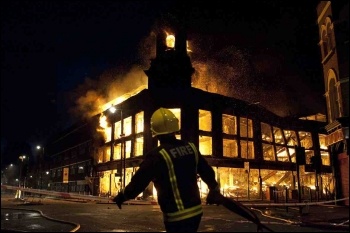
“Criminality pure and simple,” David Cameron calls this week’s riots, and it “has to be confronted and defeated”. There’s nothing pure or simple about the events of this week. You wonder why he bothered to fly home from his Tuscan holiday if that’s all he learned from his urgently convened Cobra meeting. And if the assembled parliamentarians are going to spend their recalled session on Thursday wringing their hands and deploring and vowing to punish the bad, nothing will have been achieved.
Wiser old heads might remind the shocked ministers and would-be ministers that you can’t make people good by threatening, hectoring or even legislating. People will be good if they care to be and if it seems worth their while. It can help if you treat them in the first place as if they might have a capacity to be good. But since it came to office, the coalition government has appeared to have no good word for the most disadvantaged members of society. Denounced as spongers, shirkers and benefit cheats, they have seen their meagre support systems whittled away by cuts that seem targeted to do the most damage to the most damaged.
Unemployment is inevitably created by the systematic starvation of support for public services, and youth unemployment in particular is epidemic. Local authorities have been obliged to close youth and other amenities. The government has abolished the Education Maintenance Allowance that supported poorer students and others in work-based learning schemes (what used to be called apprenticeships) and is imposing a high level of indebtedness on future recipients of higher education. At the same time, levels of unemployment benefit are being cut and tests of eligibility have been tightened to the point where, to many recipients, being given any state support or none seems to be a lottery.

Meanwhile, the media that the public depend upon for information and diversion are full of multimillionaire pop stars, actors and sports people flaunting themselves, not to mention stories of the eye-watering bonuses paid to those who work in banking and the city, many of whom seem to be over-rewarded whether they fail or succeed, whether they contribute to the general good or leech off it.
This infotainment is brought to the consumer courtesy of an increasingly ferocious campaign of advertising and promotion that instructs those consumers hundreds of times a day that they are somehow mysteriously out of the loop if they don’t acquire this, that or the other product. If you don’t have the money to buy these things, the notion naturally grows that you may as well steal them or, in the opportunist field day granted by an urban riot, loot them. After all, the culture that the various media promote carries a wholly dehumanised, grasping, competitive, uncaring, devil-take-the-hindmost message. Loot and steal is what everybody does, however exalted. Why should any kid with no income and no prospects respect a society run by people who live in tax havens and ruthlessly destroy the planet for short-term gain? If that kid lived in east Africa, she’d be starving to death.

Many have asserted that the key to this week’s riots in London and elsewhere is the use among rioters of social networks and other internet devices. If so, society deserves it. The web can help in all sorts of way. A blithe discovery was an interview given by Nick Clegg to Sky News back in the run-up to the general election, in which he forecast that the policies that the Tories were proposing to implement in order to “clear up the economic mess” would cause rioting in the streets, just the policies that he now helps to implement. The piece can be found here
http://bit.ly/obvPOV
and, before Labour crows about it too much, that well-known, finger-on-the-pulse Labour frontbencher Tessa Jowell is seen pooh-poohing Clegg’s doom-predicting quite as disdainfully as David Cameron does. This is not a story from which any politician is going to be able to draw any comfort.

Nor will the police, who find themselves in a classic bind, damned if they hold fire, damned if they go in all guns blazing. On the first three nights, they were soon cast as the villains of the piece, the citizenry – especially those burned out of their homes and businesses -– demanding to know where the help was hiding. It’s widely suggested that the tactic of staying out of it – if that indeed is what it was – was a gesture to persuade the government to stop slashing police budgets. Tonight, with 16,000 head of cops on the streets of London alone and dozens of cities and towns cancelling police leave, the danger is that civilian heads will be broken and well-founded cries of over-kill will ensue and – worse – over-kill on the wrong night. Meanwhile, the cost of police and firefighters’ overtime will have to be added to the cost of the clear-up, insurance pay-outs and eventual rebuild: more that the public purse can ill afford.
And it’s unarguable that there is still an issue over police and race relations, especially in the capital. Afro-Caribbean, Asian and mixed-race youth still feel vulnerable to unfounded police suspicion and it’s not all paranoia. As a gay white man, I cannot say hand on heart that I feel completely relaxed and accepted around police officers and I’m sure ethnic minority people sense similar subtexts of – at best – indifference. There is still a Neanderthal culture in the police – white, straight, right-wing, god-fearing, angry, blokeish – and anyone who doesn’t fit in there feels it. With the best will in the world, there is still a great deal to be changed. Watch the currently repeating fly-on-the-wall Channel 4 series Coppers for evidence.

So this was the summer that the cities exploded. Truly, it’s been an eye-popping year, every week bringing fresh and unlooked-for astonishments. Much of that turmoil arises from a government feeling its way, with no clear grasp on how it wants Britain to be. Certainly, among the edifices going up in flames on Saturday, Sunday and Monday nights was Cameron’s vaunted Big Society. In opposition, he used to deploy the PR-speak phrase that Britain was “a broken society”. What is it now?
Monday, May 16, 2011
MAY the FORCE BE WITH YOU
I had thought that, depending on the hurdles thrown into the path of independents, I might put myself forward as a candidate for the elected office of county police commissioner next May. These functionaries have been dreamed up to replace local police authorities and supposedly to make the police more accountable.
I am not the only observer to suspect that what will happen in practice is that these roles will largely fall to party apparatchiks, thereby bringing police more directly under the control of government policy. This eventuality needs to be countered. However, the House of Lords last week put a spoke in the government’s plans by throwing out the clause of the justice bill that establishes the principle of elected commissioners. There will ensue a power struggle between the Lords and the Commons (which the latter will certainly win) but, if the government’s timetable is to be preserved, it shortens the time for preparation.
Below is a first draft of a stump speech I have been considering in case the elections do indeed go ahead and my circumstances do not prevent me from standing. I would welcome feedback.
 A custodian helmet of the Metropolitan police force
Ladies and gentlemen,
When did you last set eyes on a police officer? I don’t mean on television. Of course there are myriad cops on the box every night, some of them even British. The fictional ones, unbeatable detectives all, are apt to be so-called mavericks who bend the regulations but not in a way that practical people would disapprove because they get results. The real officers on the streets, most often seen on the news, usually look like paramilitaries and appear to be carrying out some brutal regime crackdown in some god-forsaken country, until you realise that they’re actually in London.
No, I mean a police officer in the flesh, traversing your community with a watchful, friendly eye, either on foot or in a squad car temporarily perched at some prominent vantage point. I mean a visible local law enforcement presence.
When I was a child in the 1950s, the “bobby on the beat” was a familiar neighbourhood figure, like the postman and the milkman, the newspaper boy and the rag-and-bone man. He –- there were some women but the vast majority were men – was reassuring but at the same time slightly menacing, gruff but indulgent, all-seeing and all-knowing. There was a saying back then: “if you want to know the time, ask a policeman”. It perfectly caught all the qualities that the public imagination invested in the police: approachability, reliability, flexibility, trustworthiness, public service.
The foot patrol policeman was an unmistakeable figure. He was so conspicuous in his elongated, dark blue pith helmet that was properly called a custodian helmet. Do they still wear those? Are you absolutely sure that you know the answer to that question?
 Dixon, an idealised uniformed copper
Of course, nobody advocates a return to the “Evenin’ all” world of long ago. Although, don’t forget that Dixon of Dick Green’s first manifestation was in a feature film of 1950 called The Blue Lamp in which he was shot at point-blank range by a rather unconvincing desperado played by Dirk Bogarde. PC George Dixon was brought back from the dead for the reassuring and cosy television series.
Community policing is not a service that most communities are presently aware of. The only time I have seen any officers in the small town near which we live was occasioned by a local councillor, puzzlingly elected under the banner of the BNP, coming to claim his seat at the town hall. There was a demonstration that drew the local television news cameras and a small but suitably angry crowd.
Another day, I went to the local police station to report a dangerously parked vehicle. The station was locked and I spoke inconclusively to someone through an intercom at the door. I have never passed by and seen any evidence that the building is occupied.
 Morse, an idealised television detective
Many factors have changed the culture of Britain’s streets but the absence of police officers is certainly one of those factors. I don’t think we ever used the word “mugging” in the 1950s. Crimes committed in broad daylight were outrageous enough to provoke comment. But the whole of society has altered profoundly since then. We routinely have about us items that are pretty expensive and desirable: gadgets and gizmos and jewellery worn routinely, not just on high days and holidays. Even sneakers get stolen while being worn on the pavement, a crime that peaked in the 1990s. You just couldn’t have credited footwear theft in the 1950s.
Back then, people thought nothing of walking to their destination. Shopping was done at a series of high street retailers, not at one huge hypermarket that can only be reached by car. But, apart from shopping, women were much less likely to be seen alone on the street, especially at night. In the 1950s, a woman entering a pub or a restaurant alone was liable to raise eyebrows. Now, women expect to be able to walk at any hour and in sometimes surprisingly provocative clothes without putting themselves at risk, yet the risk has greatly increased along with the provocation.
 Contemporary community policing
And the greatest difference, as everyone knows, is that children no longer go out to play. The possibility of a copper heaving into sight served a double psychological purpose – it kept the kids feeling safe and it made them think twice about getting into trouble.
It’s impossible to draw these kinds of comparison and not mention government cuts. This is not the place to argue a general case for cutting more slowly or for making cuts in different areas from the ones the government has chosen. Even so, I cannot resist remarking that if as much were spent on domestic policing as on attempting to police internal strife in other countries around the world, the crime and detection figures here would be greatly improved.
But any police commissioner worth his salt is bound to make funding a major concern and to use his position to put pressure on the Home Office and the Treasury to do everything possible to sustain front line policing. And not only front line either. It’s too tempting for politicians to make cheap points about back office waste but the police have many functions, duties and services that the public do not readily see but which make a difference in subtle, subtextual and far-reaching ways. Moreover, it behoves a useful commissioner to campaign for a reduction in red tape and bureaucratic regulation. Successive governments’ preoccupation with statistics and targets has done the police no favours.
 Younger every day
Most important of all, it seems to me, is that a police commissioner be free of party interest. Policing should not be a political football. No party has a monopoly on constructive policies concerning law enforcement. Indeed, I rather suggest that many thoughtful police officers believe that no party has any very practical and progressive policies on policing. That at any rate is my own view and I am proud to offer myself as someone who has never been compromised by membership of a political party. In this election, there are candidates who will be taking for granted the votes of those who support the party that has put them up for election. I suggest that their bias is of little benefit either to the force itself or to the public. An independent representative, able to draw his own independent conclusions from the evidence before him, is best able to wield the daunting but undoubted power that comes with this post.
But if the election of a candidate such as me might in some ways represent the worst nightmare of party politicians, it might also fill the chief constable with trepidation. It happens too often that reported and video-recorded behaviour by police officers falls well short of the standards the force publicly sets for itself, let alone the standards that the public have a right to expect. Let’s consider the case of the Melksham station sergeant who dragged a woman to a cell and then threw her to the ground, opening a wound on her face. It ought not to have taken a court case before that sergeant was dismissed the service. Indeed, it ought not to have taken the leaking of CCTV footage of the assault to the media for any enquiry to be conducted into the sergeant’s behaviour. The police have a duty of care for anyone in their custody, however abusive, awkward, uncooperative or unpredictable such people might be. “We will always treat you fairly with dignity and respect” says the national policing pledge and that must include everyone, even the guilty.
 Contemporary riot gear
On this as on many other disciplinary matters, the fact that the force – like the military and parliament – act as judge and jury only reinforces the public perception that they do everything possible to look after their own and to neutralise embarrassment. This is plainly unacceptable and a police commissioner ought to involve himself with all such cases, taking as a given that each will be considered on its merits and that no attempt will be made to protect the good name of the police at the expense of the truth.
Some of the instinct to close ranks when civilians allege ill treatment or other sorts of wrongdoing clearly derives from a culture that has difficulty adapting to social change. Few can doubt that the police – like the military, the judiciary, the financial sector, professional sport and, certainly, parliament itself – have been slow to re-educate themselves out of an instinctive misogyny, racism, homophobia, ageism and cultural exclusivity that keep the predominant blokes feeling strong and safe. Sensitivity to difference has to be inculcated into recruits from the outset; eradicating age-old habits of attitude and behaviour in more senior officers may be even more challenging. But chief constables need to require such sensitivity and to crack down hard on all evidence of its lack.
 Kettling
It seems to me that one of the most fraught areas of policing is the relationship between uniformed officers and young members of the public. Adolescents and those in their early twenties require particular patience because they are not yet skilled in calibrating the impact of their behaviour. I do not suppose it is a pressing issue for this county, unless reinforcements are ever required in Bristol, but the conduct of police at demonstrations and in handling outbursts of rowdy and destructive behaviour is especially ticklish. Chief constables feel that they have found a useful tool in the new techniques of containment – what the media have dubbed kettling – but the indiscriminate nature of this method of control is deeply resented by those caught up by it. Operations that alienate the public may be useful in the short term but can have consequences for the way that the authorities are perceived by a whole generation. I acknowledge that, in crowd control situations, the police are usually on a hiding to nothing. But more strategic planning is required, along with a greater readiness to be self-critical.
Something that does drive a wedge between the police and young people in this county is the long-standing policy of picking up and charging people in possession of small quantities of recreational drugs, plainly acquired for personal use. I don’t know if this is a policy dictated by a desire to swell the numbers of convictions. I do know that it sows discontent that in small ways and – who knows? – perhaps in large ways may come to be a matter of regret.
The responses to drunkenness in town centres is also a matter that requires thoughtful anticipation. For my part, I would argue that the police (and paramedics too) should be permitted to charge fixed fees when they are obliged to tend to people rendered incapable by their own stupidity, especially if such people are accommodated in cells overnight. Charging a fee would help to ensure that the duty of care be carried out properly – after all, someone who has paid a fee is entitled to complain if he has not received the due service.
There are, as you can see, many aspects of policing that deserve renewed consideration and in which a police commissioner ought to be intimately involved. I undertake to you that, if elected, I shall make my presence felt without fear or favour towards anyone save you, the electorate, in face of whom all public servants, elected, uniformed or appointed, should quake.
And, by the by, the question of custodian helmets is not simple. Some forces do seem to be phasing them out. The requirement that they be worn has generally declined. I call that a pity. There’s much to be said for distinctiveness.
I had thought that, depending on the hurdles thrown into the path of independents, I might put myself forward as a candidate for the elected office of county police commissioner next May. These functionaries have been dreamed up to replace local police authorities and supposedly to make the police more accountable.
I am not the only observer to suspect that what will happen in practice is that these roles will largely fall to party apparatchiks, thereby bringing police more directly under the control of government policy. This eventuality needs to be countered. However, the House of Lords last week put a spoke in the government’s plans by throwing out the clause of the justice bill that establishes the principle of elected commissioners. There will ensue a power struggle between the Lords and the Commons (which the latter will certainly win) but, if the government’s timetable is to be preserved, it shortens the time for preparation.
Below is a first draft of a stump speech I have been considering in case the elections do indeed go ahead and my circumstances do not prevent me from standing. I would welcome feedback.

Ladies and gentlemen,
When did you last set eyes on a police officer? I don’t mean on television. Of course there are myriad cops on the box every night, some of them even British. The fictional ones, unbeatable detectives all, are apt to be so-called mavericks who bend the regulations but not in a way that practical people would disapprove because they get results. The real officers on the streets, most often seen on the news, usually look like paramilitaries and appear to be carrying out some brutal regime crackdown in some god-forsaken country, until you realise that they’re actually in London.
No, I mean a police officer in the flesh, traversing your community with a watchful, friendly eye, either on foot or in a squad car temporarily perched at some prominent vantage point. I mean a visible local law enforcement presence.
When I was a child in the 1950s, the “bobby on the beat” was a familiar neighbourhood figure, like the postman and the milkman, the newspaper boy and the rag-and-bone man. He –- there were some women but the vast majority were men – was reassuring but at the same time slightly menacing, gruff but indulgent, all-seeing and all-knowing. There was a saying back then: “if you want to know the time, ask a policeman”. It perfectly caught all the qualities that the public imagination invested in the police: approachability, reliability, flexibility, trustworthiness, public service.
The foot patrol policeman was an unmistakeable figure. He was so conspicuous in his elongated, dark blue pith helmet that was properly called a custodian helmet. Do they still wear those? Are you absolutely sure that you know the answer to that question?

Of course, nobody advocates a return to the “Evenin’ all” world of long ago. Although, don’t forget that Dixon of Dick Green’s first manifestation was in a feature film of 1950 called The Blue Lamp in which he was shot at point-blank range by a rather unconvincing desperado played by Dirk Bogarde. PC George Dixon was brought back from the dead for the reassuring and cosy television series.
Community policing is not a service that most communities are presently aware of. The only time I have seen any officers in the small town near which we live was occasioned by a local councillor, puzzlingly elected under the banner of the BNP, coming to claim his seat at the town hall. There was a demonstration that drew the local television news cameras and a small but suitably angry crowd.
Another day, I went to the local police station to report a dangerously parked vehicle. The station was locked and I spoke inconclusively to someone through an intercom at the door. I have never passed by and seen any evidence that the building is occupied.

Many factors have changed the culture of Britain’s streets but the absence of police officers is certainly one of those factors. I don’t think we ever used the word “mugging” in the 1950s. Crimes committed in broad daylight were outrageous enough to provoke comment. But the whole of society has altered profoundly since then. We routinely have about us items that are pretty expensive and desirable: gadgets and gizmos and jewellery worn routinely, not just on high days and holidays. Even sneakers get stolen while being worn on the pavement, a crime that peaked in the 1990s. You just couldn’t have credited footwear theft in the 1950s.
Back then, people thought nothing of walking to their destination. Shopping was done at a series of high street retailers, not at one huge hypermarket that can only be reached by car. But, apart from shopping, women were much less likely to be seen alone on the street, especially at night. In the 1950s, a woman entering a pub or a restaurant alone was liable to raise eyebrows. Now, women expect to be able to walk at any hour and in sometimes surprisingly provocative clothes without putting themselves at risk, yet the risk has greatly increased along with the provocation.

And the greatest difference, as everyone knows, is that children no longer go out to play. The possibility of a copper heaving into sight served a double psychological purpose – it kept the kids feeling safe and it made them think twice about getting into trouble.
It’s impossible to draw these kinds of comparison and not mention government cuts. This is not the place to argue a general case for cutting more slowly or for making cuts in different areas from the ones the government has chosen. Even so, I cannot resist remarking that if as much were spent on domestic policing as on attempting to police internal strife in other countries around the world, the crime and detection figures here would be greatly improved.
But any police commissioner worth his salt is bound to make funding a major concern and to use his position to put pressure on the Home Office and the Treasury to do everything possible to sustain front line policing. And not only front line either. It’s too tempting for politicians to make cheap points about back office waste but the police have many functions, duties and services that the public do not readily see but which make a difference in subtle, subtextual and far-reaching ways. Moreover, it behoves a useful commissioner to campaign for a reduction in red tape and bureaucratic regulation. Successive governments’ preoccupation with statistics and targets has done the police no favours.

Most important of all, it seems to me, is that a police commissioner be free of party interest. Policing should not be a political football. No party has a monopoly on constructive policies concerning law enforcement. Indeed, I rather suggest that many thoughtful police officers believe that no party has any very practical and progressive policies on policing. That at any rate is my own view and I am proud to offer myself as someone who has never been compromised by membership of a political party. In this election, there are candidates who will be taking for granted the votes of those who support the party that has put them up for election. I suggest that their bias is of little benefit either to the force itself or to the public. An independent representative, able to draw his own independent conclusions from the evidence before him, is best able to wield the daunting but undoubted power that comes with this post.
But if the election of a candidate such as me might in some ways represent the worst nightmare of party politicians, it might also fill the chief constable with trepidation. It happens too often that reported and video-recorded behaviour by police officers falls well short of the standards the force publicly sets for itself, let alone the standards that the public have a right to expect. Let’s consider the case of the Melksham station sergeant who dragged a woman to a cell and then threw her to the ground, opening a wound on her face. It ought not to have taken a court case before that sergeant was dismissed the service. Indeed, it ought not to have taken the leaking of CCTV footage of the assault to the media for any enquiry to be conducted into the sergeant’s behaviour. The police have a duty of care for anyone in their custody, however abusive, awkward, uncooperative or unpredictable such people might be. “We will always treat you fairly with dignity and respect” says the national policing pledge and that must include everyone, even the guilty.

On this as on many other disciplinary matters, the fact that the force – like the military and parliament – act as judge and jury only reinforces the public perception that they do everything possible to look after their own and to neutralise embarrassment. This is plainly unacceptable and a police commissioner ought to involve himself with all such cases, taking as a given that each will be considered on its merits and that no attempt will be made to protect the good name of the police at the expense of the truth.
Some of the instinct to close ranks when civilians allege ill treatment or other sorts of wrongdoing clearly derives from a culture that has difficulty adapting to social change. Few can doubt that the police – like the military, the judiciary, the financial sector, professional sport and, certainly, parliament itself – have been slow to re-educate themselves out of an instinctive misogyny, racism, homophobia, ageism and cultural exclusivity that keep the predominant blokes feeling strong and safe. Sensitivity to difference has to be inculcated into recruits from the outset; eradicating age-old habits of attitude and behaviour in more senior officers may be even more challenging. But chief constables need to require such sensitivity and to crack down hard on all evidence of its lack.

It seems to me that one of the most fraught areas of policing is the relationship between uniformed officers and young members of the public. Adolescents and those in their early twenties require particular patience because they are not yet skilled in calibrating the impact of their behaviour. I do not suppose it is a pressing issue for this county, unless reinforcements are ever required in Bristol, but the conduct of police at demonstrations and in handling outbursts of rowdy and destructive behaviour is especially ticklish. Chief constables feel that they have found a useful tool in the new techniques of containment – what the media have dubbed kettling – but the indiscriminate nature of this method of control is deeply resented by those caught up by it. Operations that alienate the public may be useful in the short term but can have consequences for the way that the authorities are perceived by a whole generation. I acknowledge that, in crowd control situations, the police are usually on a hiding to nothing. But more strategic planning is required, along with a greater readiness to be self-critical.
Something that does drive a wedge between the police and young people in this county is the long-standing policy of picking up and charging people in possession of small quantities of recreational drugs, plainly acquired for personal use. I don’t know if this is a policy dictated by a desire to swell the numbers of convictions. I do know that it sows discontent that in small ways and – who knows? – perhaps in large ways may come to be a matter of regret.
The responses to drunkenness in town centres is also a matter that requires thoughtful anticipation. For my part, I would argue that the police (and paramedics too) should be permitted to charge fixed fees when they are obliged to tend to people rendered incapable by their own stupidity, especially if such people are accommodated in cells overnight. Charging a fee would help to ensure that the duty of care be carried out properly – after all, someone who has paid a fee is entitled to complain if he has not received the due service.
There are, as you can see, many aspects of policing that deserve renewed consideration and in which a police commissioner ought to be intimately involved. I undertake to you that, if elected, I shall make my presence felt without fear or favour towards anyone save you, the electorate, in face of whom all public servants, elected, uniformed or appointed, should quake.
And, by the by, the question of custodian helmets is not simple. Some forces do seem to be phasing them out. The requirement that they be worn has generally declined. I call that a pity. There’s much to be said for distinctiveness.
Saturday, November 20, 2010
AH, THOSE REVOLTING STUDENTS
I come belatedly to the matter of the anti-tuition-fee demonstration, having passed a very busy and rather fraught ten days absorbed in other matters. Expressions of common sense, I maintain, know no sell-by date, however. How depressingly familiar was the reaction to the generally rather heartening expression of defiance that was the raison d’être of this march. All the politicians and pundits immediately weighed in with a sustained bleat about “the violence”. What violence? There was some damage but that’s not the same thing as violence.
On a typical Friday or Saturday night in many a British city, as much damage is routinely meted out to blameless town centres by drunks. Football derbies usually spark comparable damage and bloody internecine fights as well. Pop stars and other culturally important figures regularly turn over hotel suites without honourable members getting up on their hind legs and high horses.
 You might scorn the language of the modern student, but I have a slide, taken after a 1968 demo, of a slogan spray-painted onto a public monument: "Fuck the Fuzz"
When fisticuffs break out at demos, the police certainly give as good as they get, as may be gauged by respective casualty figures. I would suggest that, over the last (say) half century, more civilians than police have lost their lives during street mêlées in Britain.
“The violence” is a convenient means by which the government can divert attention from what the demonstration was about. The suggestion is made that somehow the cause is rendered null by the “deplorable” behaviour of the marchers. The government found a second line of counter-attack with which to shrug off criticism in its scorn of Labour’s supposed lack of a coherent policy on financing higher education. It’s true that Ed Miliband – still away on paternity leave – has yet to reconcile a variety of views in the shadow cabinet but if there were any placards on the march aimed at Labour’s prevarications and procrastinations, I didn’t see them.
 Demonstrators on the Millbank roof, from where the fire extinguisher was thrown
It’s doubly dreary but wholly par for the course that Labour spokespeople should obediently do the government’s work for it by just as loudly deploring “the violence”. If the Labour party sees any merit in identifying itself with the cause of universities that encourage the best brains to enrol and benefit all of society rather than supporting a system that beggars bright kids for years into the future and denies society the opportunity to make the best of its best talent, it should deploy more constructive arguments. Of course no sensible person advocates “violence” – and no legislator or would-be legislator can afford to do so – but the damage done to Tory HQ at Millbank was reparable and has doubtless been repaired by now. The damage that government is doing to the education system will take years to put right and is irreparable for the generations of students directly affected.
 A triumphant demonstrator breaches the Tories' Millbank HQ
And what do Labour and the pundits – especially the latter – say to the argument that if a march passes off without incident, it fails to generate what Margaret Thatcher famously called “the oxygen of publicity”? Having a coherent argument, being earnest about it and carrying placards with pithy slogans doesn’t get you onto the television news or into the headlines. Trashing buildings does. It’s always a fine judgment whether breaking windows will achieve more gain in overall publicity for the cause than loss in alienation from the “violence”. What would Labour advise?
The idiot who chucked a fire extinguisher from the roof of Millbank onto police below is not the yardstick for measuring the merit of the demonstration. He’s lucky no one below was killed. But there was a highly pertinent letter about him in today’s Guardian: “The masked thug seen dropping a fire extinguisher from a rooftop near police below need not worry – surely, after investigations lasting more than a year, the CPS will go on to rule that there is no realistic prospect of a conviction. Or have I misunderstood the way these things work?”

 Michael Gove and David Willetts: the government clearly equates education policy with good looks
Adjacent to this beautifully turned letter is another on a related topic: “So the policeman who injured a woman in a cell wins an appeal. It seems the door was to blame as usual”. This refers to the Melksham station sergeant who dragged a drunken woman across the floor of the station reception area and flung her into the cells. The appeal court judge said that he was satisfied that the cop “did not intend” to throw her into the cell. But the world has seen the incident on CCTV and can doubtless watch it time after time on YouTube; we know for sure that he intended to throw her into the cell. It wasn’t in any way inadvertent.
 Tariq Ali was a star of civil disobedience in the days before celebrity culture
That the courts favour the police is not news. But it’s useful to be reminded occasionally that they favour the police so blatantly. I have been pondering the possibility of standing myself for election in one of these police commissioner roles that the government has decreed will come into being and be locally elected. I think I might be a good person to do such a job: I’d be both the force’s and the government’s worst nightmare, relentlessly unforgiving of police malfeasance and the investigation of it by favourable commissions and judges but equally unforgiving of governmental starvation of funds for the policing functions to be effectively carried through. The Melksham police, were I to be elected, would – lord help them – come under my purview. I would want that station sergeant publicly flogged.
 Grosvenor Square 1968: they tried to control us with horses then but we came armed with marbles to roll under their hooves
During his recent trip to China. David Cameron revealingly suggested to local students that those of them aspiring to pursue their studies at British universities might find themselves financially penalised not quite as brutally as native students. It was instructive to see that his and his team’s constant wearing of Remembrance Day poppies while visiting a nation whose relationship with opium is, to put it delicately, complex was not the only heedless step that the PM took into a bear trap. Now that Cameron is safely home, the Home Office has revealed that a large part of its crude policy to cut the rate of immigration into Britain will be achieved by hugely stemming the rate of student visas issued to suitably qualified students from overseas. The coalition government is gathering a reputation across the world for speaking with a forked tongue. The young, who are the most concerned with the matters aired here, are the least likely to forgive such foolhardiness.
I come belatedly to the matter of the anti-tuition-fee demonstration, having passed a very busy and rather fraught ten days absorbed in other matters. Expressions of common sense, I maintain, know no sell-by date, however. How depressingly familiar was the reaction to the generally rather heartening expression of defiance that was the raison d’être of this march. All the politicians and pundits immediately weighed in with a sustained bleat about “the violence”. What violence? There was some damage but that’s not the same thing as violence.
On a typical Friday or Saturday night in many a British city, as much damage is routinely meted out to blameless town centres by drunks. Football derbies usually spark comparable damage and bloody internecine fights as well. Pop stars and other culturally important figures regularly turn over hotel suites without honourable members getting up on their hind legs and high horses.
 You might scorn the language of the modern student, but I have a slide, taken after a 1968 demo, of a slogan spray-painted onto a public monument: "Fuck the Fuzz"
 When fisticuffs break out at demos, the police certainly give as good as they get, as may be gauged by respective casualty figures. I would suggest that, over the last (say) half century, more civilians than police have lost their lives during street mêlées in Britain.
“The violence” is a convenient means by which the government can divert attention from what the demonstration was about. The suggestion is made that somehow the cause is rendered null by the “deplorable” behaviour of the marchers. The government found a second line of counter-attack with which to shrug off criticism in its scorn of Labour’s supposed lack of a coherent policy on financing higher education. It’s true that Ed Miliband – still away on paternity leave – has yet to reconcile a variety of views in the shadow cabinet but if there were any placards on the march aimed at Labour’s prevarications and procrastinations, I didn’t see them.
 Demonstrators on the Millbank roof, from where the fire extinguisher was thrown
It’s doubly dreary but wholly par for the course that Labour spokespeople should obediently do the government’s work for it by just as loudly deploring “the violence”. If the Labour party sees any merit in identifying itself with the cause of universities that encourage the best brains to enrol and benefit all of society rather than supporting a system that beggars bright kids for years into the future and denies society the opportunity to make the best of its best talent, it should deploy more constructive arguments. Of course no sensible person advocates “violence” – and no legislator or would-be legislator can afford to do so – but the damage done to Tory HQ at Millbank was reparable and has doubtless been repaired by now. The damage that government is doing to the education system will take years to put right and is irreparable for the generations of students directly affected.
 A triumphant demonstrator breaches the Tories' Millbank HQ
And what do Labour and the pundits – especially the latter – say to the argument that if a march passes off without incident, it fails to generate what Margaret Thatcher famously called “the oxygen of publicity”? Having a coherent argument, being earnest about it and carrying placards with pithy slogans doesn’t get you onto the television news or into the headlines. Trashing buildings does. It’s always a fine judgment whether breaking windows will achieve more gain in overall publicity for the cause than loss in alienation from the “violence”. What would Labour advise?
The idiot who chucked a fire extinguisher from the roof of Millbank onto police below is not the yardstick for measuring the merit of the demonstration. He’s lucky no one below was killed. But there was a highly pertinent letter about him in today’s Guardian: “The masked thug seen dropping a fire extinguisher from a rooftop near police below need not worry – surely, after investigations lasting more than a year, the CPS will go on to rule that there is no realistic prospect of a conviction. Or have I misunderstood the way these things work?”

 Michael Gove and David Willetts: the government clearly equates education policy with good looks
Adjacent to this beautifully turned letter is another on a related topic: “So the policeman who injured a woman in a cell wins an appeal. It seems the door was to blame as usual”. This refers to the Melksham station sergeant who dragged a drunken woman across the floor of the station reception area and flung her into the cells. The appeal court judge said that he was satisfied that the cop “did not intend” to throw her into the cell. But the world has seen the incident on CCTV and can doubtless watch it time after time on YouTube; we know for sure that he intended to throw her into the cell. It wasn’t in any way inadvertent.
 Tariq Ali was a star of civil disobedience in the days before celebrity culture
That the courts favour the police is not news. But it’s useful to be reminded occasionally that they favour the police so blatantly. I have been pondering the possibility of standing myself for election in one of these police commissioner roles that the government has decreed will come into being and be locally elected. I think I might be a good person to do such a job: I’d be both the force’s and the government’s worst nightmare, relentlessly unforgiving of police malfeasance and the investigation of it by favourable commissions and judges but equally unforgiving of governmental starvation of funds for the policing functions to be effectively carried through. The Melksham police, were I to be elected, would – lord help them – come under my purview. I would want that station sergeant publicly flogged.
 Grosvenor Square 1968: they tried to control us with horses then but we came armed with marbles to roll under their hooves
During his recent trip to China. David Cameron revealingly suggested to local students that those of them aspiring to pursue their studies at British universities might find themselves financially penalised not quite as brutally as native students. It was instructive to see that his and his team’s constant wearing of Remembrance Day poppies while visiting a nation whose relationship with opium is, to put it delicately, complex was not the only heedless step that the PM took into a bear trap. Now that Cameron is safely home, the Home Office has revealed that a large part of its crude policy to cut the rate of immigration into Britain will be achieved by hugely stemming the rate of student visas issued to suitably qualified students from overseas. The coalition government is gathering a reputation across the world for speaking with a forked tongue. The young, who are the most concerned with the matters aired here, are the least likely to forgive such foolhardiness.
Monday, July 12, 2010
YOUR FIFTEEN MINUTES ARE UP
Raoul Moat: it’s a name for a character in a comic novel, isn’t it. Perhaps one by David Lodge or Tom Sharpe. Come to that, so is Derrick Bird, especially spelt that way. Well, perhaps not now.
I tended to avoid coverage of Moat’s week on the lam in Northumberland, as far as I could. So I don’t know whether commentators were drawing clever parallels with Derrick Bird’s rampage through Cumbria last month. But somehow I doubt it. Bird is last month’s chip paper.
For my readers who do not or are not able to follow what now passes for news on television and radio and in the papers in Britain, the tale is easily told. Raoul Moat, a bouncer and small-time criminal, was released from gaol at the turn of the month, despite giving every indication that he intended his former girlfriend no good. He promptly shot and wounded her, shot and killed her new man (whom he believed to be a police officer), shot and gravely wounded a traffic policeman, went to ground for a week and was cornered for some six hours at the end of which he fatally shot himself.

Moat in the media's eye
Derrick Bird, a taxi driver, shot and killed his twin brother, then led police on a frenzied chase across Cumbria, killing eleven more people, some of whom he knew, some evidently at random, before shooting himself dead. By a curious coincidence, Cumbria County Council has offices in the small town of Brampton. In Moat Street.
The media calculate that there is a strong public appetite for stories like this, particularly ones that are decently contained. Had Moat held off the police well into a second week, he would have lost his place as the lead story. As it was, he timed it nicely to allow the result of the World Cup final to become tonight’s pressing report. His death almost closes down his news value, save for the fact that his brother is now giving the media an extraordinarily fanciful account of what he reckons took place in Moat’s last hours, though of course he wasn’t there.
Such stories hold little interest for me. I’d much rather have proper reporting of the spy-swap negotiation, the details of the government’s botched cancellation of school rebuilding projects and other real news. I can’t be doing with the question upon which the media harp – “why did he do it?” – because I know perfectly well that if they essay an answer it will be of the most banal kind, psychology got out of a total ignorance of either the particular circumstances of the case or the accumulated literature of psychopathology.
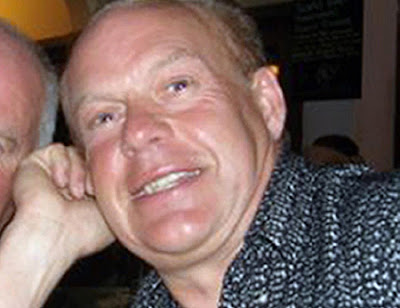
Derrick didn't get to do bird
During the days and days of coverage that succeeded Bird’s killing spree and death, BBC reporters several times observed in so many words that what the residents of Whitehaven most fervently desired was for the media circus to go away. But as so often when they talk of the media, they mysteriously exclude themselves from it, as though nobody in their right mind could possibly object to several BBC camera crews recording everything that moved, researchers collecting endless pointless vox pops in the street and a succession of senior correspondents doing grave think pieces to camera. Clearly, the BBC reporters implied, what the good folk of Cumbria really didn’t want was tabloid reporters trying to work up something salacious. I suspect that the BBC and other television news outfits rubber-necking on the assumed behalf of the nation was no less unwelcome.
What makes one situation a major candidate for a nightly fiesta of “human interest” overkill and another only worth a paragraph in a weekly local newspaper? There were 648 homicides in England and Wales in the twelve months to March 2009 (the figure for the following twelve months is due out this week). Interestingly, only 38 of them were shootings, the preferred method of Bird and Moat.
Meanwhile, the child murder rate runs at more than fifty per year but only a very few receive the attention accorded to Peter Connolly – “Baby P”. No one knows how many children go missing each year – the definition of “missing” is elusive and the police and other authorities have difficulty amassing reliable statistics – but there cannot be much doubt that the coverage accorded to Madeleine McCann in the first weeks of her alleged disappearance was vastly more extensive than that lavished on any before or since. Without belittling the ordeal of the McCanns, there was clearly a certain iconography about the case of their child that commended itself to the media, from the relatively exotic holiday setting to Mrs McCann’s gambit in always carrying her daughter’s “favourite” toy. Kate and Gerry McCann were themselves highly skilful at keeping the story bubbling.

McCanny Scots
It’s debatable whether the McCanns exploited the media or vice versa, just as you can argue that, in such cases, the media is satisfying a public appetite or creating it. News professionals of my acquaintance have hung on every word of the Moat, Bird, Baby P and McCann stories, professionals for whom, you might think, the real substance of news was the playing out of the fates of the Con-Dem coalition, the Labour leadership, the Obama administration, the tottering rules of Sarkozy, Merkel and Berlusconi, the perilous government of Zimbabwe, the fractious coexistence between Russia and her former satellites, the defiant regimes in Jerusalem and Tehran and the still new, still scorned leadership in the European Union. I don’t mind admitting that those Shakespearean dramas engage me much more than the pitiful soap operas unfolding in picturesque little northern towns.
Raoul Moat: it’s a name for a character in a comic novel, isn’t it. Perhaps one by David Lodge or Tom Sharpe. Come to that, so is Derrick Bird, especially spelt that way. Well, perhaps not now.
I tended to avoid coverage of Moat’s week on the lam in Northumberland, as far as I could. So I don’t know whether commentators were drawing clever parallels with Derrick Bird’s rampage through Cumbria last month. But somehow I doubt it. Bird is last month’s chip paper.
For my readers who do not or are not able to follow what now passes for news on television and radio and in the papers in Britain, the tale is easily told. Raoul Moat, a bouncer and small-time criminal, was released from gaol at the turn of the month, despite giving every indication that he intended his former girlfriend no good. He promptly shot and wounded her, shot and killed her new man (whom he believed to be a police officer), shot and gravely wounded a traffic policeman, went to ground for a week and was cornered for some six hours at the end of which he fatally shot himself.

Moat in the media's eye
Derrick Bird, a taxi driver, shot and killed his twin brother, then led police on a frenzied chase across Cumbria, killing eleven more people, some of whom he knew, some evidently at random, before shooting himself dead. By a curious coincidence, Cumbria County Council has offices in the small town of Brampton. In Moat Street.
The media calculate that there is a strong public appetite for stories like this, particularly ones that are decently contained. Had Moat held off the police well into a second week, he would have lost his place as the lead story. As it was, he timed it nicely to allow the result of the World Cup final to become tonight’s pressing report. His death almost closes down his news value, save for the fact that his brother is now giving the media an extraordinarily fanciful account of what he reckons took place in Moat’s last hours, though of course he wasn’t there.
Such stories hold little interest for me. I’d much rather have proper reporting of the spy-swap negotiation, the details of the government’s botched cancellation of school rebuilding projects and other real news. I can’t be doing with the question upon which the media harp – “why did he do it?” – because I know perfectly well that if they essay an answer it will be of the most banal kind, psychology got out of a total ignorance of either the particular circumstances of the case or the accumulated literature of psychopathology.

Derrick didn't get to do bird
During the days and days of coverage that succeeded Bird’s killing spree and death, BBC reporters several times observed in so many words that what the residents of Whitehaven most fervently desired was for the media circus to go away. But as so often when they talk of the media, they mysteriously exclude themselves from it, as though nobody in their right mind could possibly object to several BBC camera crews recording everything that moved, researchers collecting endless pointless vox pops in the street and a succession of senior correspondents doing grave think pieces to camera. Clearly, the BBC reporters implied, what the good folk of Cumbria really didn’t want was tabloid reporters trying to work up something salacious. I suspect that the BBC and other television news outfits rubber-necking on the assumed behalf of the nation was no less unwelcome.
What makes one situation a major candidate for a nightly fiesta of “human interest” overkill and another only worth a paragraph in a weekly local newspaper? There were 648 homicides in England and Wales in the twelve months to March 2009 (the figure for the following twelve months is due out this week). Interestingly, only 38 of them were shootings, the preferred method of Bird and Moat.
Meanwhile, the child murder rate runs at more than fifty per year but only a very few receive the attention accorded to Peter Connolly – “Baby P”. No one knows how many children go missing each year – the definition of “missing” is elusive and the police and other authorities have difficulty amassing reliable statistics – but there cannot be much doubt that the coverage accorded to Madeleine McCann in the first weeks of her alleged disappearance was vastly more extensive than that lavished on any before or since. Without belittling the ordeal of the McCanns, there was clearly a certain iconography about the case of their child that commended itself to the media, from the relatively exotic holiday setting to Mrs McCann’s gambit in always carrying her daughter’s “favourite” toy. Kate and Gerry McCann were themselves highly skilful at keeping the story bubbling.

McCanny Scots
It’s debatable whether the McCanns exploited the media or vice versa, just as you can argue that, in such cases, the media is satisfying a public appetite or creating it. News professionals of my acquaintance have hung on every word of the Moat, Bird, Baby P and McCann stories, professionals for whom, you might think, the real substance of news was the playing out of the fates of the Con-Dem coalition, the Labour leadership, the Obama administration, the tottering rules of Sarkozy, Merkel and Berlusconi, the perilous government of Zimbabwe, the fractious coexistence between Russia and her former satellites, the defiant regimes in Jerusalem and Tehran and the still new, still scorned leadership in the European Union. I don’t mind admitting that those Shakespearean dramas engage me much more than the pitiful soap operas unfolding in picturesque little northern towns.
Subscribe to:
Posts (Atom)

