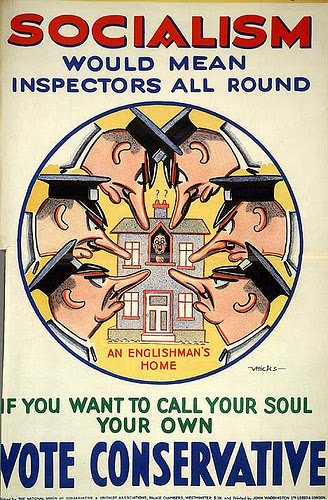
LABOUR and PREJUDICE
This is an expanded version of a paper I presented to the Warminster Constituency Labour Party on June 18th 2016, following a screen of a Ken Loach film:
I’m a writer rather than a speaker and better, I believe, at writing than extemporising so, inevitably, I have written a paper. I hope you will bear with me.
It wasn’t difficult to anticipate that it would be tough to try to follow a movie by Ken Loach – who, by the way, turned 80 yesterday – especially one as penetrating as The Spirit of ’45. I was born in 1947, two years and six days before that young upstart Jeremy Corbyn. This means that I spent the first four years of my life under the only Socialist government this nation has ever enjoyed. I hope to live long enough to die under the next one.
The first nine months of Jeremy Corbyn’s leadership have seen the party and the media dwell on the same academic questions that arose when he narrowly secured his nomination as a candidate, a year ago on Wednesday last. Is a Corbyn-led party electable? Shouldn’t it have a huge opinion poll lead by now? If the next election is to be in 2020, the answers to the questions are respectively: electable? yes of course; poll lead? no, it doesn’t signify. Commentators and party dissidents talk as if the manifesto is about to be launched and the election is in six weeks. Well, given the uncertainty surrounding the EU referendum vote next Thursday, perhaps it is. The political climate can turn on a sixpence. The events in Birstall last Thursday demonstrated that only too appallingly. But it’s always the case that politics is fluid. The truest thing Harold Wilson said – perhaps the only completely truthful thing he ever said – was “a week in politics is a long time”. Six weeks is an age. Four years is a very aeon.
So even if the next election comes in the next three or four months, trying to anticipate its outcome would be a fool’s errand, particularly considering the unusual circumstances. Who would be the Tory leader? Would the Tories implode? Would Labour implode? Would UKIP start to fade, its main ambition achieved? Would the Liberal Democrats decline further? Has the SNP bubble burst?
Whenever it comes, I believe there is one man who could wreck Labour’s chances more thoroughly than any other. His surname begins with C and he was barely known outside Westminster until last year. His name is Lynton Crosby. Australian by birth and a professional consultant to cigarette manufacturers and private healthcare providers, Sir Lynton (as he now is) was Cameron’s chief strategist at the 2015 general election. His fingerprints are all over the government’s and media’s attempts to undermine Jeremy Corbyn’s leadership of the Labour Party.
Crosby’s useful allies are the Tory press. He has proved brilliant at feeding the broadcast media, especially the BBC, as it runs scared of John Whittingdale’s plans for it. But he finds his most willing creatures on the backbenches of the parliamentary Labour Party. These dupes he plays with extraordinary skill.
Lynton Crosby: The Road to Utopia
A good example of Crosby’s art was carried out with exquisite timing ten days before the local elections last month. At some point, Crosby’s office had unearthed a couple of tweets by a Labour MP, newly elected in May 2015. The tweets were written in 2014 by Naz Shah, a Moslem who now sits for the Bradford West constituency and since this February had been Parliamentary Private Secretary to the Shadow Chancellor, John McDonnell. Crosby’s office passed the tweets to Paul Staines, who blogs under the title Guido Fawkes. Staines made a story of them, a media furore ensued and Shah was held to typify the obvious anti-semitism of Corbyn’s take-over of Labour. She stood down from her post and was then suspended by the Party.
Well, I expect you’ll all have your own ideas about the matter, because you’ll all have read the offending tweets. Yes? No? Anybody read them? You see, that is a measure of Crosby’s triumph. Everybody readily accepted that a soon-to-be MP was an anti-semite – well, she’s a Moslem so of course she is – and that Labour, particularly its loony left, is riddled with prejudice. No need actually to examine the facts.
Naz Shah: stepping down
For the record, then, here is what Shah posted. In July 2014, she simply quoted: “Hamas: We are a legitimate resistance movement”. That December, she retweeted another quote: “Hamas should be removed from terror list” and added the source “EU court ruling”. You perhaps notice that there is no mention of Israel, of Zionism or of Jews. It shouldn’t need stating that supporting Palestine is not of itself anti-semitic. There was also – and this was actually cited quite widely – a graphic that imagines Israel relocated to the American mid-west. Naz Shah did not dream this up herself. She took it from the blog of an American academic, Norman Finkelstein. As you may surmise from his name, Professor Finkelstein is Jewish, the son of two Shoah survivors. In collaboration with a Palestinian scholar, Finkelstein is preparing a book entitled How to Solve the Israel-Palestine Conflict, his twelfth on the subject. This provenance casts a rather different light on the map's intent, I venture.
The Guido Fawkes weblog did not disclose the background of the graphic. It did, however, in reference to the tweets declare that “Hamas is a proscribed terrorist organisation in the UK”. This is simply untrue. Unlike the US and the EU (whose court ruling about which Shah tweeted was, by the way, later overturned), the UK does not deem Hamas itself a terrorist organisation. Only its military wing, which is called Izz al-Din al-Qassem Brigades, appears on the proscribed list.
Finkelstein's graphic, the satiric intent of which he says would be widely understood in the States
Pretending to make no distinction between Hamas and guerrillas who proceed under its banner is a stance taken by many of those people who did the same with Sinn Féin and the Provisional IRA. Incidentally, there are two small Zionist organisations, Kach and Kahane Chai, that are not proscribed as terrorist in the UK but are so listed in the US and indeed in Israel. Avigdor Lieberman, who the other week was appointed Defence Minister in the most right-wing government Israel has ever produced, has been accused of former membership of Kach.
The row about Naz Shah boiled over with a characteristic intervention by Ken Livingstone who – in a gesture unacceptable in the present Labour Party – attempted to defend a colleague against unjust attacks. In a BBC London radio interview, Livingstone said: “Let’s remember when Hitler won his election in 1932, his policy then was that Jews should be moved to Israel. He was supporting Zionism”. There seem to be people who have a knee-jerk reaction to hearing the name of Hitler and who instinctively assume that the speaker must be anti-semitic. John Mann MP, who hounded Livingstone up a stairway with several camera crews conveniently available while Livingstone was trying to take part in an interview over the phone, is evidently one such. Mann compared Naz Shah to Adolf Eichmann and called the graphic of Israel transposed to the States “a chilling transportation policy”. Mann, who is being investigated for his expenses claims, is always ready to pour oil on water that is troubling for Corbyn.
The aforementioned Norman Finklestein told Peace News that Mann was “dragging the Nazi Holocaust through the mud for the sake of … petty jostling for power and position". He said that Livingstone “maybe wasn’t precise enough, and lacked nuance” but was “as accurate as might be expected from a politician speaking off the cuff”. No doubt Livingstone was alluding to the Haavara Agreement of 1933, made between the Nazis and the Zionists, which provided for the resettlement of some 60,000 German Jews in Palestine over the following six years. Nevertheless, Livingstone too was suspended from the Labour Party.
Professor Finkelstein
The very notion that the left is in any way anti-semitic has no merit. Jewish people have been wedded to Socialism from its very outset; indeed with Marx and Trotsky one could argue that Jews own Socialism. Among celebrated Jewish Socialists were and are Rosa Luxemburg, Harold Laski, Ernst Bloch, Harold Rosen, Walter Benjamin, Isaac Deutscher, Albert Einstein, Ernest Mandel, IF Stone, Manny Shinwell, Ian Mikardo, Sydney Silverman, Gloria Steinem and Bernie Sanders.
Jeremy Corbyn’s immediate predecessor as Party leader, Ed Miliband, was in my view often treated by the media in an implicitly anti-semitic fashion – his voice, his alleged weirdness, the notorious unflattering photograph of him eating a bacon sandwich. Most overt of all was the disgusting attack by the Daily Mail on his father Ralph, “the man who hated Britain”. Again, the subtext was about his status as a Jewish migrant. It counted for nothing that Miliband had served in the Royal Navy during World War II, whereas Peter Dacre, the father of the editor of the Mail, had avoided military service by pulling strings.
John Mann accosts Livingstone
Panic in the Labour Party accounted for several unjust, knee-jerk suspensions. Jackie Walker, a Momentum vice-chair, was temporarily suspended for writing about what she called “the African holocaust”. Walker has both Jewish and African ancestry and her partner is Jewish. Momentum, the pro-Corbyn pressure group set up by veteran Socialist Jon Lansmann (who is Jewish), is being cast as the hub of anti-semitism. A Momentum member, Rhea Wolfson, was prevented from standing for the Party’s National Executive Committee via a fix led by the notorious Blairite revisionist Jim Murphy who, in Wolfson’s enforced absence, attacked her as a “factionalist”. Wolfson was the sole Jewish candidate for an NEC seat but the Murphy-ites preferred to smother the notion that Momentum is anything other than anti-semitic.
Lynton Crosby’s Machiavellian manipulation of the media and of grateful anti-Corbyn Labour MPs duly prevented the party progressing quite as much as it might have hoped in the local elections, especially in seats where there is a strong Jewish presence. Labour and its true supporters need to be better prepared for the next stroke that Crosby pulls. Watch out for Corbyn being set up for the blame if the country votes to leave the EU.
The Tories have always known how to fight dirty. Not for nothing did Theresa May, when Tory chairman (as she chose to be known), dub it “the nasty party”. Labour plays into this because its own particular talent is for self-harming. It’s instructive to examine the internal party report by Jon Cruddas, Labour’s Future: Why Labour lost in 2015 and how it can win again. The issue of immigration is frequently mentioned by Cruddas who repeatedly observes that Labour has lost those voters whom he calls “socially conservative”, identifying UKIP as the main beneficiary. Cruddas accounts the socially conservative as people “who value family, work, fairness and their country” but he doesn’t explain what that means or whether everybody else is by contrast, homeless or living alone, feckless and unemployed, bent on unfairness and either anti-British or pro-globalist. What he doesn’t explore is what he thinks Labour should do about immigration. If the implication is that Labour should metamorphose into a racist party like UKIP, I suggest that it will cease to be the Labour Party.
In the last phase of the referendum campaign, the leavers have played immigration as their trump card, or perhaps I mean their Trump card. There are many arguments that can be advanced concerning immigration that are very different from anything Nigel Farage would say. To begin with, we are continually told by the government that unemployment is coming down. On Thursday, it was announced that the number of people in work is at a record high. Evidently, then, the present level of immigration is not having the effect that is often claimed: that “they’re taking our jobs”. Of more concern is the argument that the NHS is overstretched and that there is a housing shortage. However, immigration doesn’t cause these problems even if it exacerbates them, and there is irony in the unarguable fact that both the NHS and house-building are unusually dependent on immigrant workers to keep going.
Cruddas supports the fallen in Downing Street
The nettle that Labour must grasp about immigration is that its extent is an urban myth. Ask people what percentage of the population in their area was born abroad and even those who welcome multiculturalism pitch the number far higher than it actually is. Official figures take time to process and the most recent are 18 months old. The percentage of the UK population that is foreign-born was then put at 12.8.
But of course the spread is very varied. Immigration in London runs at about 37%. In Wales, where UKIP gained seats for the first time this year, the percentage is 5.9. And in the North-East, it’s only 5.2 (the lowest in the UK), yet that region has one of the highest rates of UKIP support (nearly as high as Wales), which suggests that unjustified, imaginary fear is a significant factor in opposition to immigration and is exploited by UKIP; by contrast the place where UKIP gets its lowest support, save for Scotland, is London. (The percentage in the South-West, by the way, is 8.4).
Labour must point this out to its potential supporters who bend their ears about being “swamped”, in Margaret Thatcher’s unlovely term. I have found when canvassing that a fruitful line to take, when told that immigration is a “problem”, is to ask how specifically it proves a problem for that householder. Vanishingly few in fact have anything to offer other than prejudicial generalities. It isn’t rocket science to shame them very gently and respectfully out of their more unjustified claims, because few want to commit to stating baldly to your face that they just don’t like Poles or West Indians or Pakistanis. And if they do, then frankly UKIP is welcome to them.
Let’s remember also that it is not so many weeks since the British public, appalled at images of drowned children, were pressurising the government to accept many more refugees than it had hitherto permitted, an issue about which Jo Cox was passionate. Again, on the doorsteps, it helps to remind sceptics that the countries from which millions are now fleeing are the very same that our planes have bombed: Syria, Libya, Afghanistan. We have a moral duty that voters gainsay only if they are prepared to admit that narrow self-interest is their only concern.
The Cruddas Report regurgitates the attitude that has been widely expressed in the Party and beyond concerning the 2015 general election: that it was “a crushing defeat”, “catastrophic”, “a calamity”. Even more apocalyptic language is used on specific aspects of the defeat: “a tsunami of aspirant voters sank Labour … Labour is on life support in England and Wales”. This stuff is deeply offensive to people who have relatives or friends who actually (rather than metaphorically) are on life support, who actually have lost family in a tsunami. Such overstatement is childish and reductive and it solves nothing.
People who bemoan Labour’s recent electoral performance are apt to point to Tony Blair as the unbeaten leader. Blair indeed won three elections but with steeply declining support. In 2005, Labour was down almost 4 million votes on its 1997 total and had sacrificed 63 parliamentary seats. Although it lost the 2010 election under Gordon Brown, Labour gained more than a million votes on its 2005 total and, in 2015 under Ed Miliband, the vote increased by a further million in England and Wales (a lot more than the Tories gained), though this was offset by losses in Scotland. But the decline in Scotland was not down to Miliband or Brown. It began under Blair.
At the 2015 election, there was a swing to the Tories of 0.8% but a swing to Labour of 1.5%. The major losses were sustained by the Liberal Democrats, against whom the swing was 15.2%. That might have favoured Labour, but the distribution of votes happened to help the Tories most significantly in seats, especially those held by Lib Dems; this was Lynton Crosby’s famed decapitation strategy.
Labour did well in the local elections last month but you would never guess as much from the media or indeed from the Labour Party. Jon Cruddas is a typical example. He seems to think that selective comparisons “prove” things. So, for instance, he writes that “The 5th of May elections were the first time that a new leadership – of either the Labour or Conservative Party – has not made substantial gains in its first year of opposition”. But even in the chart that Cruddas reproduces you can see that 1,680 council seats were gained altogether under Ed Milband’s leadership, nearly twice as many as the Tories had won from Labour over the previous eight years of local elections. In other words, to make further substantial gains would have been little short of miraculous. It would have been unrealistic even had the party been led by Liz Kendall, who had absurdly declared, before the elections, that Labour ought to gain 150 seats, whereas many pollsters were forecasting a loss of that magnitude. In the event, Labour’s net loss was 18 seats, a very commendable result from such a high base, while the Tories, who needed to make up ground, shed a further 48.
In any case, you could just as well say “The 5th of May elections were the first time a new leadership has had to fight elections when half the parliamentary party is refusing to serve, many of them are pumping out anti-leadership propaganda on a daily basis and the BBC is unabashedly pursuing a policy of undermining the new leadership and questioning its ability to survive”.
Even in Scotland, the Holyrood elections could be seen as encouraging. Everybody focused on Labour coming third behind the Tories; nobody mentioned that Labour won 24 seats. As it managed to hold only one seat in the general election a year earlier, I would have thought that could be reasonably described as a recovery.
My overarching point is that results can be talked up or talked down. The Tories habitually talk theirs up. Why could Labour not bring in a revolutionary notion and talk theirs up too? Instead, Labour is in the dismal, habitual game of finding fault with itself. Cruddas says that Labour has become a “toxic brand”. Thanks, Jon. People who have never read or even heard of your report will hear and remember that phrase and it will stick in their minds as an historic “fact”, rather like Theresa May’s “nasty party”, long after the occasion of its use is dead and buried.
The murdered MP, Jo Cox
Corbyn has admirably answered those who reckoned he is unelectable. Confidently predicted by everyone to be another disaster, even a loss to UKIP, the Oldham by-election last November was taken by Labour with a strikingly increased majority. Two days ago – did you know this? the media were widely silent about it – there was a by-election in Tooting, Sadiq Khan's former seat, where his majority in the general election was 2,842 on a 70% turnout. Not surprisingly, the turnout on Thursday was down to 42.5%. Yet despite that, Rosena Allin-Khan more than doubled the majority to 6,357. With a vote like that, Labour has absolutely no fear of a snap election. Don't anybody DARE suggest that Corbyn is unelectable.
Though you might think opinion polling a discredited industry, Cruddas relies heavily on it to do his thinking for him. So many of the propositions put by pollsters either beg the question or offer self-fulfilling prophecies: “I am most likely to vote for the political party that puts my financial interests first” and “I am most likely to vote for the political party that knows the importance of supporting businesses to grow”. Here’s one that they missed: “I am most likely to vote for the political party that doesn’t spend all its time, effort and resources on rubbishing its own history”.
The report takes it as axiomatic that the media is not going to change, so Labour must accept it as it is. This is wrong on two counts. Media is changing. The influence of the print media and broadcasting is in clear decline and that decline will accelerate. But even if the status quo remained, there is plenty Labour can do about it. The report also takes it as read that the electorate gets mixed signals from Labour and that Labour’s “message” doesn’t “get through”, but these things are not a reflection of Labour’s performance, they are the result of mediation by the media. Because the media spends a disproportionate amount of time disparaging and belittling Labour, the Party has a daily disadvantage compared to other parties. Labour needs to deal with this not by adopting policies that belong to the Tories or UKIP, as Cruddas implies, but by a) systematically opposing, questioning and countering every lie, distortion and sin of omission that appears in the media; b) by being much more aggressive towards media outlets and towards rival parties; c) by being much smarter in using social media and in investigating other routes to the electorate.
“To win again, Labour will need to develop a new political economy,” says Cruddas. This is a strange response to his finding that the electorate broadly don’t know what Labour stands for. Changing the policy doesn’t make it any more widely known. What Labour needs to do is to address the fact that the naked bias in the media prevents Labour from being heard and, more specifically, from being given an unbiased hearing.
Cruddas says that Labour has to be “listening to the people, trusting their judgment, letting them decide the destiny of their country”. Quite right. The people spoke pretty damned loudly and flooded into – and in many cases back into – the Party on the election of Corbyn, who has introduced more grassroots participation in the party than it has ever had. So why isn’t Cruddas cheer-leading for Corbyn. And if Labour had done extensive polling of its supporters before on the question of EU membership, it might well have found a majority in favour of leaving. So does Cruddas believe that should have been the policy? I doubt it: he supports Remain. It’s an old saying but a sound one, and to be remembered as we vote on Thursday: be careful what you wish for.
Showing posts with label immigration. Show all posts
Sunday, June 19, 2016
Thursday, June 16, 2016
The REFERENDUM – WHAT DO I KNOW?
Are you sitting comfortably, children? Then I’ll begin. All of you have, I am well aware, been eagerly awaiting definitive guidance on what to do about the referendum concerning our continued membership of the European Union next Thursday. Now is the time to grant you that guidance. There is still long enough for you to process it and take from it all that you need. So here it is. I shall not be adding to it and I shall not be taking questions. Anyone who wants to argue with any of it is naturally free to do so, but I shall not be engaging with such arguments. I am not in the business of explaining further to anyone who is incapable of paying attention. And I cannot be shamed or browbeaten into changing my analysis. But I warn you that the guidance is comprehensive and lengthy [3,000 words] and you will need to persevere if you have the interest.
The first thing you should know is exactly what the screenwriter William Goldman famously reported about Hollywood in his memoir of that town and that industry. It is so important and so fundamental that he wrote it in capitals and I shall do the same: NOBODY KNOWS ANYTHING [Adventures in the Screen Trade 1983 p39]. This is as true about politics in general as it is about movies in general, and it is as particularly true about the political future of Great Britain, in or out of the EU, as it is about Hollywood. So, as Goldman did, I shall write it again. NOBODY KNOWS ANYTHING.
Of course a great many people think that they know rather a lot, even that they know everything, but they are deluded. Pay them no heed. If you needed examples of how little they know about the political future, just ask them if, twelve months ago, they anticipated that Jeremy Corbyn would be leader of the Labour Party (he secured his nomination as a candidate a year ago yesterday) or that Donald Trump would be the Republican candidate for the presidency of the United States (he announced his candidature on this date in 2015). You would think, with these lollapaloozas of examples, such people would foreswear gravely informing us of what will happen. But they never learn, even though they all knew for a fact a year ago that either Manchester City or Chelsea would win the football premier league.
I am fond of quoting Harold Wilson’s maxim, so you may have noticed me quoting it before: “a week in politics is a long time”. It is true so often that what was the case on Wednesday is out of all consideration on Tuesday that you would think no one could possibly have the temerity to pontificate about what will happen in six months or two years or at the 2020 election. But they do so pontificate and with such hubristic self-satisfaction that you wonder how they get their pullovers over their heads. Well, pay no attention. Nobody knows what will happen. We could all be dead, even before the conference season is due to begin.
Now, many people – politicians, columnists, lay people and haunters of social media – have been telling us for weeks what “will” happen if we leave the EU. Some – fewer, but more than enough – have been telling us what “will” happen if we stay in the EU. By the laws of averages and probability, some of these statements will turn out to be reasonably correct, but only because shooting a lot of bullets greatly increases the chances of someone being hit, not because the speculators actually knew what would happen; because, as I say, NOBODY KNOWS ANYTHING.
In the Remain campaign, this presumption to prophesy the future if the Leave campaign prevails is characterised, reasonably enough and not only by the Leave campaign, as “scare-mongering”. It does seem very clearly designed to frighten people into voting to stay. Is it any wonder that such tactics do not commend themselves to everyone? As the opinion polls have suggested that the result may be becoming uncomfortably close, the Remain campaign have perhaps lost a little nerve or tried to soften their tactic. Thus the interview with the Prime Minister in The Observer (on Sunday last) generated the main headline: “Cameron: Brexit may put pensions at risk”. We are, then, entitled to assume simultaneously that leaving may NOT put pensions at risk. Would the newspaper have granted such a half-hearted headline to Boris Johnson and indeed would he have wanted it?
For most of the time, the Remain campaign have heavily leaned, dismayingly but not unexpectedly, on the doom scenario. They do it because it is easy and it does not require detailed exposition. From the first attempts by Harold Macmillan to secure British entry to what was then called the Common Market, pro-EU politicians have presented an unwavering attitude to the British electorate: “You just leave it to us; don’t you worry your pretty little head about all this European stuff; we know best”. That has been the demeanour of Edward Heath, Harold Wilson, Jeremy Thorpe, Roy Jenkins, John Smith, John Major, Tony Blair, Nick Clegg, Gordon Brown and now David Cameron. What the present Remain campaign has conspicuously lacked is any kind of exposition of how being in the EU is a good thing. There has been almost nothing constructive and upbeat about the campaign; the only message has been: stick with us or the sky will fall.
Actually, there has been an exception to this negativity. Some of you will grumble that yes, of course I WOULD say this; but I play it as I see it and this is what I see. The only British politician who has talked about the actual advantages of being in the EU is Jeremy Corbyn. He has also talked, sensibility, judiciously and in a measured way, about the disadvantages of being in the EU as he sees them. He has taken a mature and – as people say these days – nuanced line on the referendum. But this has been nothing like sufficient for the drama queens in the Tory Party and the media. Though Corbyn has made dozens of carefully worded speeches about the referendum, only three of them have been made public to my knowledge. Reporting on those three has concentrated on the notion, spread by Lynton Crosby for the Tories and by his allies on the Labour backbenches, that Corbyn is “lukewarm” on the EU, that he is a “closet leaver” and that Labour supporters don’t know where the Party stands. The conventional wisdom becomes that Corbyn has “failed to get his message across”. Well, as Marshall McLuhan proclaimed half a century ago, “the medium is the message”. If the media get in the way of the message because reporters and commentators are only interested in who’s up and who’s down (presently in the Tory Party), the politicians cannot be blamed if they find that they are shouting into a void. Crosby knows this very well; it is all part of his plan to try to shift the blame onto Labour if Cameron loses the referendum.
Apart from eschewing the scare-mongering and name-calling that his fellow Remain campaigners have daily indulged, Corbyn is (as far as I am aware) unique in presenting himself not as a politician only concerned with the British interest or even – and few enough of the strong advocates do this – as one properly ‘communautaire’ (which is to say concerned with the European interest), but as a citizen of the world. Corbyn wants to reform the EU so that it protects the planet and its working millions. He is not in this racket to ensure that all the bankers and asset-strippers and speculators stay in London. Jean Monnet, the founding father of the Common Market, and the Treaty of Rome, which enshrined the articles that set up the market, were dedicated to the self-interest of the nations that made up one of the two wealthiest continents in the world. In that way, the EU was inward- rather than outward-looking. It has continued to be so. That is why it has been found so wanting when challenged by the great crises of the 21st century: the ailing economies of the weakest EU members and the plight of millions of refugees. European governments have fretted that their domestic interests will suffer and this has led them to make destructive and stupid decisions. This stupidity and destructiveness is evidently endemic. The EU is in dire need of comprehensive reform; it may be beyond saving.
What is more, consensus politics is in retreat, not only in Europe but right across the world, as witnessed by the astonishing successes of both Donald Trump and Bernie Sanders in the presidential primaries in the States. It is perfectly conceivable that within four or five years there will be highly ideological governments of both right and left in several of the EU member states, not least in France and Germany. Moreover, it has been suggested with some credibility that the spread of Islam across France has been so vigorous that within thirty years there could be a Muslim administration in Paris. Certainly, the possibility of supporters of Sharia law having the means of raising objection to liberal social measures – let alone any say in the framing of EU regulation – gives pause and makes the aspiration of Turkey to join the EU something to be resisted. One can foresee a Europe ahead that Britain might wish it had left when it had the chance.
For me, the issue for Britain and the world this year that is far more important than the future of the EU is the future of the United Nations. A new Secretary-General must be appointed soon and the courage and nature of that appointee will have a profound impact on the geo-political future of the planet. The UN is desperately in need of reconfiguration; its charter, now 71 years old, is no longer fit for purpose. I’d like Corbyn to bend his mind to that issue. I’d like to hear his proposals.
The UN’s methodology has remained fixed and consistent through its history. By contrast, the Common Market/EU has changed radically. Some of its attempts to change have been tested against public opinion, as will happen in Britain next Thursday. But the grave warnings that this referendum will be irrevocable and “a once-in-a-lifetime decision” are not borne out by precedent.
In 2005, the French President, Jacques Chirac, called a referendum on the European Constitution. Three days later, the Dutch prime minister, Jan Peter Balkenende, held a similar referendum. Both the French and the Dutch voted against ratification. The EU reintroduced the greater part of the new constitution renamed as the Treaty of Lisbon which was passed by the member governments without offering it to any electorates, save that the Irish constitution required ratification. In the referendum duly held in June 2008, the Irish voted against the Treaty. The EU tinkered with the treaty and then the Taoiseach, Brian Cowen, asked the electorate to vote again 16 months after the rejection. This time the ratification was successful. In another part of the forest, the Scottish voted against independence in September 2014, but already there is strong pressure for a repeat of the referendum. So remember the venerable saying about politics: “never say never”.
Irrevocability is another of the ways in the Remain campaign paint a frightening picture of chaos and collapse if Britain leaves the EU. Some of those who will play some part in Britain’s future relations with Europe have added to the doom scenario. The European Council President, Donald Tusk, reckoned the other day that Britain leaving the EU “could be the beginning of the destruction of not only the EU but also Western political civilisation in its entirety”. Oh, for Pete’s sake. An hysteric should not be appointed to a position of power. Donald Tusk is as undisciplined a prophet as Donald Trump. The world needs grown-up, judicious, steady leaders, not fantasists.
We should give no credence to these prophesies of doom. It is true that we are entering new territory. Nobody has been here before. But the new dispensation, whether in or out, has still to be managed by real-life politicians who stand to gain nothing from making difficulties where none needs exist. The sun will still rise and wages will still have to be paid. If Britain leaves the EU, accommodations will be made, threats will be rescinded and a new relationship with Europe will be constructed. It will not be the world of the world; it may, however, be the end of David Cameron.
The argument is put that leaving will make for uncertainty and that business hates uncertainty. Business will have to pull itself together. The rest of us hate those businesses that avoid their share of taxation. Perhaps leaving the EU will expedite measures to enforce tax collection.
In any case, political uncertainty is fertile ground, testing the mettle of politicians and public alike. Only a fool – there are plenty of those – would predict who will occupy no 10 Downing Street at Christmas. I hope it will be Corbyn. Certainly, if the electorate vote to leave, the prospect of a Corbyn government unfettered by EU regulation would be a bracing one. We must hope that the Labour Party will allow him to rise to the occasion.
I might be positively attracted to the Leave campaign were it not peopled – without exception as far as I can see – by chancers and shysters of the kind one would resist accompanying up a single floor in a lift. Its leaders have made outrageous claims about the present cost of belonging to the EU and about what they would do with the cash that wouldn’t actually be saved, including suddenly presenting themselves as the saviours of the NHS, the break-up of which institution many of them have hitherto espoused.
And lately they have been playing their trump – or do I mean Trump? – card, the Farage joker: immigration. This is the main reason given for the perceived support for leaving the EU among Labour supporters. The issue is also frequently mentioned in the internal party report by Jon Cruddas, Labour’s Future: Why Labour lost in 2015 and how it can win again. Cruddas repeatedly observes that Labour has lost those voters whom he calls “socially conservative”, identifying UKIP as the main beneficiary. What he doesn’t explain is what he thinks Labour should do about immigration. If the implication is that Labour should metamorphose into a racist party like UKIP, I suggest that it will cease to be the Labour Party.
There are many arguments that can be advanced concerning immigration that are very different from anything Nigel Farage would say. To begin with, we are continually told that unemployment is coming down, that the number in work is higher than it has ever been. Evidently, then, the present level of immigration is not having the effect that is often claimed: that “they’re taking our jobs”. More convincing is the argument that the NHS is overstretched and that there is a housing shortage. However, immigration does not cause these problems even if it exacerbates them, and there is irony in the unarguable fact that both the NHS and house-building are unusually dependent on immigrant workers to keep going.
The nettle that Labour need to grasp about immigration is that its extent is an urban myth. Ask people what percentage of the population in their area was born abroad and even those who welcome multiculturalism pitch the number far higher than it actually is. The most recent official figures are 18 months old. The percentage of the UK population that is foreign-born was then put at 13.1. But of course the spread is very varied. Immigration in London runs at almost 40%. In Wales, where UKIP gained seats for the first time this year, the percentage is 2.3. And in the North-East, it’s only 1.6, yet that region has one of the highest rates of UKIP support (nearly as high as Wales), which suggests that unjustified fear is a significant factor in opposition to immigration; by contrast the place whether UKIP gets its lowest support, save for Scotland, is London.
Labour has to point this out to its supporters who bend their ears about being “swamped”, in Margaret Thatcher’s unlovely term. I have found when canvassing that a fruitful line to take, when told that immigration is a “problem”, is to ask how specifically it proves a problem for that householder. Vanishingly few in fact have anything to offer other than prejudicial generalities. It isn’t rocket science to shame them very gently and respectfully out of their more unjustified claims, because few want to commit to actually stating to your face that they just don’t like Poles or West Indians or Pakistanis. And if they do, then frankly UKIP is welcome to them.
Let us remember also that it is not so many weeks since the British public, appalled at images of drowned children, were pressurising the government to accept many more refugees than it had hitherto permitted. Again, on the doorsteps, it helps to remind sceptics that the countries from which millions are now fleeing are the very same that our planes have bombed: Syria, Libya, Afghanistan. We have a moral duty that voters gainsay only if they are prepared to admit that narrow self-interest is their only concern.
When it comes down to it, I think that it is only proper to bring moral considerations to the way one votes. Self-interest is not always a simple procedure. More often, benefit comes over the longer term by taking consideration of everyone’s interests, not just one’s own. I would have voted gladly to remain in the EU if I thought that anyone additional to Jeremy Corbyn presented a cogent and humanitarian reason to do so. But I have been profoundly dismayed at the antics of the last few weeks. I shall not make a final decision until actually inside the voting booth. But, as I said in my letter to The Guardian the other day, I incline strongly to spoiling my ballot paper. This is a very different gesture from abstaining and staying at home. I am sorely tempted to write across my ballot paper: “Each campaign as vile and destructive as the other – neither deserves my vote”. Many more people at the count would look at my ballot paper than any just marked with a cross. It is a legitimate exercise of one’s civic duty.
Are you sitting comfortably, children? Then I’ll begin. All of you have, I am well aware, been eagerly awaiting definitive guidance on what to do about the referendum concerning our continued membership of the European Union next Thursday. Now is the time to grant you that guidance. There is still long enough for you to process it and take from it all that you need. So here it is. I shall not be adding to it and I shall not be taking questions. Anyone who wants to argue with any of it is naturally free to do so, but I shall not be engaging with such arguments. I am not in the business of explaining further to anyone who is incapable of paying attention. And I cannot be shamed or browbeaten into changing my analysis. But I warn you that the guidance is comprehensive and lengthy [3,000 words] and you will need to persevere if you have the interest.
The first thing you should know is exactly what the screenwriter William Goldman famously reported about Hollywood in his memoir of that town and that industry. It is so important and so fundamental that he wrote it in capitals and I shall do the same: NOBODY KNOWS ANYTHING [Adventures in the Screen Trade 1983 p39]. This is as true about politics in general as it is about movies in general, and it is as particularly true about the political future of Great Britain, in or out of the EU, as it is about Hollywood. So, as Goldman did, I shall write it again. NOBODY KNOWS ANYTHING.
Of course a great many people think that they know rather a lot, even that they know everything, but they are deluded. Pay them no heed. If you needed examples of how little they know about the political future, just ask them if, twelve months ago, they anticipated that Jeremy Corbyn would be leader of the Labour Party (he secured his nomination as a candidate a year ago yesterday) or that Donald Trump would be the Republican candidate for the presidency of the United States (he announced his candidature on this date in 2015). You would think, with these lollapaloozas of examples, such people would foreswear gravely informing us of what will happen. But they never learn, even though they all knew for a fact a year ago that either Manchester City or Chelsea would win the football premier league.
I am fond of quoting Harold Wilson’s maxim, so you may have noticed me quoting it before: “a week in politics is a long time”. It is true so often that what was the case on Wednesday is out of all consideration on Tuesday that you would think no one could possibly have the temerity to pontificate about what will happen in six months or two years or at the 2020 election. But they do so pontificate and with such hubristic self-satisfaction that you wonder how they get their pullovers over their heads. Well, pay no attention. Nobody knows what will happen. We could all be dead, even before the conference season is due to begin.
Now, many people – politicians, columnists, lay people and haunters of social media – have been telling us for weeks what “will” happen if we leave the EU. Some – fewer, but more than enough – have been telling us what “will” happen if we stay in the EU. By the laws of averages and probability, some of these statements will turn out to be reasonably correct, but only because shooting a lot of bullets greatly increases the chances of someone being hit, not because the speculators actually knew what would happen; because, as I say, NOBODY KNOWS ANYTHING.
In the Remain campaign, this presumption to prophesy the future if the Leave campaign prevails is characterised, reasonably enough and not only by the Leave campaign, as “scare-mongering”. It does seem very clearly designed to frighten people into voting to stay. Is it any wonder that such tactics do not commend themselves to everyone? As the opinion polls have suggested that the result may be becoming uncomfortably close, the Remain campaign have perhaps lost a little nerve or tried to soften their tactic. Thus the interview with the Prime Minister in The Observer (on Sunday last) generated the main headline: “Cameron: Brexit may put pensions at risk”. We are, then, entitled to assume simultaneously that leaving may NOT put pensions at risk. Would the newspaper have granted such a half-hearted headline to Boris Johnson and indeed would he have wanted it?
For most of the time, the Remain campaign have heavily leaned, dismayingly but not unexpectedly, on the doom scenario. They do it because it is easy and it does not require detailed exposition. From the first attempts by Harold Macmillan to secure British entry to what was then called the Common Market, pro-EU politicians have presented an unwavering attitude to the British electorate: “You just leave it to us; don’t you worry your pretty little head about all this European stuff; we know best”. That has been the demeanour of Edward Heath, Harold Wilson, Jeremy Thorpe, Roy Jenkins, John Smith, John Major, Tony Blair, Nick Clegg, Gordon Brown and now David Cameron. What the present Remain campaign has conspicuously lacked is any kind of exposition of how being in the EU is a good thing. There has been almost nothing constructive and upbeat about the campaign; the only message has been: stick with us or the sky will fall.
Actually, there has been an exception to this negativity. Some of you will grumble that yes, of course I WOULD say this; but I play it as I see it and this is what I see. The only British politician who has talked about the actual advantages of being in the EU is Jeremy Corbyn. He has also talked, sensibility, judiciously and in a measured way, about the disadvantages of being in the EU as he sees them. He has taken a mature and – as people say these days – nuanced line on the referendum. But this has been nothing like sufficient for the drama queens in the Tory Party and the media. Though Corbyn has made dozens of carefully worded speeches about the referendum, only three of them have been made public to my knowledge. Reporting on those three has concentrated on the notion, spread by Lynton Crosby for the Tories and by his allies on the Labour backbenches, that Corbyn is “lukewarm” on the EU, that he is a “closet leaver” and that Labour supporters don’t know where the Party stands. The conventional wisdom becomes that Corbyn has “failed to get his message across”. Well, as Marshall McLuhan proclaimed half a century ago, “the medium is the message”. If the media get in the way of the message because reporters and commentators are only interested in who’s up and who’s down (presently in the Tory Party), the politicians cannot be blamed if they find that they are shouting into a void. Crosby knows this very well; it is all part of his plan to try to shift the blame onto Labour if Cameron loses the referendum.
Apart from eschewing the scare-mongering and name-calling that his fellow Remain campaigners have daily indulged, Corbyn is (as far as I am aware) unique in presenting himself not as a politician only concerned with the British interest or even – and few enough of the strong advocates do this – as one properly ‘communautaire’ (which is to say concerned with the European interest), but as a citizen of the world. Corbyn wants to reform the EU so that it protects the planet and its working millions. He is not in this racket to ensure that all the bankers and asset-strippers and speculators stay in London. Jean Monnet, the founding father of the Common Market, and the Treaty of Rome, which enshrined the articles that set up the market, were dedicated to the self-interest of the nations that made up one of the two wealthiest continents in the world. In that way, the EU was inward- rather than outward-looking. It has continued to be so. That is why it has been found so wanting when challenged by the great crises of the 21st century: the ailing economies of the weakest EU members and the plight of millions of refugees. European governments have fretted that their domestic interests will suffer and this has led them to make destructive and stupid decisions. This stupidity and destructiveness is evidently endemic. The EU is in dire need of comprehensive reform; it may be beyond saving.
What is more, consensus politics is in retreat, not only in Europe but right across the world, as witnessed by the astonishing successes of both Donald Trump and Bernie Sanders in the presidential primaries in the States. It is perfectly conceivable that within four or five years there will be highly ideological governments of both right and left in several of the EU member states, not least in France and Germany. Moreover, it has been suggested with some credibility that the spread of Islam across France has been so vigorous that within thirty years there could be a Muslim administration in Paris. Certainly, the possibility of supporters of Sharia law having the means of raising objection to liberal social measures – let alone any say in the framing of EU regulation – gives pause and makes the aspiration of Turkey to join the EU something to be resisted. One can foresee a Europe ahead that Britain might wish it had left when it had the chance.
For me, the issue for Britain and the world this year that is far more important than the future of the EU is the future of the United Nations. A new Secretary-General must be appointed soon and the courage and nature of that appointee will have a profound impact on the geo-political future of the planet. The UN is desperately in need of reconfiguration; its charter, now 71 years old, is no longer fit for purpose. I’d like Corbyn to bend his mind to that issue. I’d like to hear his proposals.
The UN’s methodology has remained fixed and consistent through its history. By contrast, the Common Market/EU has changed radically. Some of its attempts to change have been tested against public opinion, as will happen in Britain next Thursday. But the grave warnings that this referendum will be irrevocable and “a once-in-a-lifetime decision” are not borne out by precedent.
In 2005, the French President, Jacques Chirac, called a referendum on the European Constitution. Three days later, the Dutch prime minister, Jan Peter Balkenende, held a similar referendum. Both the French and the Dutch voted against ratification. The EU reintroduced the greater part of the new constitution renamed as the Treaty of Lisbon which was passed by the member governments without offering it to any electorates, save that the Irish constitution required ratification. In the referendum duly held in June 2008, the Irish voted against the Treaty. The EU tinkered with the treaty and then the Taoiseach, Brian Cowen, asked the electorate to vote again 16 months after the rejection. This time the ratification was successful. In another part of the forest, the Scottish voted against independence in September 2014, but already there is strong pressure for a repeat of the referendum. So remember the venerable saying about politics: “never say never”.
Irrevocability is another of the ways in the Remain campaign paint a frightening picture of chaos and collapse if Britain leaves the EU. Some of those who will play some part in Britain’s future relations with Europe have added to the doom scenario. The European Council President, Donald Tusk, reckoned the other day that Britain leaving the EU “could be the beginning of the destruction of not only the EU but also Western political civilisation in its entirety”. Oh, for Pete’s sake. An hysteric should not be appointed to a position of power. Donald Tusk is as undisciplined a prophet as Donald Trump. The world needs grown-up, judicious, steady leaders, not fantasists.
We should give no credence to these prophesies of doom. It is true that we are entering new territory. Nobody has been here before. But the new dispensation, whether in or out, has still to be managed by real-life politicians who stand to gain nothing from making difficulties where none needs exist. The sun will still rise and wages will still have to be paid. If Britain leaves the EU, accommodations will be made, threats will be rescinded and a new relationship with Europe will be constructed. It will not be the world of the world; it may, however, be the end of David Cameron.
The argument is put that leaving will make for uncertainty and that business hates uncertainty. Business will have to pull itself together. The rest of us hate those businesses that avoid their share of taxation. Perhaps leaving the EU will expedite measures to enforce tax collection.
In any case, political uncertainty is fertile ground, testing the mettle of politicians and public alike. Only a fool – there are plenty of those – would predict who will occupy no 10 Downing Street at Christmas. I hope it will be Corbyn. Certainly, if the electorate vote to leave, the prospect of a Corbyn government unfettered by EU regulation would be a bracing one. We must hope that the Labour Party will allow him to rise to the occasion.
I might be positively attracted to the Leave campaign were it not peopled – without exception as far as I can see – by chancers and shysters of the kind one would resist accompanying up a single floor in a lift. Its leaders have made outrageous claims about the present cost of belonging to the EU and about what they would do with the cash that wouldn’t actually be saved, including suddenly presenting themselves as the saviours of the NHS, the break-up of which institution many of them have hitherto espoused.
And lately they have been playing their trump – or do I mean Trump? – card, the Farage joker: immigration. This is the main reason given for the perceived support for leaving the EU among Labour supporters. The issue is also frequently mentioned in the internal party report by Jon Cruddas, Labour’s Future: Why Labour lost in 2015 and how it can win again. Cruddas repeatedly observes that Labour has lost those voters whom he calls “socially conservative”, identifying UKIP as the main beneficiary. What he doesn’t explain is what he thinks Labour should do about immigration. If the implication is that Labour should metamorphose into a racist party like UKIP, I suggest that it will cease to be the Labour Party.
There are many arguments that can be advanced concerning immigration that are very different from anything Nigel Farage would say. To begin with, we are continually told that unemployment is coming down, that the number in work is higher than it has ever been. Evidently, then, the present level of immigration is not having the effect that is often claimed: that “they’re taking our jobs”. More convincing is the argument that the NHS is overstretched and that there is a housing shortage. However, immigration does not cause these problems even if it exacerbates them, and there is irony in the unarguable fact that both the NHS and house-building are unusually dependent on immigrant workers to keep going.
The nettle that Labour need to grasp about immigration is that its extent is an urban myth. Ask people what percentage of the population in their area was born abroad and even those who welcome multiculturalism pitch the number far higher than it actually is. The most recent official figures are 18 months old. The percentage of the UK population that is foreign-born was then put at 13.1. But of course the spread is very varied. Immigration in London runs at almost 40%. In Wales, where UKIP gained seats for the first time this year, the percentage is 2.3. And in the North-East, it’s only 1.6, yet that region has one of the highest rates of UKIP support (nearly as high as Wales), which suggests that unjustified fear is a significant factor in opposition to immigration; by contrast the place whether UKIP gets its lowest support, save for Scotland, is London.
Labour has to point this out to its supporters who bend their ears about being “swamped”, in Margaret Thatcher’s unlovely term. I have found when canvassing that a fruitful line to take, when told that immigration is a “problem”, is to ask how specifically it proves a problem for that householder. Vanishingly few in fact have anything to offer other than prejudicial generalities. It isn’t rocket science to shame them very gently and respectfully out of their more unjustified claims, because few want to commit to actually stating to your face that they just don’t like Poles or West Indians or Pakistanis. And if they do, then frankly UKIP is welcome to them.
Let us remember also that it is not so many weeks since the British public, appalled at images of drowned children, were pressurising the government to accept many more refugees than it had hitherto permitted. Again, on the doorsteps, it helps to remind sceptics that the countries from which millions are now fleeing are the very same that our planes have bombed: Syria, Libya, Afghanistan. We have a moral duty that voters gainsay only if they are prepared to admit that narrow self-interest is their only concern.
When it comes down to it, I think that it is only proper to bring moral considerations to the way one votes. Self-interest is not always a simple procedure. More often, benefit comes over the longer term by taking consideration of everyone’s interests, not just one’s own. I would have voted gladly to remain in the EU if I thought that anyone additional to Jeremy Corbyn presented a cogent and humanitarian reason to do so. But I have been profoundly dismayed at the antics of the last few weeks. I shall not make a final decision until actually inside the voting booth. But, as I said in my letter to The Guardian the other day, I incline strongly to spoiling my ballot paper. This is a very different gesture from abstaining and staying at home. I am sorely tempted to write across my ballot paper: “Each campaign as vile and destructive as the other – neither deserves my vote”. Many more people at the count would look at my ballot paper than any just marked with a cross. It is a legitimate exercise of one’s civic duty.
Wednesday, October 31, 2012
RACE to the FINISH
This time next week, give or take a hanging chad or a tropical storm, we should know whether Barack Obama is to be a two-term or a one-term president. That the electoral outcome could be in doubt has only really been a matter of moment since the first television debate between the two major candidates (I think we can safely discount the possibility that Roseanne Barr, the Peace and Freedom Party candidate, will be the 45th occupant of the Oval Office).
It says a lot about the tenor of American politics and its relationship with television that Mitt Romney’s campaign, hitherto universally scorned as the most inept in the modern era, could be turned around simply because he was able to trot through three debates without perpetrating a major gaffe and because the incumbent was perceived to be relatively subdued in the first of the encounters. Such a low threshold of credibility hardly suggests that the American electorate is either very thoughtful or very far-sighted.
Moreover, one might imagine that sufficient numbers of snake-oil salesmen have run for public office in the US for the voters to be leary of broad and uncosted promises. Yet no presidential candidate since Richard Nixon has been more ready to say anything to get elected than Mitt Romney. Can any member of the Republican team say, hand on heart, that they know for a certainty what is Romney’s definitive position on any issue of the day?
Mitt's tax affairs remain a mystery
This readiness to embrace an implausible candidate who reckons to carry the right-wing banner is a peculiarly American trait. Just as the twice-elected George W Bush was at best a joke and in general an inadequate to the rest of the world, so Obama remains held in high esteem everywhere except in the States. Under a Republican chief executive, disobliging remarks about his character and record are held to be un-American. Yet the most vituperative abuse is poured onto Obama’s head by Tea Party adherents and others. This says a lot about innate attitudes in America. Indeed, it is absurdly difficult to overestimate the unblushing conservatism of a huge proportion of the American populace.
In a posting earlier this year – The Elephant is Still in the Room (March 12th) – I explained why I feared that Obama’s declaration that he would ask the rich to contribute “just a little bit more” to the economy was something that might deny him re-election. I still don’t discount that but I detect a more potent swell against the incumbent. And I am sorry to say that I believe it is the race issue.
Those attacks on Obama that are meant to be abusive and damaging are really addressed to the notion of his legitimacy as an American. And even after four years of him leading and representing the American people on the world stage – certainly with no less dignity or distinction than any of his predecessors – these nay-sayers have revived the attacks with even greater venom. There are three prongs to these absurd claims: that he is “secretly” a Muslim, that he is nakedly a Socialist and that he was not born in Hawaii as his birth certificate clearly states.
Dog-lovers have never forgiven Mitt for driving hundreds of miles with the family dog in a cage lashed to the car roof
From Donald Trump upwards, people of malicious intent and clinical stubbornness insist that, despite a total lack of any corroborating evidence, all these assertions are true. Outside the States, there are millions who – unlike the Americans – have actually lived under Muslim or Socialist governments and who therefore can recognise the genuine article. Show me anyone in the world outside the Republican-Tea Party nexus in the States who sincerely reckons that Obama is either a Muslim or a Socialist.
But of course Obama is an “outsider”, not a “proper” American so it stands to reason that he would be trying to impose “foreign” notions on the upstanding Americans: QED. The whole cockamamie stance speaks to the real objection to Obama, the racial objection. A few weeks ago, a Florida woman gave her vox pop view to a BBC reporter. Mitt Romney she declared “has more experience. And more class”. You can hear precisely what she means underneath those words: “why, Mr Romney is white”.
A placard sometimes seen at Romney rallies yells: “Put the white back in the White House”. It would be encouraging if the Republican stewards told the bearers to take these down but they don’t. As with every other issue, Mitt Romney has played fast and loose with the race card. Would he support the implementation of the Development, Relief and Education for Alien Minors Act (the DREAM Act), a federal measure designed to admit to citizenship those integrated children whose parents brought them to the US without proper documentation? Romney has said yes, no and partly. Then Romney has floated the elusive notion of “self-deportation”, a technique that is theoretically voluntary, yet you just know that its implementation would be accompanied by techniques designed to impel the inadequately documented to leave.
Having no foreign policies of his own, Mitt is apt to echo Barack's
Voting in Arizona will be watched with particular interest in connection with this matter. The state’s immigration law is bitterly resented by the Hispanic community and its chief architect was recruited to be a Romney advisor. Arizona has been safely in the Republican camp since favourite-son Barry Goldwater’s run for president in 1964. But lately, against the trend, Obama has been eating into Romney’s lead there. Instead of being marked as “Republican” in the forecasting graphics, Arizona is now counted, in the jargon, “leaning Republican”. That may have great significance, not just for this election but for future political developments.
As it happens, Romney has immigration issues in his own family. Though his myriad sons have all-American names like Biff, Jerk and Schlong rather than Dai, Rhys and Gwrddywal, Romney is married to a woman whose parents came from Wales. What’s more, Ann Romney’s father was fiercely opposed all his life to supernatural superstition and was shamefully baptised into the Mormon church by his children within days of his death in 1992. He’d have been incandescent with rage to be dragooned into what he termed “hogwash”. For his children, this must have looked like the DREAM solution.
One of the most heartening aspects of the 2008 election was the way Obama’s candidature galvanised non-whites. Hundreds of thousands – maybe millions – of citizens who had never voted before, because they felt disenfranchised by a WASP establishment, found themselves queuing round the block to vote for a black presidential candidate. Well, you might say, those people will vote again and so he’ll be safely returned. But will they vote?
A big issue for Obama's second term will be the USA's response to the economic power of China
For many, I surmise, nothing much has been changed by four years of Obama. The president has very properly governed on behalf of all the citizenry and so, in the longest recession in living memory, few of those who already didn’t have much have added to their store. Many of them will not be motivated to vote as they were four years ago and many of them will reason that they made their great gesture then and they don’t need to repeat it. The glass ceiling has been broken and, had he not ruled himself out by self-inflicted damage, Herman Cain might have been the Republican candidate.
The Democrats have several causes for hope, however. One is the streamlined organisation on the ground that got the vote out so overwhelmingly last time. Re-election as an operation has been planned and fine-tuned ceaselessly for at least two years, a time during which the Republicans have frequently been all over the place. Another is that incumbency is certainly an advantage. Those presidents who failed to be re-elected – Ford, Carter, Bush Sr – were held in low esteem by their own parties, let alone their opponents, and the rival candidates in each case offered a credible new start. And Hurricane Sandy has been as good an “October surprise” as any incumbent could wish, allowing him to be and to appear responsive and decisive: at any rate, the storm is certainly not about to cost Obama any votes, unless he fumbles something in this last week of campaigning.
Opinion poll trackers like The New York Times and The Huffington Post have never shown any serious doubt that Obama would prevail. But opinion pollsters can be very wrong: as I frequently remind my readers, I was unable to stay up for the 2004 elections and retired to bed with Bob Worcester’s confident “calling it” for John Kerry ringing in my ears. So I do genuinely fear that the unprincipled puppet may yet make it to the White House, buoyed by the unspoken racism of vast tracts of the supposedly god-fearing electorate. But I cling to the audacity of hope.
This time next week, give or take a hanging chad or a tropical storm, we should know whether Barack Obama is to be a two-term or a one-term president. That the electoral outcome could be in doubt has only really been a matter of moment since the first television debate between the two major candidates (I think we can safely discount the possibility that Roseanne Barr, the Peace and Freedom Party candidate, will be the 45th occupant of the Oval Office).
It says a lot about the tenor of American politics and its relationship with television that Mitt Romney’s campaign, hitherto universally scorned as the most inept in the modern era, could be turned around simply because he was able to trot through three debates without perpetrating a major gaffe and because the incumbent was perceived to be relatively subdued in the first of the encounters. Such a low threshold of credibility hardly suggests that the American electorate is either very thoughtful or very far-sighted.
Moreover, one might imagine that sufficient numbers of snake-oil salesmen have run for public office in the US for the voters to be leary of broad and uncosted promises. Yet no presidential candidate since Richard Nixon has been more ready to say anything to get elected than Mitt Romney. Can any member of the Republican team say, hand on heart, that they know for a certainty what is Romney’s definitive position on any issue of the day?
Mitt's tax affairs remain a mystery
This readiness to embrace an implausible candidate who reckons to carry the right-wing banner is a peculiarly American trait. Just as the twice-elected George W Bush was at best a joke and in general an inadequate to the rest of the world, so Obama remains held in high esteem everywhere except in the States. Under a Republican chief executive, disobliging remarks about his character and record are held to be un-American. Yet the most vituperative abuse is poured onto Obama’s head by Tea Party adherents and others. This says a lot about innate attitudes in America. Indeed, it is absurdly difficult to overestimate the unblushing conservatism of a huge proportion of the American populace.
In a posting earlier this year – The Elephant is Still in the Room (March 12th) – I explained why I feared that Obama’s declaration that he would ask the rich to contribute “just a little bit more” to the economy was something that might deny him re-election. I still don’t discount that but I detect a more potent swell against the incumbent. And I am sorry to say that I believe it is the race issue.
Those attacks on Obama that are meant to be abusive and damaging are really addressed to the notion of his legitimacy as an American. And even after four years of him leading and representing the American people on the world stage – certainly with no less dignity or distinction than any of his predecessors – these nay-sayers have revived the attacks with even greater venom. There are three prongs to these absurd claims: that he is “secretly” a Muslim, that he is nakedly a Socialist and that he was not born in Hawaii as his birth certificate clearly states.
Dog-lovers have never forgiven Mitt for driving hundreds of miles with the family dog in a cage lashed to the car roof
From Donald Trump upwards, people of malicious intent and clinical stubbornness insist that, despite a total lack of any corroborating evidence, all these assertions are true. Outside the States, there are millions who – unlike the Americans – have actually lived under Muslim or Socialist governments and who therefore can recognise the genuine article. Show me anyone in the world outside the Republican-Tea Party nexus in the States who sincerely reckons that Obama is either a Muslim or a Socialist.
But of course Obama is an “outsider”, not a “proper” American so it stands to reason that he would be trying to impose “foreign” notions on the upstanding Americans: QED. The whole cockamamie stance speaks to the real objection to Obama, the racial objection. A few weeks ago, a Florida woman gave her vox pop view to a BBC reporter. Mitt Romney she declared “has more experience. And more class”. You can hear precisely what she means underneath those words: “why, Mr Romney is white”.
A placard sometimes seen at Romney rallies yells: “Put the white back in the White House”. It would be encouraging if the Republican stewards told the bearers to take these down but they don’t. As with every other issue, Mitt Romney has played fast and loose with the race card. Would he support the implementation of the Development, Relief and Education for Alien Minors Act (the DREAM Act), a federal measure designed to admit to citizenship those integrated children whose parents brought them to the US without proper documentation? Romney has said yes, no and partly. Then Romney has floated the elusive notion of “self-deportation”, a technique that is theoretically voluntary, yet you just know that its implementation would be accompanied by techniques designed to impel the inadequately documented to leave.
Having no foreign policies of his own, Mitt is apt to echo Barack's
Voting in Arizona will be watched with particular interest in connection with this matter. The state’s immigration law is bitterly resented by the Hispanic community and its chief architect was recruited to be a Romney advisor. Arizona has been safely in the Republican camp since favourite-son Barry Goldwater’s run for president in 1964. But lately, against the trend, Obama has been eating into Romney’s lead there. Instead of being marked as “Republican” in the forecasting graphics, Arizona is now counted, in the jargon, “leaning Republican”. That may have great significance, not just for this election but for future political developments.
As it happens, Romney has immigration issues in his own family. Though his myriad sons have all-American names like Biff, Jerk and Schlong rather than Dai, Rhys and Gwrddywal, Romney is married to a woman whose parents came from Wales. What’s more, Ann Romney’s father was fiercely opposed all his life to supernatural superstition and was shamefully baptised into the Mormon church by his children within days of his death in 1992. He’d have been incandescent with rage to be dragooned into what he termed “hogwash”. For his children, this must have looked like the DREAM solution.
One of the most heartening aspects of the 2008 election was the way Obama’s candidature galvanised non-whites. Hundreds of thousands – maybe millions – of citizens who had never voted before, because they felt disenfranchised by a WASP establishment, found themselves queuing round the block to vote for a black presidential candidate. Well, you might say, those people will vote again and so he’ll be safely returned. But will they vote?
A big issue for Obama's second term will be the USA's response to the economic power of China
For many, I surmise, nothing much has been changed by four years of Obama. The president has very properly governed on behalf of all the citizenry and so, in the longest recession in living memory, few of those who already didn’t have much have added to their store. Many of them will not be motivated to vote as they were four years ago and many of them will reason that they made their great gesture then and they don’t need to repeat it. The glass ceiling has been broken and, had he not ruled himself out by self-inflicted damage, Herman Cain might have been the Republican candidate.
The Democrats have several causes for hope, however. One is the streamlined organisation on the ground that got the vote out so overwhelmingly last time. Re-election as an operation has been planned and fine-tuned ceaselessly for at least two years, a time during which the Republicans have frequently been all over the place. Another is that incumbency is certainly an advantage. Those presidents who failed to be re-elected – Ford, Carter, Bush Sr – were held in low esteem by their own parties, let alone their opponents, and the rival candidates in each case offered a credible new start. And Hurricane Sandy has been as good an “October surprise” as any incumbent could wish, allowing him to be and to appear responsive and decisive: at any rate, the storm is certainly not about to cost Obama any votes, unless he fumbles something in this last week of campaigning.
Opinion poll trackers like The New York Times and The Huffington Post have never shown any serious doubt that Obama would prevail. But opinion pollsters can be very wrong: as I frequently remind my readers, I was unable to stay up for the 2004 elections and retired to bed with Bob Worcester’s confident “calling it” for John Kerry ringing in my ears. So I do genuinely fear that the unprincipled puppet may yet make it to the White House, buoyed by the unspoken racism of vast tracts of the supposedly god-fearing electorate. But I cling to the audacity of hope.
Labels:
Arizona,
Barack Obama,
Democrats,
DREAM Act,
elections,
George W Bush,
Hurricane Sandy,
immigration,
Mitt Romney,
Muslims,
polls,
race,
racism,
Republicans,
Richard Nixon,
Socialism,
Tea Party,
television,
USA,
Wales
Wednesday, November 10, 2010
PARTY HARMANY
I find it hard to squeeze out many tears for the fate of Phil Woolas. The erstwhile MP for Oldham East and Saddleworth has been barred from elective public office for three years at a court hearing and banished to political outer darkness for rather longer than three years by the Labour leadership.
Woolas has always struck me as a chancer, not someone whom I would admit to my confidence. His offence during the election was, the court found, to have promulgated in his election literature an untruth about the campaign of his nearest rival, Elwyn Watkins, the Liberal Democrat candidate. Given that the Lib Dem was beaten by only 103 votes (there must have been a few recounts), it’s hardly surprising that Watkins should seek to overturn the result by other means.
Phil Woolas: if I pull my right ear, it means I'm fibbing
The complaint is that Woolas accused Watkins of “wooing Islamist extremists” in the constituency. As immigration minister in the outgoing government, Woolas ought to have been able to be relied upon to raise such an issue with authority and sensitivity. He cannot have helped his case at the election court by conceding that the disputed leaflet “sailed very close to the wind”.
What the leaflet (reproduced below) actually says is this: “Extremists are trying to hijack this election. They want you to vote Lib Dem to punish Phil for being strong on immigration. The Lib Dems plan to give hundreds of thousands of illegal immigrants the right to stay. It is up to you. Do you want the extremists to win?”
The leaflet that did for Phil
It rather depends on where you are coming from whether you find this archetypally robust knock-about of the kind that occurs in elections or in one way or another unacceptable. The case has certainly raised a number of issues. The first is that of Islamophobia. Two days before the general election, the Lib Dem leader of Oldham Council lodged a complaint before the Equality and Human Rights Commission against the leaflet: “I believe that this type of inflammatory literature is incredibly detrimental to community relations and promoting equality” he wrote.
The Oldham Labour party’s conflation of immigration and extremism was certainly inflammatory and it seemed to yank a perfectly understandable nervousness in the community towards radical Islam into a much less sympathetic pitch – “strong on immigration” – that hardly differs from that of the BNP. But whether that constitutes an offence under the Representation of the People Act seems to me to be highly moot.
It’s perfectly legitimate to debate Islam and its acceptability or otherwise as a force in British society. Political leaders generally have allowed themselves to be persuaded that such discussion is somehow off-limits, both because it might suggest that one might be racist and because the Muslim vote is critical in several constituencies, usually Labour ones. In my view, politicians need to be a bit more grown-up and a bit braver in stating what they think. After all, Muslims living in Britain are considerably freer to pursue their superstitions than are non-Muslims in countries where Islam furnishes the government.
An earlier moment of Woolas fame, when bearded by Joanna Lumley (that look!) over the Gurkhas
Islamophobia – if that is indeed what is involved in this particular matter – does not derive from the same kind of perception as xenophobia. To put it in a nutshell, I would suggest that xenophobia is a response a priori and Islamophobia a posteriori. In the last week, a fanatical Islamist woman has been sentenced to life imprisonment for attempting to knife to death her constituency MP, Stephen Timms, like Woolas a minister in the outgoing government. Her rationale was that Timms had voted for the invasion of Iraq. So did hundreds of other MPs. Many more vote frequently on social and other issues in ways that would put them at odds with radical Islam. There is cause for concern here in a way quite different from generalised xenophobic rantings against an imagined “flood” of immigrants.
At the same time, it was widely commented during the election campaign that all the major parties were running away from immigration as an issue and refusing to debate it. As part of the post mortem discussions in all the parties – and especially in Labour – there was wide acknowledgment that the issue ought to have been addressed more thoroughly. Woolas might not have been actually discussing it in his literature but he certainly wasn’t ignoring it.
The Labour leadership has taken an impulsive and heedless line on Woolas, one that suggests a number of knee-jerk reactions based on fear: fear of being thought Islamophobic; fear of being thought soft on party transgressors; fear of a run of abuse from the media. By the Labour leadership, I mean just now Harriet Harman, who is acting leader in Ed Miliband’s absence on paternity leave (though she will doubtless have cleared her line with him). Her line, in short, is that Woolas has been hung out to dry.
Harriet Harman tells Andrew Marr what a good egg Phil Woolas is (not)
The parliamentary party gave Harman a rough ride at its meeting on Monday night. She was accused of pre-empting the final outcome of the case – Woolas is attempting to appeal the court’s decision and must raise £50,000 to pay his legal fees because Labour will no longer support him – and pandering to supposed public opinion which is probably misinformed. What’s more, beyond the Labour party, thoughtful members on the government benches have publicly wondered what restrictions are now likely to be deemed necessary in election literature and whether this doesn’t set a damagingly restrictive precedent.
As it happens, no party has been more often accused of conducting dirty campaigns than the Liberal Democrats. At the May 6th general election, I decided not to vote for our local Lib Dem candidate because he had made a wholly mendacious and unjustified charge against the Tory candidate and refused to withdraw; instead I cast my vote (vain in this Lib Dem/Tory marginal constituency) for the Labour candidate.
Politicians libel each other all the time; it’s part of the game. But the Woolas case has changed the rules. He is the first MP since 1911 to be barred from the Commons by court order. MPs across the house say that it should be for the electorate, not the courts to decide who sits in parliament. They have a point.
Furthermore, there is a dark suspicion that the Labour leadership feel confident about a by-election in a Labour marginal just now, especially one where the challenger is a Lib Dem. They reckon that aggrieved Mr Watkins will end up as toast, after having had to defend the policy reversals that his party have made since the election against a Labour favourite parachuted in for the occasion. (You may stake folding money on it that Oldham East and Saddleworth Labour Party will not get to select a candidate without firm direction from Central Office).
La Lumley reflects sadly on her little friend's fate in her own special way
The Lib Dems have certainly handed Labour a good case, what with comprehensively reneging on their highly trumpeted pledge to oppose any rise in university tuition fees and their broad support for a manifestly unfair assault on the unemployed and those claiming sickness benefit. What is the point of Lib Dems being in the coalition if they cannot effect as rigorous a squeeze on the tax-shy as their Tory partners are applying to the alleged “work-shy”?
The other ingredient in Harman’s position reiterates the spineless stance that all the parties have continually taken over the matter of MPs’ expenses. There is little doubt that the rules were confused and poorly enforced. MPs clearly ought to have sought to uphold the spirit as well as the letter of the regulations.
But the media embraces many much larger snouts that are forever in the trough and ministers and shadow ministers ought to have had the gumption to point this out. Fiddling exes and taking backhanders is no less egregious just because it occurs in the private rather than the public sector. On the contrary, successive Tory and Labour leaderships have bent over backwards and forwards to do the bidding of billionaire media owners, Rupert Murdoch in particular. Harman probably feared that The Times, The Sun and the Daily Mail would have kept up a daily barrage, had she waited to see whether Woolas won his court case. Well, sometimes leadership means stiffening your resolve against the daily slings and arrows in pursuit of the more just cause, even if the upshot takes time. The Woolas case, unattractive though its protagonist might be, is one of those occasions.
I find it hard to squeeze out many tears for the fate of Phil Woolas. The erstwhile MP for Oldham East and Saddleworth has been barred from elective public office for three years at a court hearing and banished to political outer darkness for rather longer than three years by the Labour leadership.
Woolas has always struck me as a chancer, not someone whom I would admit to my confidence. His offence during the election was, the court found, to have promulgated in his election literature an untruth about the campaign of his nearest rival, Elwyn Watkins, the Liberal Democrat candidate. Given that the Lib Dem was beaten by only 103 votes (there must have been a few recounts), it’s hardly surprising that Watkins should seek to overturn the result by other means.
Phil Woolas: if I pull my right ear, it means I'm fibbingThe complaint is that Woolas accused Watkins of “wooing Islamist extremists” in the constituency. As immigration minister in the outgoing government, Woolas ought to have been able to be relied upon to raise such an issue with authority and sensitivity. He cannot have helped his case at the election court by conceding that the disputed leaflet “sailed very close to the wind”.
What the leaflet (reproduced below) actually says is this: “Extremists are trying to hijack this election. They want you to vote Lib Dem to punish Phil for being strong on immigration. The Lib Dems plan to give hundreds of thousands of illegal immigrants the right to stay. It is up to you. Do you want the extremists to win?”
The leaflet that did for PhilIt rather depends on where you are coming from whether you find this archetypally robust knock-about of the kind that occurs in elections or in one way or another unacceptable. The case has certainly raised a number of issues. The first is that of Islamophobia. Two days before the general election, the Lib Dem leader of Oldham Council lodged a complaint before the Equality and Human Rights Commission against the leaflet: “I believe that this type of inflammatory literature is incredibly detrimental to community relations and promoting equality” he wrote.
The Oldham Labour party’s conflation of immigration and extremism was certainly inflammatory and it seemed to yank a perfectly understandable nervousness in the community towards radical Islam into a much less sympathetic pitch – “strong on immigration” – that hardly differs from that of the BNP. But whether that constitutes an offence under the Representation of the People Act seems to me to be highly moot.
It’s perfectly legitimate to debate Islam and its acceptability or otherwise as a force in British society. Political leaders generally have allowed themselves to be persuaded that such discussion is somehow off-limits, both because it might suggest that one might be racist and because the Muslim vote is critical in several constituencies, usually Labour ones. In my view, politicians need to be a bit more grown-up and a bit braver in stating what they think. After all, Muslims living in Britain are considerably freer to pursue their superstitions than are non-Muslims in countries where Islam furnishes the government.
An earlier moment of Woolas fame, when bearded by Joanna Lumley (that look!) over the GurkhasIslamophobia – if that is indeed what is involved in this particular matter – does not derive from the same kind of perception as xenophobia. To put it in a nutshell, I would suggest that xenophobia is a response a priori and Islamophobia a posteriori. In the last week, a fanatical Islamist woman has been sentenced to life imprisonment for attempting to knife to death her constituency MP, Stephen Timms, like Woolas a minister in the outgoing government. Her rationale was that Timms had voted for the invasion of Iraq. So did hundreds of other MPs. Many more vote frequently on social and other issues in ways that would put them at odds with radical Islam. There is cause for concern here in a way quite different from generalised xenophobic rantings against an imagined “flood” of immigrants.
At the same time, it was widely commented during the election campaign that all the major parties were running away from immigration as an issue and refusing to debate it. As part of the post mortem discussions in all the parties – and especially in Labour – there was wide acknowledgment that the issue ought to have been addressed more thoroughly. Woolas might not have been actually discussing it in his literature but he certainly wasn’t ignoring it.
The Labour leadership has taken an impulsive and heedless line on Woolas, one that suggests a number of knee-jerk reactions based on fear: fear of being thought Islamophobic; fear of being thought soft on party transgressors; fear of a run of abuse from the media. By the Labour leadership, I mean just now Harriet Harman, who is acting leader in Ed Miliband’s absence on paternity leave (though she will doubtless have cleared her line with him). Her line, in short, is that Woolas has been hung out to dry.
Harriet Harman tells Andrew Marr what a good egg Phil Woolas is (not)The parliamentary party gave Harman a rough ride at its meeting on Monday night. She was accused of pre-empting the final outcome of the case – Woolas is attempting to appeal the court’s decision and must raise £50,000 to pay his legal fees because Labour will no longer support him – and pandering to supposed public opinion which is probably misinformed. What’s more, beyond the Labour party, thoughtful members on the government benches have publicly wondered what restrictions are now likely to be deemed necessary in election literature and whether this doesn’t set a damagingly restrictive precedent.
As it happens, no party has been more often accused of conducting dirty campaigns than the Liberal Democrats. At the May 6th general election, I decided not to vote for our local Lib Dem candidate because he had made a wholly mendacious and unjustified charge against the Tory candidate and refused to withdraw; instead I cast my vote (vain in this Lib Dem/Tory marginal constituency) for the Labour candidate.
Politicians libel each other all the time; it’s part of the game. But the Woolas case has changed the rules. He is the first MP since 1911 to be barred from the Commons by court order. MPs across the house say that it should be for the electorate, not the courts to decide who sits in parliament. They have a point.
Furthermore, there is a dark suspicion that the Labour leadership feel confident about a by-election in a Labour marginal just now, especially one where the challenger is a Lib Dem. They reckon that aggrieved Mr Watkins will end up as toast, after having had to defend the policy reversals that his party have made since the election against a Labour favourite parachuted in for the occasion. (You may stake folding money on it that Oldham East and Saddleworth Labour Party will not get to select a candidate without firm direction from Central Office).
La Lumley reflects sadly on her little friend's fate in her own special wayThe Lib Dems have certainly handed Labour a good case, what with comprehensively reneging on their highly trumpeted pledge to oppose any rise in university tuition fees and their broad support for a manifestly unfair assault on the unemployed and those claiming sickness benefit. What is the point of Lib Dems being in the coalition if they cannot effect as rigorous a squeeze on the tax-shy as their Tory partners are applying to the alleged “work-shy”?
The other ingredient in Harman’s position reiterates the spineless stance that all the parties have continually taken over the matter of MPs’ expenses. There is little doubt that the rules were confused and poorly enforced. MPs clearly ought to have sought to uphold the spirit as well as the letter of the regulations.
But the media embraces many much larger snouts that are forever in the trough and ministers and shadow ministers ought to have had the gumption to point this out. Fiddling exes and taking backhanders is no less egregious just because it occurs in the private rather than the public sector. On the contrary, successive Tory and Labour leaderships have bent over backwards and forwards to do the bidding of billionaire media owners, Rupert Murdoch in particular. Harman probably feared that The Times, The Sun and the Daily Mail would have kept up a daily barrage, had she waited to see whether Woolas won his court case. Well, sometimes leadership means stiffening your resolve against the daily slings and arrows in pursuit of the more just cause, even if the upshot takes time. The Woolas case, unattractive though its protagonist might be, is one of those occasions.
Labels:
BNP,
elections,
Harriet Harman,
immigration,
Iraq,
Joanna Lumley,
Labour Party,
Lib Dems,
media,
MPs' expenses,
Muslims,
Phil Woolas,
politicians,
race,
Rupert Murdoch,
Stephen Timms
Thursday, April 29, 2010
DUFFIED UP
What an astonishing and misdirected fuss. Gordon Brown, boldly canvassing on the streets of the Lib Dem-held marginal of Rochdale, is caught up in a conversation with Mrs Gillian Duffy who, the press informs us, is a “granny” and a “pensioner” as well as a life-long Labour supporter. It seems a genial enough encounter, at the end of which Mrs Duffy takes Brown’s hand in both of hers. There’s been a slightly sticky moment when she brings up the matter of East European immigrants and wants to know how the foreign students can be afforded, even though her own grandchildren will have such high tuition fees; it emerges later, when Gordon (who’s remembered this detail) asks how old her grandchildren are, that they are still only twelve and ten.
In the privacy of his car, Gordon immediately turns sour, unaware that his radio mic is still on his lapel and broadcasting. He clearly isn’t satisfied with how the encounter went, surrounded as it was by what he later calls a mêlée of press, and, as one is apt to do, he sprays his irritation around, landing some of it on the innocent head of Mrs Duffy, whom he characterises as a “sort of bigoted woman”.
"That was a disaster"
So far, so what? What all changes it and makes it into the greatest political crisis since Suez is that the broadcasters fall over each other to get the overheard grumbling onto air. Not long afterwards, Brown is sitting in a Radio 2 studio for a phone-in and Jeremy Vine takes palpable delight in playing back the recording to Gordon and the world while the PM crumples into a dejected heap. The pundits immediately wheel in, announcing that the general election is over and that Gordon Brown is dead, buried and erased from the official record. Meanwhile, Max Clifford is on the blower to Gillian Duffy, offering his services at very reasonable rates.
This is a farce. Everybody – Cameron, Clegg, the editors of newspapers and broadcasting news, Andrew Rawnsley, you and me – says things that are unguarded, loose, disobliging, unfair and that pass no test of scrutiny when we fondly imagine that we are talking in private. The supposed insult to Mrs Duffy was perpetrated not by the Prime Minister, whose words were intended for no one but those in his car, but by the editors who decided to transmit them to the world, in the spirit of little boys ogling an oblivious woman in a state of undress. I wish Gordon had had the smarts to seize on that as soon as Vine played his trump card, that he had pointed out angrily that he didn’t say what he said for public consumption and that, if he gets back into government, he will instruct MI5 to install recording devices in every office (not forgetting the club) at the BBC so that, whenever anything is said that is confidential, it can be released to the public.
Poor Brown looked so pole-axed that maybe there is yet some sympathy mileage in it, similar to that sparked by the campaign in The Sun to discredit him over his handwriting in a letter to the mother of a killed soldier. But feeling sorry for the man is not much of a basis for an election victory.
"He called me what?"
What I found much more telling and much more of concern was how, in their public conversation, Brown repeatedly tried to steer Mrs Duffy away from actual politics, trying to get her to agree that “it’s nice around here” (not as nice as Fife, Gordon) or asking about her family. I know he doesn’t have much in the way of people skills or small talk ease; indeed, it’s his authenticity and lack of a silver tongue that distinguishes him from the slick slipperiness of David Cameron. After rewarding the latter style in a similar mismatch between John Major and Tony Blair in 1997, you’d think the public would be conclusively wary of a snake-oil salesman this time around. But it doesn’t do to try to avoid discussing issues with voters. The nettle of European immigration has to be grasped, both in word and in deed. None of the leaders wants to grasp it for fear of seeming ... well, bigoted.
Something else I thought ill-judged was Brown’s demeanour after he had come to Mrs Duffy’s house to have a conversation with her, a conservation that I hope will remain private. Perhaps they got on very well, perhaps he found a form of words that satisfied her, perhaps she graciously accepted what I do not doubt was a heart-felt apology. Brown emerged grinning, perhaps with relief, perhaps because he had been charmed. But it made him seem as though he felt he had had a triumph and that looked all wrong.
"I'm a penitent sinner"
None of this amounts to a hill of beans, of course, but you’d think from the coverage that Brown had at least killed somebody with his bare hands. The other parties will have hugged themselves with glee but it would be a mistake for either of their leaders to try to capitalise on it in the leaders’ debate tonight. They know very well to mutter: “There but for the grace of god …”
There remains the larger matter of the morality, responsibility, taste and judgment of the media. How skewed our values have become when an innocent expression of candid frustration is universally condemned while underhand and treacherous opportunism passes unremarked. I think this heartless roasting of the Prime Minister is only one up from Rory Bremner’s stunt, four or five years ago, of contacting Margaret Beckett, then Foreign Secretary, and convincing her that he was really the then Chancellor, one Gordon Brown. I thought that hoax the lowest of the low but this ugly compromising of the PM is nearly as shabby.
And really, does this silly episode, blown out of all proportion, signify when set against our solemn responsibility to elect a new government?
What an astonishing and misdirected fuss. Gordon Brown, boldly canvassing on the streets of the Lib Dem-held marginal of Rochdale, is caught up in a conversation with Mrs Gillian Duffy who, the press informs us, is a “granny” and a “pensioner” as well as a life-long Labour supporter. It seems a genial enough encounter, at the end of which Mrs Duffy takes Brown’s hand in both of hers. There’s been a slightly sticky moment when she brings up the matter of East European immigrants and wants to know how the foreign students can be afforded, even though her own grandchildren will have such high tuition fees; it emerges later, when Gordon (who’s remembered this detail) asks how old her grandchildren are, that they are still only twelve and ten.
In the privacy of his car, Gordon immediately turns sour, unaware that his radio mic is still on his lapel and broadcasting. He clearly isn’t satisfied with how the encounter went, surrounded as it was by what he later calls a mêlée of press, and, as one is apt to do, he sprays his irritation around, landing some of it on the innocent head of Mrs Duffy, whom he characterises as a “sort of bigoted woman”.
"That was a disaster"So far, so what? What all changes it and makes it into the greatest political crisis since Suez is that the broadcasters fall over each other to get the overheard grumbling onto air. Not long afterwards, Brown is sitting in a Radio 2 studio for a phone-in and Jeremy Vine takes palpable delight in playing back the recording to Gordon and the world while the PM crumples into a dejected heap. The pundits immediately wheel in, announcing that the general election is over and that Gordon Brown is dead, buried and erased from the official record. Meanwhile, Max Clifford is on the blower to Gillian Duffy, offering his services at very reasonable rates.
This is a farce. Everybody – Cameron, Clegg, the editors of newspapers and broadcasting news, Andrew Rawnsley, you and me – says things that are unguarded, loose, disobliging, unfair and that pass no test of scrutiny when we fondly imagine that we are talking in private. The supposed insult to Mrs Duffy was perpetrated not by the Prime Minister, whose words were intended for no one but those in his car, but by the editors who decided to transmit them to the world, in the spirit of little boys ogling an oblivious woman in a state of undress. I wish Gordon had had the smarts to seize on that as soon as Vine played his trump card, that he had pointed out angrily that he didn’t say what he said for public consumption and that, if he gets back into government, he will instruct MI5 to install recording devices in every office (not forgetting the club) at the BBC so that, whenever anything is said that is confidential, it can be released to the public.
Poor Brown looked so pole-axed that maybe there is yet some sympathy mileage in it, similar to that sparked by the campaign in The Sun to discredit him over his handwriting in a letter to the mother of a killed soldier. But feeling sorry for the man is not much of a basis for an election victory.
"He called me what?"What I found much more telling and much more of concern was how, in their public conversation, Brown repeatedly tried to steer Mrs Duffy away from actual politics, trying to get her to agree that “it’s nice around here” (not as nice as Fife, Gordon) or asking about her family. I know he doesn’t have much in the way of people skills or small talk ease; indeed, it’s his authenticity and lack of a silver tongue that distinguishes him from the slick slipperiness of David Cameron. After rewarding the latter style in a similar mismatch between John Major and Tony Blair in 1997, you’d think the public would be conclusively wary of a snake-oil salesman this time around. But it doesn’t do to try to avoid discussing issues with voters. The nettle of European immigration has to be grasped, both in word and in deed. None of the leaders wants to grasp it for fear of seeming ... well, bigoted.
Something else I thought ill-judged was Brown’s demeanour after he had come to Mrs Duffy’s house to have a conversation with her, a conservation that I hope will remain private. Perhaps they got on very well, perhaps he found a form of words that satisfied her, perhaps she graciously accepted what I do not doubt was a heart-felt apology. Brown emerged grinning, perhaps with relief, perhaps because he had been charmed. But it made him seem as though he felt he had had a triumph and that looked all wrong.
"I'm a penitent sinner"None of this amounts to a hill of beans, of course, but you’d think from the coverage that Brown had at least killed somebody with his bare hands. The other parties will have hugged themselves with glee but it would be a mistake for either of their leaders to try to capitalise on it in the leaders’ debate tonight. They know very well to mutter: “There but for the grace of god …”
There remains the larger matter of the morality, responsibility, taste and judgment of the media. How skewed our values have become when an innocent expression of candid frustration is universally condemned while underhand and treacherous opportunism passes unremarked. I think this heartless roasting of the Prime Minister is only one up from Rory Bremner’s stunt, four or five years ago, of contacting Margaret Beckett, then Foreign Secretary, and convincing her that he was really the then Chancellor, one Gordon Brown. I thought that hoax the lowest of the low but this ugly compromising of the PM is nearly as shabby.
And really, does this silly episode, blown out of all proportion, signify when set against our solemn responsibility to elect a new government?
Friday, April 09, 2010
BESTOWING ONE’s KISS
I’m such an election junkie. For at least 18 months, I have been in training for the ritual of sitting up all night on May 6th. Not for me the weary trudge to bed after the Portillo Moment. Unless my crumbling body won’t let me, I shall see it through to the bitter end.
The only election in half a century the results of which I did not sit up for was that of 1979. Election day that year happened to coincide with the first night at the Royal Court of Martin Sherman’s epochal play Bent. I knew Martin, had read the play and, in my then role as a BBC drama producer, had declared that if the Court didn’t make up its mind to commit to a production I would do it on television. The designated stage director, Bob Chetwyn, was also someone I knew – he was (still is) the partner of my old pal Howard Schuman, author of Rock Follies. So there is reason to think that my view carried a little weight in the matter. Anyway, the Court made up its mind, a gang of us supported it on the first night and my reward was that I met there a very sweet young man with whom I began a nice little affair that night. So Margaret Thatcher’s wholly anticipated triumph was, frankly, no contest.

The Tories have often played the fear card
But it’s a big and important deal, putting one’s X on a ballot paper. It was of the 1979 election that the very sweet young man with whom I then shared my flat – a different sweet young man whom I adored and who pitifully died in 1982 – remarked that he had yet to decide to which candidate he was going to give his kiss. I thought that description delicious; deliciously camp too.

Posters for the 1945 election
At that election, our seat (but not my kiss) was won by Hugh Rossi, who went on to be a self-satisfied junior minister under Thatcher. He was finally beaten in 1997 by Barbara Roche who in turn became a junior minister under Blair. She lost to the Liberal Democrat Lynne Featherstone in 2005, by which time we were voting elsewhere, though I had already abandoned Labour for the first time in 2001, adding my kiss to the second largest swing to the Lib Dems in the country at that election. I thought that Blair had taken us to war too often – this was before the second invasion of Iraq and the first (by the West) of Afghanistan – and that the government’s immigration policy, which Roche then administered, was a disgrace. Happily, the local trend was to a liberal rather than a reactionary reaction on this issue.

BBC election studio 1950
My ballot paper in 1997 is not the only one I have ever dropped into the box that added to a winning total but it is rare enough that that has happened. None of us chooses where we live simply in order to take a decisive part in the democratic process (unless we are professional politicians) and it’s a function of wanting to live in relatively salubrious neighbourhoods that one is apt to find oneself represented in parliament by a Conservative. Such has been the case since we abandoned the capital for the West Country, where Labour members are like hen’s teeth. The old non-conformist traditions here, though, ensure that there is unusual strength in the Lib Dem vote.
Our constituency boundaries have been redrawn since the 2005 election. The largest town in the area, which is where the Lib Dem vote has historically been strongest, has become the centre of a new seat and so there must be a real chance that Clegg’s gang will take it. Happily we fall into this new constituency. The rural area that falls within the boundaries of the other new constituency is being contested by the Tory MP who habitually won the old seat and he must be a certainty to retain it. This is despite the torrent of bad publicity he has received, both for cheating on his cancer-stricken wife, like some John Edwards of the shires, and for the shabby nature of his role in the Great Expenses Scandal – he claimed for a Remembrance Sunday wreath: how cheesy is that?

BBC election studio 1966
The comprehensively bad press that the whole House has received over the last twelve months has been expected to influence the electorate’s response and, anticipating as much, an unprecedented tally of members is standing down this time. Some have been pushed rather than jumped, some have feared further humiliation at the ballot box and many Labour backbenchers listened too readily to the extraordinarily persistent consensus from the start of 2008 to the end of 2009 that the Tories were certain to win by a landslide and decided that someone else could lose their seat. The evidence of polling doesn’t especially reinforce the notion that members thought to be corrupt will be disproportionately punished. And of course the punditry’s expectation is now of a much tighter result.

Don't let this happen this time
One consideration that has been overlooked by the media is that the public’s trust in journalists is, if anything, even shallower than that in politicians. As one who worked as a journalist for thirty-odd years, I think the public is right to be sceptical. Asked to trust either Ann Leslie or Jacqui Smith, Alexander Chancellor or Ming Campbell, Simon Heffer or Chris Grayling, I’d take the politico every time. And if a parliamentary committee decided to investigate corruption and expenses-fiddling in newspapers and broadcasting, the results would be even more shocking than the revelations about the politicians, save of course that those revelations would have to be conveyed to the public by the very people being fingered and so the message might be subtly or nor so subtly altered.

John & Norma Major at the 1992 poll
By and large, British politicians are a pretty good advertisement for probity, certainly when compared to those of many other countries. There was an interesting piece in The Guardian this week by Sir Simon Jenkins explaining how Thatcher fatally damaged the Tories as an electoral fighting machine by failing to maintain the local nature of the party’s infrastructure, a system that (Jenkins suggested) was intrinsically corrupt in a Masonic sort of way but nevertheless was mightily effective at keeping the Tories as the dominant political organisation for most of the twentieth century: see
http://www.guardian.co.uk/commentisfree/2010/apr/06/conservatives-david-cameron-weakness-local-level
When I was young and living in the east Midlands, I saw at first hand how the Tories held onto local councils by putting up candidates in local elections as “independents” and thereby fooling the public that they were being represented by people who weren’t answerable to vested interests. There are of course local elections as well on May 6th but don’t hold your breath for any media coverage, even though the London boroughs are involved.
Looking back on elections of the past, I find impressions are very vivid. For the 1959 election, I was centrally involved in the conducting of a mock election at my prep school, simultaneously spearheading the Tory campaign and overseeing the ballot itself – no suggestion of corruption was ever made. I have a movie-like image in my mind of virtually the entire school population chasing me across the quad as I carried off the ballot box to count the votes.
By the 1964 election, I was 17 and rather more sophisticated. Though my chum Tony and I affected to deplore the throwing out of Downing Street after just a year of the erstwhile Earl of Home (pronounced Hume) – “a proper gentleman” we mourned – the prospect of a dynamic new government (“Let’s go with Labour” was the slogan, accompanied by a thumbs-up sign) was exhilarating. Harold Wilson, who had spent the campaign decrying “thirteen wasted years of Tory rule”, embraced “the white heat of technology” and promised a modern, progressive Britain.

Murdoch's boys crow in 1992. Maybe this time they haven't backed the winner
What I most remember of election night was an interview with Wilson’s deputy, the irrepressible George Brown, who addressed an outside broadcast camera at Labour’s Transport House HQ and was plainly quite seriously drunk. Six years later, watching the coverage of Labour’s defeat on a communal telly in a student rooming house, I joined in the sad groan that greeted the news of Brown’s defeat at Belper (where my maternal grandmother was born).
Another election night memory was probably from the previous election, in 1966. The BBC’s studio on that occasion was like the set of some trendy theatre production, all scaffolding and floated platforms. Cliff Michelmore, who was the main presenter, at one point handed over to Sir Robin Day (as he then wasn’t) – who was perched on a platform in the roof of the studio where he interviewed a succession of passing-through politicians – with a reference to the fact that Robin had once stood as a Liberal candidate. White with fury, Day leaned precariously over the scaffolding and bawled “I asked for that not to be mentioned”.
Pinning down the politicians has always been the aim of broadcast coverage of the campaign. The politicians know how to spar with professional journalists but can be thrown by persistent members of the public. The woman who bearded Thatcher during the 1983 campaign on the question of the sinking of the Belgrano sadly didn’t manage to swing the result by putting the PM on the spot but Thatcher never forgave the BBC for letting it happen. So that was a far-reaching consequence.
In 2005, Jeremy Paxman pitched an outrageously improper question to George Galloway who had just squeaked a win for his Respect Party over Oona King in Bethnal Green and Bow: “Are you proud to have thrown a black woman out of parliament, Mr Galloway?” Galloway was as gob-smacked by this as everybody else and mumbled a suitably combative answer in the circumstances. No doubt later – as an esprit de l’escalier – he will have wished he had come up with something along the lines of: “No, any more than I am proud that I am being interviewed by you rather than Zeinab Badawi”.
Politicians can be seen at their best and worst during elections. Having to get out of the Westminster comfort zone can be very good for them. Some of course truly relish campaigning. On The World at One today we heard John Prescott out on the road, not something he needs to do because he too is standing down but there he was being himself as only he could be: “Thank you for your support, son; if one finger means support”. You have to love him.
This election has been hailed as “the most important for a generation”. I have never lived through a single election that wasn’t hailed as “the most important for a generation”. But I hope that this one won’t feature a poor turnout or a significant drift to fringe parties, particularly those with racist and/or little-Englander policies. I hope the flow of results on the night is exciting and sometimes unexpected and that not too many follow the example of some returning officers who have abandoned the traditional count as soon as he polls close in favour of a next-day result. And of course I hope that we do not vote ourselves a majority Tory regime, full of PR types and smug gits. As it happens, my own fortunes have never prospered under a Tory government – the ‘80s and ‘90s were often a desperate time – and I can’t see any other than city fat cats doing well out of the baronet George Osborne’s budgets, nor Hillary Clinton hitting it off anything like as well with Hague as with her adored Miliband. Given the chance, Cameron will destroy our credibility in Europe without having a fallback position to replace that role. It’s a no-brainer. For all his flaws, we need to keep Gordon.
I’m such an election junkie. For at least 18 months, I have been in training for the ritual of sitting up all night on May 6th. Not for me the weary trudge to bed after the Portillo Moment. Unless my crumbling body won’t let me, I shall see it through to the bitter end.
The only election in half a century the results of which I did not sit up for was that of 1979. Election day that year happened to coincide with the first night at the Royal Court of Martin Sherman’s epochal play Bent. I knew Martin, had read the play and, in my then role as a BBC drama producer, had declared that if the Court didn’t make up its mind to commit to a production I would do it on television. The designated stage director, Bob Chetwyn, was also someone I knew – he was (still is) the partner of my old pal Howard Schuman, author of Rock Follies. So there is reason to think that my view carried a little weight in the matter. Anyway, the Court made up its mind, a gang of us supported it on the first night and my reward was that I met there a very sweet young man with whom I began a nice little affair that night. So Margaret Thatcher’s wholly anticipated triumph was, frankly, no contest.

The Tories have often played the fear card
But it’s a big and important deal, putting one’s X on a ballot paper. It was of the 1979 election that the very sweet young man with whom I then shared my flat – a different sweet young man whom I adored and who pitifully died in 1982 – remarked that he had yet to decide to which candidate he was going to give his kiss. I thought that description delicious; deliciously camp too.

Posters for the 1945 election
At that election, our seat (but not my kiss) was won by Hugh Rossi, who went on to be a self-satisfied junior minister under Thatcher. He was finally beaten in 1997 by Barbara Roche who in turn became a junior minister under Blair. She lost to the Liberal Democrat Lynne Featherstone in 2005, by which time we were voting elsewhere, though I had already abandoned Labour for the first time in 2001, adding my kiss to the second largest swing to the Lib Dems in the country at that election. I thought that Blair had taken us to war too often – this was before the second invasion of Iraq and the first (by the West) of Afghanistan – and that the government’s immigration policy, which Roche then administered, was a disgrace. Happily, the local trend was to a liberal rather than a reactionary reaction on this issue.

BBC election studio 1950
My ballot paper in 1997 is not the only one I have ever dropped into the box that added to a winning total but it is rare enough that that has happened. None of us chooses where we live simply in order to take a decisive part in the democratic process (unless we are professional politicians) and it’s a function of wanting to live in relatively salubrious neighbourhoods that one is apt to find oneself represented in parliament by a Conservative. Such has been the case since we abandoned the capital for the West Country, where Labour members are like hen’s teeth. The old non-conformist traditions here, though, ensure that there is unusual strength in the Lib Dem vote.
Our constituency boundaries have been redrawn since the 2005 election. The largest town in the area, which is where the Lib Dem vote has historically been strongest, has become the centre of a new seat and so there must be a real chance that Clegg’s gang will take it. Happily we fall into this new constituency. The rural area that falls within the boundaries of the other new constituency is being contested by the Tory MP who habitually won the old seat and he must be a certainty to retain it. This is despite the torrent of bad publicity he has received, both for cheating on his cancer-stricken wife, like some John Edwards of the shires, and for the shabby nature of his role in the Great Expenses Scandal – he claimed for a Remembrance Sunday wreath: how cheesy is that?

BBC election studio 1966
The comprehensively bad press that the whole House has received over the last twelve months has been expected to influence the electorate’s response and, anticipating as much, an unprecedented tally of members is standing down this time. Some have been pushed rather than jumped, some have feared further humiliation at the ballot box and many Labour backbenchers listened too readily to the extraordinarily persistent consensus from the start of 2008 to the end of 2009 that the Tories were certain to win by a landslide and decided that someone else could lose their seat. The evidence of polling doesn’t especially reinforce the notion that members thought to be corrupt will be disproportionately punished. And of course the punditry’s expectation is now of a much tighter result.

Don't let this happen this time
One consideration that has been overlooked by the media is that the public’s trust in journalists is, if anything, even shallower than that in politicians. As one who worked as a journalist for thirty-odd years, I think the public is right to be sceptical. Asked to trust either Ann Leslie or Jacqui Smith, Alexander Chancellor or Ming Campbell, Simon Heffer or Chris Grayling, I’d take the politico every time. And if a parliamentary committee decided to investigate corruption and expenses-fiddling in newspapers and broadcasting, the results would be even more shocking than the revelations about the politicians, save of course that those revelations would have to be conveyed to the public by the very people being fingered and so the message might be subtly or nor so subtly altered.

John & Norma Major at the 1992 poll
By and large, British politicians are a pretty good advertisement for probity, certainly when compared to those of many other countries. There was an interesting piece in The Guardian this week by Sir Simon Jenkins explaining how Thatcher fatally damaged the Tories as an electoral fighting machine by failing to maintain the local nature of the party’s infrastructure, a system that (Jenkins suggested) was intrinsically corrupt in a Masonic sort of way but nevertheless was mightily effective at keeping the Tories as the dominant political organisation for most of the twentieth century: see
http://www.guardian.co.uk/commentisfree/2010/apr/06/conservatives-david-cameron-weakness-local-level
When I was young and living in the east Midlands, I saw at first hand how the Tories held onto local councils by putting up candidates in local elections as “independents” and thereby fooling the public that they were being represented by people who weren’t answerable to vested interests. There are of course local elections as well on May 6th but don’t hold your breath for any media coverage, even though the London boroughs are involved.
Looking back on elections of the past, I find impressions are very vivid. For the 1959 election, I was centrally involved in the conducting of a mock election at my prep school, simultaneously spearheading the Tory campaign and overseeing the ballot itself – no suggestion of corruption was ever made. I have a movie-like image in my mind of virtually the entire school population chasing me across the quad as I carried off the ballot box to count the votes.
By the 1964 election, I was 17 and rather more sophisticated. Though my chum Tony and I affected to deplore the throwing out of Downing Street after just a year of the erstwhile Earl of Home (pronounced Hume) – “a proper gentleman” we mourned – the prospect of a dynamic new government (“Let’s go with Labour” was the slogan, accompanied by a thumbs-up sign) was exhilarating. Harold Wilson, who had spent the campaign decrying “thirteen wasted years of Tory rule”, embraced “the white heat of technology” and promised a modern, progressive Britain.

Murdoch's boys crow in 1992. Maybe this time they haven't backed the winner
What I most remember of election night was an interview with Wilson’s deputy, the irrepressible George Brown, who addressed an outside broadcast camera at Labour’s Transport House HQ and was plainly quite seriously drunk. Six years later, watching the coverage of Labour’s defeat on a communal telly in a student rooming house, I joined in the sad groan that greeted the news of Brown’s defeat at Belper (where my maternal grandmother was born).
Another election night memory was probably from the previous election, in 1966. The BBC’s studio on that occasion was like the set of some trendy theatre production, all scaffolding and floated platforms. Cliff Michelmore, who was the main presenter, at one point handed over to Sir Robin Day (as he then wasn’t) – who was perched on a platform in the roof of the studio where he interviewed a succession of passing-through politicians – with a reference to the fact that Robin had once stood as a Liberal candidate. White with fury, Day leaned precariously over the scaffolding and bawled “I asked for that not to be mentioned”.
Pinning down the politicians has always been the aim of broadcast coverage of the campaign. The politicians know how to spar with professional journalists but can be thrown by persistent members of the public. The woman who bearded Thatcher during the 1983 campaign on the question of the sinking of the Belgrano sadly didn’t manage to swing the result by putting the PM on the spot but Thatcher never forgave the BBC for letting it happen. So that was a far-reaching consequence.
In 2005, Jeremy Paxman pitched an outrageously improper question to George Galloway who had just squeaked a win for his Respect Party over Oona King in Bethnal Green and Bow: “Are you proud to have thrown a black woman out of parliament, Mr Galloway?” Galloway was as gob-smacked by this as everybody else and mumbled a suitably combative answer in the circumstances. No doubt later – as an esprit de l’escalier – he will have wished he had come up with something along the lines of: “No, any more than I am proud that I am being interviewed by you rather than Zeinab Badawi”.
Politicians can be seen at their best and worst during elections. Having to get out of the Westminster comfort zone can be very good for them. Some of course truly relish campaigning. On The World at One today we heard John Prescott out on the road, not something he needs to do because he too is standing down but there he was being himself as only he could be: “Thank you for your support, son; if one finger means support”. You have to love him.
This election has been hailed as “the most important for a generation”. I have never lived through a single election that wasn’t hailed as “the most important for a generation”. But I hope that this one won’t feature a poor turnout or a significant drift to fringe parties, particularly those with racist and/or little-Englander policies. I hope the flow of results on the night is exciting and sometimes unexpected and that not too many follow the example of some returning officers who have abandoned the traditional count as soon as he polls close in favour of a next-day result. And of course I hope that we do not vote ourselves a majority Tory regime, full of PR types and smug gits. As it happens, my own fortunes have never prospered under a Tory government – the ‘80s and ‘90s were often a desperate time – and I can’t see any other than city fat cats doing well out of the baronet George Osborne’s budgets, nor Hillary Clinton hitting it off anything like as well with Hague as with her adored Miliband. Given the chance, Cameron will destroy our credibility in Europe without having a fallback position to replace that role. It’s a no-brainer. For all his flaws, we need to keep Gordon.
Wednesday, September 23, 2009
STANDS SCOTLAND WHERE SHE DID?
The case of Baroness Scotland and the Tongan housekeeper – one for Poirot, surely – is the absolute type of the pickles into which the government seems to find itself pitching almost on a daily basis. Whatever the eventual upshot, it looks like a lose-lose situation.
The bones of it are these: Lady Scotland is the Attorney General, the first woman ever to hold the office and only the second black woman (after Valerie Amos) to have a seat in the cabinet. She was a junior minister, though not in the Justice Department, when legislation was passed making employers liable for employing illegal immigrants. It emerged last week that she had hired a woman whose visa had long expired. A fine of £5,000 – half the maximum the law allows – has been imposed.
This is a sorry situation. Patricia Scotland is clearly a diligent and honourable minister and in every way an ornament to a government short on style and grace. But she is a law officer. Like Caesar’s wife, she must be above suspicion. The test of her probity is harsher than one imposed on you or me. Her somewhat callow dismissal of the offence as equivalent to neglecting to pay the congestion charge does not stand much scrutiny: for that offence, the standard penalty charge is £120. On the other hand, this remark, much quoted in the press, does not actually appear in the Sky News video of its interview with her, the alleged source of the comparison.
Scotch mist (from BBC News website)
No doubt guided from Number 10, Scotland has rolled with the punch and palmed off the inevitable opposition and press cries for her head. This has been the method adopted in just about every case where a minister’s judgment, honesty or loyalty has been called into question and in the majority of such cases the minister has after all gone, just later rather than sooner. It’s the least good option. Saying you’ll stay, along with Gordon Brown saying you have his complete confidence, only pays dividends if two things happen: the shemozzle completely dies away and is forgotten and no bad smell, however faint and indefinable, attaches to you. The best course, but the least often taken, is to resign at once and work diligently from the backbenches to restore your reputation. Peter Hain might have pulled that off if he hadn’t taken so long to resign but some taint still attached to him and, since he rejoined the cabinet, he has been put in to bat for the government far less frequently than heretofore. Charles Clarke might have been back in government by now (not that he deserved to be in office in the first place, in my view) if he could have kept his bloody trap shut.
Now Patricia Scotland has been put in a (surely) untenable position by the resignation of a parliamentary private secretary in her department. Stephen Hesford told the BBC that “you shouldn’t be in a position where the office that you hold could be called into account for something that you’ve done or that you could possibly embarrass the government”. He may not put it very cogently but he’s certainly right. There can be little doubt that he is not alone in his view on the Labour benches.
If Scotland clings on now, she will take a long time to rebuild her authority. If she resigns now, she will look indecisive and weak. Moreover, Number 10’s guidance once again proves to have jumped the wrong way. For here is the nub of this particular embarrassment: one of the senior law officers in the land has discovered to her heavy cost that a piece of legislation brought in by this government is extremely difficult to observe, even by one so close to the matter of legality.
The status, rights and obligations of economic migrants and other seekers of “a better life” in the UK remain unclear and impossible to police. That is precisely because the government – like all its predecessors – has failed to address the matter root and branch. New Labour has now had twelve years to put this right so the phrase “like its predecessors” excuses nothing. Nor indeed, for all its pious talk on the matter, has New Labour done anything meaningful to assist career women who also have families, which is why Patricia Scotland found herself employing a housekeeper in the first place and why such responsibilities always seem to devolve to working women rather than working men.
The case of Baroness Scotland and the Tongan housekeeper – one for Poirot, surely – is the absolute type of the pickles into which the government seems to find itself pitching almost on a daily basis. Whatever the eventual upshot, it looks like a lose-lose situation.
The bones of it are these: Lady Scotland is the Attorney General, the first woman ever to hold the office and only the second black woman (after Valerie Amos) to have a seat in the cabinet. She was a junior minister, though not in the Justice Department, when legislation was passed making employers liable for employing illegal immigrants. It emerged last week that she had hired a woman whose visa had long expired. A fine of £5,000 – half the maximum the law allows – has been imposed.
This is a sorry situation. Patricia Scotland is clearly a diligent and honourable minister and in every way an ornament to a government short on style and grace. But she is a law officer. Like Caesar’s wife, she must be above suspicion. The test of her probity is harsher than one imposed on you or me. Her somewhat callow dismissal of the offence as equivalent to neglecting to pay the congestion charge does not stand much scrutiny: for that offence, the standard penalty charge is £120. On the other hand, this remark, much quoted in the press, does not actually appear in the Sky News video of its interview with her, the alleged source of the comparison.
Scotch mist (from BBC News website)No doubt guided from Number 10, Scotland has rolled with the punch and palmed off the inevitable opposition and press cries for her head. This has been the method adopted in just about every case where a minister’s judgment, honesty or loyalty has been called into question and in the majority of such cases the minister has after all gone, just later rather than sooner. It’s the least good option. Saying you’ll stay, along with Gordon Brown saying you have his complete confidence, only pays dividends if two things happen: the shemozzle completely dies away and is forgotten and no bad smell, however faint and indefinable, attaches to you. The best course, but the least often taken, is to resign at once and work diligently from the backbenches to restore your reputation. Peter Hain might have pulled that off if he hadn’t taken so long to resign but some taint still attached to him and, since he rejoined the cabinet, he has been put in to bat for the government far less frequently than heretofore. Charles Clarke might have been back in government by now (not that he deserved to be in office in the first place, in my view) if he could have kept his bloody trap shut.
Now Patricia Scotland has been put in a (surely) untenable position by the resignation of a parliamentary private secretary in her department. Stephen Hesford told the BBC that “you shouldn’t be in a position where the office that you hold could be called into account for something that you’ve done or that you could possibly embarrass the government”. He may not put it very cogently but he’s certainly right. There can be little doubt that he is not alone in his view on the Labour benches.
If Scotland clings on now, she will take a long time to rebuild her authority. If she resigns now, she will look indecisive and weak. Moreover, Number 10’s guidance once again proves to have jumped the wrong way. For here is the nub of this particular embarrassment: one of the senior law officers in the land has discovered to her heavy cost that a piece of legislation brought in by this government is extremely difficult to observe, even by one so close to the matter of legality.
The status, rights and obligations of economic migrants and other seekers of “a better life” in the UK remain unclear and impossible to police. That is precisely because the government – like all its predecessors – has failed to address the matter root and branch. New Labour has now had twelve years to put this right so the phrase “like its predecessors” excuses nothing. Nor indeed, for all its pious talk on the matter, has New Labour done anything meaningful to assist career women who also have families, which is why Patricia Scotland found herself employing a housekeeper in the first place and why such responsibilities always seem to devolve to working women rather than working men.
Subscribe to:
Posts (Atom)